The polypropylene sheet extrusion process is the manufacturing method that turns polypropylene resin pellets into the flat sheets that fabricators build tanks, ductwork, and scrubbers from. The process runs the melted resin through a screw extruder, a sheet die, and a roll stack, and it sets the thickness, the width, the surface, and the material grade of the finished sheet. A buyer who understands the process can judge the manufacturer’s quality control and the reason the sheet costs what it does. This guide explains the complete extrusion process, the equipment, the temperatures, and the quality control, and it is part of the PP sheet guide series on this site.
Key Takeaways
- Polypropylene sheet is made by extrusion in six steps: feeding the resin, melting it in a single-screw extruder, forming it through a sheet die, calibrating it in a roll stack, cooling it, and cutting or winding it.
- Polypropylene melts at 160-170 degC, and the extrusion runs the melt at 200-230 degC. The melt temperature is the key process parameter, held within a narrow band to avoid the unmelted resin or the polymer degradation.
- The thickness is set by the interaction of the die gap, the roll gap, and the line speed, and a thickness gauge with a feedback loop holds the sheet within plus or minus 5-10% of the nominal thickness.
- The resin grade and the additives set the sheet performance: a homopolymer for stiffness and temperature, a copolymer for toughness, and a UV stabilizer, a color, or a flame retardant for the specific duty.
- The manufacturing capability and the quality records are the basis for choosing a sheet manufacturer, because the extrusion line, the thickness gauge, and the logged data determine the consistency of the delivered sheet.
How Is Polypropylene Sheet Made?
The answer to how is polypropylene sheet made is the polypropylene sheet manufacturing process, and it runs in a continuous line from the resin to the finished sheet. The process melts the polypropylene, forms it into a flat web, and cools and cuts it into the sheets that the fabrication uses.
The Extrusion Process Overview
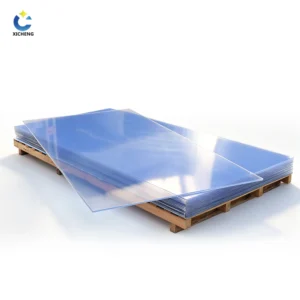
The process has six steps. The resin pellets are fed from the hopper into the extruder, where a rotating screw melts them under heat and pressure. The melted polymer is pushed through a sheet die that spreads it into a wide flat web. The web passes through a roll stack that sets the thickness and the surface, then through the cooling section that fixes the dimensions. The cooled sheet is cut into panels by a guillotine or wound into a roll. The whole line runs continuously, and the line speed and the temperatures are set against the thickness and the material grade.
The PP Sheet Extrusion Line
The pp sheet extrusion line is the set of equipment that performs the six steps, and it is sized by the sheet width and the throughput. A sheet line for the 4×8 sheet runs a die width of 1,500-2,500 mm, and the line speed ranges from a few meters per minute for a thick sheet to tens of meters per minute for a thin one. The line includes the hopper, the extruder, the die, the roll stack, the cooling rolls, and the cutter or winder, and each component sets one quality input. The polypropylene sheet pillar covers the sheet range that the line produces, and the process steps are the reference below.
| Step | Equipment | Key parameter |
|---|---|---|
| Feeding | Hopper, dryer | Resin grade, moisture |
| Melting | Single-screw extruder | Melt temperature 200-230 degC |
| Sheet forming | Sheet die | Die gap |
| Calibration | 3-roll stack | Roll gap, surface finish |
| Cooling | Cooling rolls | Cooling rate |
| Cutting/Winding | Guillotine / winder | Sheet length, roll width |
The table gives the six steps, the equipment, and the key parameter of each step, and the following sections detail the extruder, the die, and the thickness control.
The extrusion line is a continuous operation that runs at a throughput set by the line speed and the sheet thickness. A thick sheet moves through the line slowly, because the melt must cool and calibrate over a longer contact time, and a thin sheet moves faster. The line output is measured in kilograms per hour, and a sheet line can produce hundreds of kilograms per hour depending on the width and the thickness. The line speed and the throughput are the economics of the polypropylene sheet extrusion, and a manufacturer that runs the line efficiently supplies the sheet at the competitive price.
The process also determines the sheet quality that the buyer depends on. A consistent melt, an even die flow, and a calibrated roll stack produce a sheet with a uniform thickness, a flat surface, and a stable dimension. A variation in any step produces a sheet with a variable thickness, a warped panel, or a surface defect. The polypropylene sheet extrusion process is therefore the quality control, and the manufacturer that controls the six steps controls the sheet. The buyer who understands the process can evaluate the manufacturer’s line and quality system before the order.
The Extruder and Melting
The pp sheet extruder is the heart of the extrusion line, and it melts the resin and pumps the melt to the die. The melting quality sets the sheet consistency, and the extruder is the first quality input.
The Single-Screw Extruder
The pp sheet extrusion machine uses a single-screw extruder with a barrel divided into heating zones. The resin pellets fall from the hopper into the screw channel, and the rotating screw conveys the pellets through the barrel, where the barrel heaters and the friction melt the polymer. The screw has a length-to-diameter ratio of 25-35, and the zones increase in temperature from the feed to the die. The screw melts the resin uniformly and builds the pressure that pushes the melt through the die, and the melt consistency is set by the screw design, the speed, and the zone temperatures.
Melt Temperature
The polypropylene melts at 160-170 degC, and the extrusion runs the melt at 200-230 degC to reduce the viscosity and fill the die. The melt temperature is the key process parameter, because a temperature too low leaves the resin unmelted and a temperature too high degrades the polymer. The melt temperature and the throughput set the polypropylene extrusion temperature, and the extruder maintains it within a narrow band across the line speed. The melt properties follow the polypropylene data in the Engineering Toolbox PP properties reference, and the extruder control holds the melt at the setpoint that produces the consistent sheet.
The extruder also mixes the additives into the melt. The color masterbatch, the UV stabilizer, and the other additives are fed with the resin, and the screw mixes them uniformly into the melt. The mixing quality sets the color consistency and the additive distribution across the sheet, and a poorly mixed batch produces a sheet with a streaked color or a variable UV protection. The polypropylene sheet extrusion process is therefore as much a mixing operation as a melting one, and the extruder screw design sets the mixing quality. The manufacturer controls the additive feed and the mixing to produce the consistent sheet that the specification requires.
The extruder size also sets the line capacity. A larger screw melts more resin per hour and feeds a wider die, and the extruder size is matched to the die width and the target throughput. The screw, the barrel, and the motor are the mechanical heart of the pp sheet extruder, and the maintenance of the screw and the barrel sets the long-term consistency. A worn screw reduces the mixing and the pumping, and a manufacturer that maintains the extruder preserves the sheet quality. The extruder is the first and the largest investment of the line, and it sets the capacity and the quality ceiling.
The extruder control also manages the start-up and the shutdown of the line. A start-up runs the melt through the line and flushes the old material, and a shutdown purges the extruder to avoid the polymer degradation in the barrel. The purge and the flush waste some material, and the start-up and the shutdown are scheduled to minimize the waste. The pp sheet extruder maintenance and the purge schedule set the consistency of the first and the last sheet of the run, and the line operator manages the transition. A manufacturer that runs the line without the frequent stops produces a more consistent sheet and a lower waste.
The Sheet Die and Roll Stack
The sheet die and the roll stack form the melted polymer into the flat sheet, and the two set the width, the thickness, and the surface.
The Sheet Die
The sheet die is a coat-hanger die that spreads the melt from the round extruder outlet into a wide flat web. The die has an internal manifold that distributes the melt evenly across the die width, and the die lips at the exit set the initial sheet thickness. The die gap is set wider than the final thickness, because the melt swells as it exits and the roll stack draws it down to the target. The die width sets the maximum sheet width, and the die temperature is held even across the width to keep the flow uniform. A die that distributes the melt unevenly produces a sheet with a variable thickness across the width, and the die is the first thickness control.
The Roll Stack / Calibration
The roll stack, also called the calendar, is a set of three rolls that calibrates the sheet to the final thickness and surface. The melted web passes through the nip between the rolls, and the roll gap sets the thickness while the roll surface sets the finish. A polished roll produces a smooth sheet, and a matte roll produces a textured surface. The roll temperature is controlled to cool the web gradually and set the crystallinity, and the roll speed and the die output together set the thickness by the draw-down. The polypropylene sheet extrusion line calibrates the sheet in the roll stack, and the thickness control is the interaction between the die gap, the roll gap, and the line speed.
The die and the roll stack also set the surface quality that the fabrication uses. A polished roll produces the smooth surface that a lining needs, and a matte roll produces the surface that a floor panel or a part that will be bonded needs. The roll surface is maintained to avoid the marks and the scratches that transfer to the sheet, and the roll is cleaned on a schedule. The surface finish is a specification input, and the polypropylene sheet extrusion line is set up for the finish that the application requires. The buyer specifies the surface with the thickness, and the manufacturer sets the roll finish to match.
The die maintenance is also a quality input. The die lips and the manifold collect the carbonized polymer over time, and the buildup creates a streaked or a variable sheet. The die is cleaned on a schedule, and the die gap is reset to the target after each cleaning. A manufacturer that maintains the die and the rolls supplies a consistent sheet across the run, and the maintenance discipline is part of the quality system. The polypropylene sheet extrusion line is a set of components that must all be maintained, and the die and the roll stack are the finishing quality.
The roll stack also handles the sheet edge. The web edges are trimmed to a clean width, and the trim is recycled back into the feed. The edge trim and the recycle reduce the waste, and the recycled material is blended with the virgin resin at a controlled ratio. The polypropylene sheet extrusion line recycles the trim and the offcut, and the recycle ratio is set to hold the sheet quality. A manufacturer that recycles the edge and the scrap supplies the sheet at a lower material cost, and the recycle practice is part of the production economics.
Cooling, Cutting, and Thickness Control
The cooling, cutting, and thickness control complete the polypropylene sheet extrusion line, and the three set the dimensional quality of the finished sheet.
Cooling
The calibrated web passes through a set of cooling rolls that reduce the temperature below the melting point and fix the dimensions. The cooling rate sets the crystallinity and the flatness, because a sheet that cools unevenly warps and a sheet that cools too fast locks in the stress. The cooling rolls hold the web flat while it solidifies, and the roll temperature is controlled across the width. The cooled sheet is dimensionally stable and ready for the cutting, and the cooling section is the last step that sets the sheet flatness.
Cutting and Winding
The cooled sheet is cut into panels or wound into rolls. A guillotine cuts the 4×8 and the standard panels to length, and a winder collects the continuous sheet into a roll for the long applications. The cutting is set against the sheet length and the roll width, and the PP sheet thickness guide covers the range the line produces. The cut panels are stacked and packed for the shipment, and the rolls are wound with the tension control that prevents the deformation. The cutting and the winding are the finishing steps, and the sheet leaves the line as the product that the fabrication receives.
Thickness Control
The thickness control is the feedback loop that holds the sheet at the target. A thickness gauge measures the sheet across the width, and the control system adjusts the die gap, the roll gap, and the line speed to correct the deviation. The plastic sheet thickness control holds the sheet within the tolerance, typically plus or minus 5-10% of the nominal thickness, and the tolerance follows the ASTM D4101 standard for the material. The thickness control is the quality input that the buyer verifies on the delivered sheet, and a manufacturer with the gauge and the feedback loop produces a sheet that holds the dimension.
The line speed also sets the production economics. A sheet line that runs faster produces more sheet per hour, and the line speed is balanced against the cooling and the calibration time. The thickness and the line speed are linked by the draw-down, and a change in the line speed shifts the thickness unless the die and the roll gap are adjusted. The polypropylene sheet extrusion control coordinates the line speed, the die, and the rolls to hold the thickness at the setpoint. The line control is the automated skill of the process, and the manufacturer that runs the control well supplies a consistent sheet across the shift and the week.
The cutting accuracy also sets the sheet dimension that the fabrication receives. A guillotine cuts the sheet to the specified length, and the cut edge is square and clean for the weld. The cutting tolerance and the edge quality are the finishing inputs, and a fabrication that welds the panels needs the clean edge. The polypropylene sheet extrusion line cuts the sheet to the standard and the custom lengths, and the cut quality is verified on the shipping inspection. The cutting and the packing complete the line, and the sheet arrives at the fabrication ready for the weld.
Quality Control and Grades
The quality control and the resin grades set the polypropylene sheet manufacturing process output, and the two determine the consistency and the performance of the sheet.
Quality Checks
The extrusion line runs the quality checks that the buyer relies on. The thickness is measured across the width and logged against the target, and the width, the flatness, and the surface are checked on a schedule. The melt quality is monitored by the extruder conditions, and the sheet is sampled for the density, the tensile strength, and the dimensional stability. The quality records accompany the shipment, and a manufacturer that logs the thickness and the property data supplies the evidence that the sheet meets the specification. The quality control is the difference between the sheet that holds the dimension and the sheet that varies across the run, and the buyer verifies the records with the receipt.
Resin Grades and Additives
The resin grade and the additives set the sheet performance. A homopolymer resin produces the stiffer, higher-temperature sheet, and a copolymer resin produces the tougher sheet, as the cluster pillar and the high density guide cover. The additives extend the performance: a UV stabilizer protects the outdoor sheet, a color masterbatch sets the sheet color, and a flame retardant or a glass filler adds the specific property. The polypropylene sheet extrusion line feeds the resin and the additives from the hopper, and the grade and the additive blend are set against the application. The polypropylene sheet uses guide covers the applications that the grades serve, and the manufacturer supplies the sheet with the grade and the additive data.
The quality control also covers the dimensional and the physical tests. The density, the tensile strength, and the elongation are tested on a sample, and the dimensional stability is checked against the temperature. The test results are logged and supplied with the shipment, and the records are the evidence that the sheet meets the standard. The polypropylene sheet extrusion quality system follows the ISO 9001 practice, and the documented tests are the basis for the buyer’s acceptance. A manufacturer that tests and documents the sheet supplies the assurance that the fabrication relies on.
The property data also serves the engineering. A fabrication that is designed against the sheet properties uses the data sheet for the modulus, the density, and the temperature rating, and the property values are the bridge between the manufacturer and the engineer. The data sheet is supplied with the sheet, and the polypropylene sheet manufacturing process documentation is part of the delivery. A buyer who requests the property data and the thickness tolerance receives the information that the design and the fabrication need.
The property data also serves the fabrication. A fabricator that welds or machines the sheet uses the data for the welding parameters and the machining feeds, and the sheet with the documented properties is the predictable material. The data sheet accompanies the shipment, and the property documentation is the bridge between the manufacturer and the fabricator.
Choosing a Polypropylene Sheet Manufacturer
The polypropylene sheet extrusion capability is the basis for choosing a sheet manufacturer, because the extrusion line and the quality control set the sheet that the buyer receives.
Manufacturing Capability
A manufacturer with the extrusion line, the thickness gauge, and the quality records supplies a consistent sheet, and a manufacturer without them supplies a variable one. The manufacturing capability is verified by the line size, the thickness range, and the quality control records. A manufacturer that runs the 4×8 sheet line with the thickness feedback supplies the sheet within the tolerance, and a manufacturer that can produce the custom sizes and the roll supply covers the fabrication range. The Xicheng PP sheet line produces the sheets in the 4×8 and the custom sizes, and the manufacturing capability is the foundation of the product range.
Supplier Evaluation
The supplier evaluation checks the grade data, the thickness tolerance, and the quality records. A manufacturer confirms the homopolymer or the copolymer grade, the density, and the property values on the data sheet, and a distributor may not control the production. The evaluation also covers the lead time, the minimum order, and the fabrication support, and a manufacturer that supplies the cut panels and the technical support closes the fabrication loop. The polypropylene sheet extrusion capability and the quality records are the evidence of the manufacturer’s control, and the buyer who verifies them receives a sheet that meets the specification.
The manufacturing capability also covers the range and the flexibility. A manufacturer with the sheet line, the thickness gauge, and the quality system supplies the full range from the thin lining to the thick structural sheet, and the custom sizes and the cut panels are the value-added service. The flexibility lets the buyer source the whole sheet requirement from one manufacturer, and the fabrication support closes the supply chain. The polypropylene sheet extrusion capability and the service range are the basis for the long-term supply, and the buyer who partners with the capable manufacturer builds the reliable source.
The manufacturer choice also sets the consistency across the batches. A manufacturer that runs the same line with the same resin and the same settings supplies a sheet that matches from one order to the next, and the color, the thickness, and the property remain consistent. The batch consistency matters for a project that orders the sheet in stages, and the polypropylene sheet extrusion control and the documented settings are the basis for the consistency. The buyer verifies the batch records and the property data on each delivery, and the consistent supplier is the dependable source.
For a sheet from the extrusion line, browse the PP sheet product range or contact our engineering team with the thickness, the size, and the grade, and receive a polypropylene sheet matched to the application.
FAQ
How is polypropylene sheet made?
Polypropylene sheet is made by extrusion: the resin pellets are melted in a single-screw extruder at 200-230 degC, formed into a flat web through a sheet die, calibrated to the thickness by a roll stack, cooled, and cut into panels or wound into rolls.
What is the extrusion process for polypropylene sheet?
The extrusion process has six steps: feeding the resin, melting it in the extruder, forming it through the sheet die, calibrating it in the roll stack, cooling it, and cutting or winding it. The thickness, the width, and the surface are set by the die gap, the roll gap, and the line speed.
What temperature is polypropylene extruded at?
Polypropylene melts at 160-170 degC, and the sheet extrusion runs the melt at 200-230 degC to reduce the viscosity and fill the die. The melt temperature is held within a narrow band, because a temperature too low leaves the resin unmelted and a temperature too high degrades the polymer.
How is the thickness of polypropylene sheet controlled?
The thickness is controlled by a feedback loop: a thickness gauge measures the sheet across the width, and the control system adjusts the die gap, the roll gap, and the line speed to correct the deviation. The tolerance is typically plus or minus 5-10% of the nominal thickness.
What equipment is in a polypropylene sheet extrusion line?
The extrusion line includes a hopper, a single-screw extruder, a sheet die, a 3-roll stack, cooling rolls, and a guillotine or a winder. The line is sized by the sheet width, with a die width of 1,500-2,500 mm for the standard 4×8 sheet.
What grades of polypropylene are used for sheet?
A homopolymer grade produces the stiffer, higher-temperature sheet, and a copolymer grade produces the tougher sheet. The additives set the performance: a UV stabilizer for the outdoor sheet, a color masterbatch for the color, and a flame retardant or a glass filler for the specific property.
What is the difference between extruded and calendered polypropylene sheet?
The two are the same sheet forming method described differently. The extrusion line melts the resin and forms the sheet through a die, and the roll stack, also called the calendar, calibrates the thickness and the surface. The terms describe the same continuous process.
What is the output of a polypropylene sheet extrusion line?
A sheet line produces hundreds of kilograms per hour, with the output set by the line speed and the sheet thickness. A thick sheet moves through the line slowly, and a thin sheet moves faster, and the throughput is the economics of the process.
How is the surface of an extruded polypropylene sheet finished?
The surface is set by the roll stack finish: a polished roll produces a smooth sheet, and a matte roll produces a textured sheet. The roll finish is specified with the thickness, and the surface is the input for the lining, the print, or the bond.
Does polypropylene sheet extrusion recycle the scrap?
Yes. The edge trim and the offcut from the line are recycled back into the feed at a controlled ratio. The recycle reduces the waste and the material cost, and the ratio is set to hold the sheet quality.