You spec “pp hollow sheet” and find the same product sold as corrugated, fluted, twin-wall, correx, and coroplast, each with its own supplier and its own price. The name does not tell you what you are buying, because the real specification is the areal weight in grams per square meter, usually written as GSM, and that number drives both the stiffness and the cost. Order by name alone and you receive whatever density the supplier had in stock.
This guide explains what a pp hollow sheet is, how its twin-wall structure works, and the GSM and thickness options you will actually be quoted. It covers the applications, the factors that set pp hollow sheet price, and how to tell hollow from solid polypropylene sheet. Where you need solid, weldable board instead of a hollow panel, the polypropylene sheet guide covers that range.
Key Takeaways
- One product, six names. PP hollow sheet, corrugated, fluted, twin-wall, correx, and coroplast describe the same twin-wall construction. Order by GSM and thickness, not by the name the supplier uses.
- GSM is the master specification. Areal weight from 250 to 2000 g/m² drives the stiffness and the price, and a 4 mm panel can be quoted at very different densities. State both thickness and GSM on the purchase order.
- The structure is the strength. Two skins and vertical ribs deliver solid-sheet stiffness at a quarter of the material weight: a 4 mm hollow sheet weighs about 0.8 kg/m² against 3.6 kg/m² for solid.
- Water and reuse change the economics. Hollow sheet is waterproof, washable, and recyclable, so returnable packaging replaces single-use cardboard and pays back across hundreds of cycles.
- Price follows resin, not name. A 4 by 8 foot sheet runs roughly 10 to 30 dollars at retail, falling below 12 to 15 dollars at volume, and the grade choice of virgin versus recycled resin moves the cost more than the supplier.
What Is a PP Hollow Sheet?
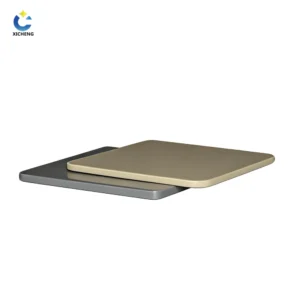
A pp hollow sheet is a twin-wall plastic panel made from polypropylene resin, built as two flat skins joined by a vertical rib structure that forms hollow channels between them. The construction mirrors corrugated cardboard, but the material is solid polypropylene, so the sheet is waterproof, washable, and reusable instead of single-use paper. The ribbed core is the source of the strength: the panel resists bending across the flute direction while using a fraction of the material of a solid board.
Twin-Wall Structure: Two Skins and Vertical Ribs
The structure does the work, not the polymer thickness. Two thin outer skins carry the surface loads, and the vertical ribs between them act as webs that transfer shear and keep the skins apart, which is the same I-beam principle that makes corrugated cardboard stiff. A 4 mm hollow sheet at roughly 800 grams per square meter weighs about 0.8 kg per square meter, while a solid 4 mm polypropylene sheet weighs about 3.6 kg per square meter, so the hollow construction delivers a comparable bending stiffness at a quarter of the material weight. That weight saving is why the board replaces cardboard, wood, and metal in packaging and signage.
One Product, Many Names: Hollow, Corrugated, Fluted, Twin-Wall
The same panel is sold under several names that describe the same structure. “Hollow” and “twin-wall” name the construction, “corrugated” and “fluted” name the rib profile, and regional brands add correx in the United Kingdom and coroplast in North America. When a quotation arrives under one of these names, the specification to check is still the GSM and thickness, because the material is identical and the density varies. The corrugated and fluted terminology, including the flute configurations and printing grades, is covered in detail in the corrugated polypropylene sheet guide, and this guide focuses on the hollow construction and its cost drivers.
How PP Hollow Sheet Is Made: Hollow Profile Extrusion
Production is a single-pass extrusion process, and it is what keeps the board economical. Polypropylene pellets, compounded with stabilizers, pigments, flame retardants, or anti-static agents as required, are melted and forced through a twin-wall die that forms the skins and ribs in one shot. The extruded profile is cooled on a controlled run-out to hold uniform thickness, passed through a corona discharge to raise the surface energy for printing, and cut to standard 4 by 8 foot panels or to custom sizes. The same extrusion family that produces solid sheet, described in the how polypropylene sheet is made guide, produces the hollow profile at high throughput, which is why the sheet is cheap per square meter.
Key Properties of PP Hollow Sheet
The performance of a pp hollow sheet is set by two numbers on the data sheet: the thickness and the areal weight in GSM. Together they fix the stiffness, the price, and the right application, and every other property follows from the polypropylene base material. The specification ranges below are what manufacturers quote, and a pp hollow corrugated sheet from a different supplier should be compared on the same two numbers.
| Specification | Range / Options |
|---|---|
| Thickness | 2–12 mm standard; up to 15 mm specialty |
| Areal weight (GSM) | 250–2000 g/m² |
| Standard size | 1220 × 2440 mm (4 × 8 ft), custom sizes available |
| Standard colors | White, black, grey, blue, red, transparent, custom |
| Additives | UV stabilizer, flame retardant, anti-static, conductive |
GSM and Thickness Options
GSM, grams per square meter, is the true density specification for a hollow sheet, because the hollow structure makes a thickness figure misleading. A 4 mm panel can be quoted at 600 GSM or 1000 GSM, and the denser one is stiffer and dearer even though both are 4 mm. Light grades at 250 to 500 GSM suit interleaving, temporary signs, and light packaging; mid grades at 600 to 1000 GSM cover general packaging, dunnage, and printed displays; heavy grades above 1200 GSM handle reusable boxes, layer pads, and construction protection. Thickness and GSM move together on a specification, and both must be stated on the purchase order.
Reading a quote comes down to one check: convert the GSM and the sheet size into the weight you are actually buying. A 4 by 8 foot sheet is 2.98 square meters, so an 800 GSM grade weighs about 2.4 kg per sheet and a 1200 GSM grade about 3.6 kg. That number tells you whether two suppliers are quoting the same product, because a lower price for a higher GSM at the same size is a signal that the resin source or the flute geometry differs. When the application is load-bearing, such as a layer pad under stacked product, choose by GSM and confirm the impact rating rather than by sheet thickness alone.
Strength, Stiffness, and Impact
The polypropylene core gives the sheet its durability, and the twin-wall structure gives it its stiffness per kilogram. Solid polypropylene has a density near 900 kg/m³ and a tensile strength of roughly 27 MPa, per the Engineering ToolBox polymer property tables, and the hollow panel inherits the impact resistance of that base polymer. The sheet flexes and recovers instead of cracking on impact, which is why it survives drops in logistics that would tear cardboard, and it creases and folds cleanly along the flute line. The material is also non-toxic and odor-free, which qualifies it for food packaging and medical dividers when the grade is specified for contact.
Stiffness is directional, and the flute orientation should be part of the design. The panel is stiffest when it bends across the flute direction, because the ribs act as the webs of the beam, and it flexes more easily along the flute, which is the direction used for folding. A box design that carries a load should run the flutes across the load span, while a fold line should run with the flutes. Specifying the flute direction on the drawing prevents a fabricator from cutting the panel the wrong way and delivering a lid that sags under a light load.
Water, Chemical, and Weather Resistance
Water is where a plastic hollow sheet leaves cardboard in a different class. The polypropylene skins do not absorb moisture, so the sheet is waterproof and washable, and it keeps its stiffness when wet instead of sagging. The polymer also resists a wide range of acids, alkalis, and solvents at ambient temperature, with the same exceptions documented for polypropylene in the Engineering ToolBox chemical resistance tables: concentrated oxidizing acids and aromatic and chlorinated hydrocarbons attack it. Outdoors, a standard sheet will degrade in direct sunlight, so UV-stabilized grades are specified for signage and agricultural panels that see sun for years.
Printability and Corona Treatment
Print quality depends on surface energy, and polypropylene is naturally low-energy, which makes ink bead up on an untreated sheet. Manufacturers apply a corona discharge to the surface during extrusion, which raises the surface energy and gives the ink a substrate to bond to. A corona-treated pp hollow sheet prints with UV-curable and solvent inks for signs, banners, and point-of-sale graphics, and the printed face holds color outdoors when the UV-stabilized grade is used. If your application is printed signage, the surface treatment is not an optional upgrade, it is the difference between a graphic that sticks and one that wipes off.
PP Hollow Sheet Applications
A pp hollow sheet replaces cardboard, wood, and light metal wherever the load is moderate and the environment is wet. The applications cluster into packaging, signage, construction, and agriculture, and each one exploits a different combination of the same properties: light weight, stiffness, water resistance, and reuse. Because the sheet cuts, folds, and prints easily, fabricators convert it into finished goods rather than using it as a raw panel only.
Packaging and Storage
Packaging is the largest market, driven by the economics of reuse. PP hollow boxes, crates, and layer pads replace single-use corrugated cartons in logistics, and the plastic panels survive hundreds of returnable cycles while staying waterproof on the dock and in the truck. The sheet is used for layer pads that separate bottles and cans, dividers for electronics packaging, and export crates where the low weight cuts freight cost and the moisture resistance protects the contents. For food-contact packaging, the grade must be specified against the polypropylene food-contact rules in 21 CFR 177.1520, and the same washable surface makes the boxes hygienic across repeated cycles. A fabricator converts the raw panel into the finished box by scoring, folding, and welding, so the packaging buyer can source either the sheet or the finished product from one supplier.
Signage and Advertising
Printed hollow sheet is a standard base for temporary and reusable signage. Election campaign signs, promotional boards, exhibition displays, and point-of-sale graphics use the corona-treated surface for crisp printing, and the UV-stabilized grade keeps the graphics legible outdoors for a season or longer. The sheet is light enough to mount on stakes or frames without heavy bracing, and it does not warp in the rain the way a paper-based sign board does. When the campaign or promotion ends, the panels pull out and print again or recycle.
Construction Protection
Construction crews use hollow sheet as a reusable protective layer that does not degrade on a wet job site. Floor protection panels shield finished surfaces from foot traffic, ladders, and dropped tools during renovation, and temporary partitions divide a space without the dust and disposal cost of drywall. Concrete formwork panels and roofing underlayment take advantage of the sheet’s stiffness and water resistance, and the panels are hosed down and reused on the next job instead of being thrown away. The sheet also lines voids and protects openings where a light, rigid, removable barrier is needed. Contractors measure the saving in two ways: the panels outlast several jobs, and the jobsite stays cleaner because there is no sawdust, no cardboard breakdown, and no need to re-clean a soaked floor protector between rooms.
Agriculture and Automotive
Agriculture values the sheet for the seasons it survives. Seedling trays, greenhouse panels, and row-crop fencing withstand moisture, irrigation chemicals, and sun, and fruit and vegetable packaging keeps its strength through washing and cold storage where cardboard collapses. In the automotive and industrial sectors, the sheet lines truck beds and trunk compartments, builds warehouse bins and pallet separators, and protects machine surfaces in transit, trading the weight of metal and wood for a panel that dampens vibration and does not corrode.
PP Hollow Sheet Price: What Drives the Cost
A pp hollow sheet price is set by GSM first, then thickness, then quantity, and the spread between the cheapest and dearest quote for the same nominal sheet is wide enough to matter. Retail pricing for a standard 4 by 8 foot panel runs from roughly 10 to 30 dollars a sheet depending on the grade, and volume buyers pay less than half the retail unit price. Comparing quotes means comparing the specification, not the headline number, because a light 500 GSM panel and a heavy 1000 GSM panel are different products at the same sheet size.
GSM, Thickness, and Quantity
The areal weight is the dominant cost driver because it is the amount of resin in the sheet. A heavy grade at 1500 GSM uses about three times the polymer of a light grade at 500 GSM, and resin is the largest part of the material cost, so the price tracks the GSM almost linearly. Thickness adds cost through the extra profile and the slower line speed, and quantity drives the unit price down through set-up amortization: a retail buyer pays 15 to 30 dollars per sheet at a distributor, while a pallet or container quantity at factory-direct pricing commonly lands below 12 to 15 dollars per sheet. Custom sizes, colors, and cut-to-size service add handling charges on top of the material price.
Virgin vs Recycled Resin and Surface Treatments
Resin source and surface treatment are the two specification choices that move the price at the same GSM. A sheet made from virgin polypropylene is whiter, stiffer, and more consistent, and it costs more than a recycled-content sheet, which can show color variation and lower impact strength. The right choice depends on the application, not on price alone: structural and food-contact work should specify virgin resin, while disposable display and interleaving can run recycled content. Corona treatment for printing and UV or flame-retardant additives each add a small premium, and they are worth paying when the panel must hold a printed graphic or survive outdoor or fire-rated service. For a complete buying and pricing guide across the polypropylene sheet family, the polypropylene sheet price guide covers the detail.
Compare like for like before you accept the lowest number. Request the GSM, thickness, flute geometry, and resin source on the quotation, then price per square meter rather than per sheet, because sheet sizes vary. A supplier quoting 10 dollars for a 4 by 8 foot 600 GSM sheet is not cheaper than one quoting 14 dollars for the same size at 1000 GSM; they are different products. Factoring the freight also matters, because hollow sheet is bulky and shipping volume often costs more than the material, so a local fabricator can beat a distant low price once delivery is added.
Hollow PP Sheet vs Solid PP Sheet
A pp hollow sheet and a solid polypropylene sheet share the same polymer but are different products with different failure modes. The hollow panel wins on weight and cost per square meter for panels, boxes, and signs; the solid board wins on stiffness, weldability, and chemical containment. The selection rule is simple: if the part is a panel, packaging, or a printed surface, use hollow; if it must hold pressure, chemicals, or a heavy load, use solid.
When to Choose Hollow Instead of Solid
Choose a pp hollow sheet when the panel carries light to moderate load and weight matters. A 4 mm hollow sheet weighs about 0.8 kg per square meter against 3.6 kg for the same 4 mm solid board, which cuts freight, handling, and mounting loads, and the hollow sheet costs less because it contains less resin. It folds, prints, and staples like cardboard, which makes it the practical material for boxes, dividers, signs, and protective panels. Where the structure is a flat or lightly loaded panel that must be light and cheap, the hollow construction is the engineered choice.
Where Solid Sheet Is Required
Solid polypropylene sheet is required the moment the application involves pressure, chemicals, or heavy loads. A solid sheet welds with a hot-air or extrusion welder into tanks, ductwork, and scrubbers, and it holds the wall strength that a hollow panel cannot offer at any density. The solid material also machines for guards, bearings, and structural brackets, and it is specified for service above the temperature and chemical duty a hollow panel tolerates. The complete material range, including the weldable and rigid grades, is covered in the polypropylene sheet guide.
The two materials also combine in a single product. A returnable shipping crate can use a hollow sheet for the lightweight lid and sides while the base is a solid sheet where the product weight and the fork-lift loads concentrate. A machine guard can be a hollow panel framed in solid PP sections that weld to the equipment structure. Designing the hybrid takes the best of both: the economy and weight saving of hollow where the load is light, and the strength and weldability of solid where the load is real.
Cutting, Folding, and Fabricating PP Hollow Sheet
A pp hollow sheet fabricates with simple shop tooling, which is one of the reasons it replaces wood and cardboard in production. The hollow core means there is no thick melt to manage and no grain to fight, and the flute direction gives a natural fold line. The rules are to work with the flute direction, keep the cutting edge sharp, and protect the printed face.
Cutting and Creasing
The sheet cuts with a utility knife, a guillotine, or a CNC router, and a sharp blade produces a clean edge without crushing the flute. For straight cuts and boxes, score the top skin along the cut line and snap the panel, which leaves a crisp edge on a light or mid grade. Creasing is where hollow sheet outperforms solid: score the flute direction and the panel folds into a box corner that stays, because the ribs hinge instead of cracking. Die cutting produces complex shapes at high volume, and the die maker should allow for the flute orientation so the fold lines land where the box design needs them.
Folding and Welding
Folding a scored pp hollow sheet creates the boxes, trays, and bins that make up most hollow sheet products, and the fold holds its shape when the corners are taped, stapled, or welded. Welding works for permanent joints: a hot-air welder with polypropylene filler rod fuses the panel edges, and ultrasonic welding joins thin hollow sheet for packaging without filler. Staples and self-tapping screws also fix the sheet to wood or metal frames, and the low density means a standard fastening pattern holds without the fastener pulling out. For finished products, lamination adds a printed skin or a film that protects the surface and upgrades the appearance.
Two quality checks separate a clean hollow sheet part from a poor one. First, cut with the flute running along the intended fold so the hinge lands between the ribs, because folding across the ribs crushes them and weakens the corner. Second, allow the printed face to cure before folding, so the ink does not crack at the fold line, and keep the masking film on any pre-printed sheet until the last fabrication step. A fabricator who follows these two rules produces boxes and displays with crisp corners, sealed edges, and no crushed cells, which is the difference between a part that holds up in logistics and one that fails at the first corner impact.
FAQ
Is PP hollow sheet waterproof?
Yes. A PP hollow sheet is made from polypropylene, which does not absorb moisture, so the sheet is waterproof and washable and keeps its stiffness when wet. It does not swell or sag like cardboard, which is why it is used for reusable packaging, marine-adjacent applications, and construction protection on wet sites.
What is a PP hollow sheet used for?
A PP hollow sheet is used for reusable packaging boxes and layer pads, printed signage and point-of-sale displays, construction floor protection and temporary partitions, and agricultural seedling trays and greenhouse panels. It replaces cardboard, wood, and light metal wherever a panel must be light, water-resistant, and reusable.
What is the difference between PP hollow sheet and corrugated plastic sheet?
They are the same product under different names. PP hollow sheet, corrugated polypropylene sheet, fluted polypropylene board, and twin-wall sheet all describe a panel with two flat skins connected by vertical ribs. The name varies by region and industry, and the specification that matters is the GSM, thickness, and surface treatment.
How much does a PP hollow sheet cost?
A standard 4 by 8 foot PP hollow sheet costs roughly 10 to 30 dollars at retail depending on the GSM and thickness, and volume buyers pay below 12 to 15 dollars per sheet at pallet or container quantity. The price is driven by the areal weight, the quantity, the resin source, and any surface treatment or additive.
Is PP hollow sheet recyclable?
Yes. PP hollow sheet is 100 percent recyclable because it is a single-polymer thermoplastic. Used panels are collected, shredded, and reprocessed into new sheet or other polypropylene products, and the material can also be produced with recycled content. This single-material structure is why it is specified for returnable packaging and sustainability programs.
Conclusion
A PP hollow sheet is the light, water-resistant panel that replaced cardboard and wood in packaging, signage, construction protection, and agriculture, and it earns that position on the strength of its structure rather than its name. Specify the GSM and thickness, confirm the surface treatment and resin source, and match the grade to the load and the environment. Where the application needs a panel that is light, printable, and reusable, hollow sheet is the economical choice.
When the requirement is solid, weldable polypropylene for tanks, ductwork, or equipment rather than a hollow panel, review the PP sheet product range for rigid and flame-retardant grades, or contact the Xicheng engineering team with your panel size, load, and service conditions for a material recommendation.