You search “polypropylene foam sheet” and get two different products wearing the same name: a rigid expanded polypropylene (EPP) panel and a soft extruded foam film. Ordering the wrong one wastes the budget and fails the application, because the two have almost nothing in common beyond the base resin. The property that separates them, and that separates all closed-cell foams, is the cell structure, and that is the detail most supplier pages never state.
This guide explains what a polypropylene foam sheet actually is, how EPP is made, and the density, water, temperature, and impact data you need to specify it. It compares EPP against expanded polystyrene and polyethylene foam, maps the applications for each, and gives a density-based selection process. Where you need solid, weldable polypropylene instead of foam, start with the polypropylene sheet guide.
Key Takeaways
- “Polypropylene foam sheet” means two products. A rigid EPP bead-foam panel absorbs impact and is reusable; an extruded foam film is thin, flexible, and disposable. Specify the cell structure, not the name.
- Density is the master specification. EPP ranges from 15 to 200 kg/m³, and compressive strength from 0.3 to 2.5 MPa scales with it. Choose the density for the load, or the supplier chooses it for you.
- Closed cells make it waterproof. EPP absorbs under 0.3 percent of its weight in water, resists mold, and survives marine, cold-chain, and humid duty that destroys open-cell foam.
- It survives what EPS cannot. EPP recovers over 95 percent of its shape after impact, resists oils and chemicals, and is 100 percent recyclable, at a higher first cost that reusable packaging pays back.
- Solid PP and foam serve different loads. Pressure and chemical duty belong to solid, weldable sheet; impact, insulation, and flotation belong to foam. The two share a resin but not a job.
What Is Polypropylene Foam Sheet?
A polypropylene foam sheet is a cellular plastic panel made by foaming polypropylene resin so that air occupies most of the volume. The base polymer is the same polypropylene used in solid sheet, with a density near 0.90 g/cm³, but the foamed material drops to a density of roughly 15 to 100 kg/m³, which means the sheet is one tenth to one sixtieth as heavy as the solid board. A Knauf Industries EPP sheet describes the result directly: about 94 percent air and 6 percent material.
Two Products Under One Name: EPP Bead Foam vs Extruded Foam Sheet
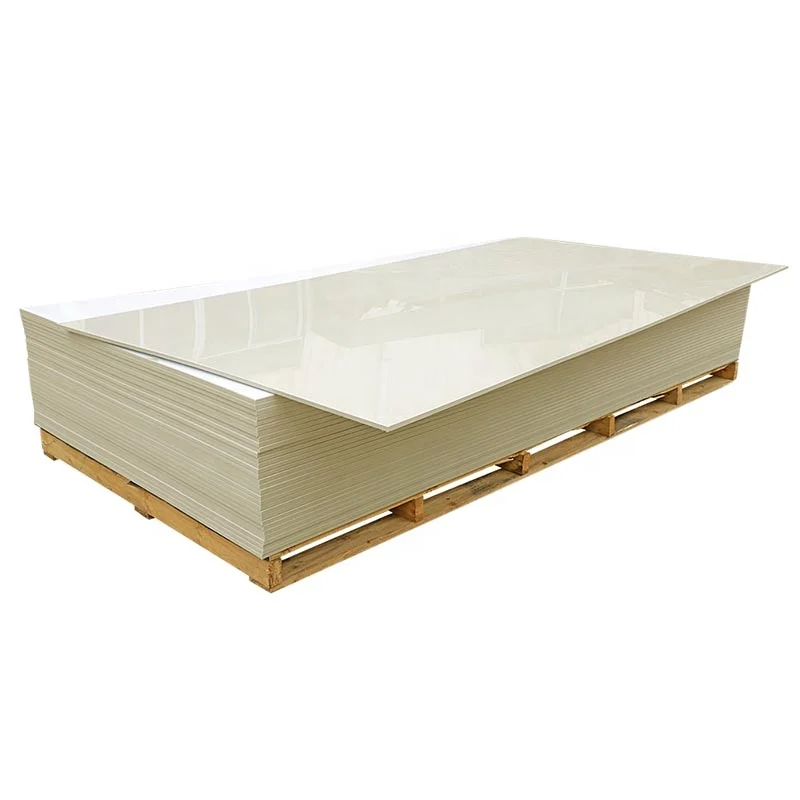
Two manufacturing routes produce the products that both appear under the name “pp foam sheet.” Expanded polypropylene (EPP) is a rigid, closed-cell bead foam: pre-expanded beads are fused into a panel or molded part in a steam chest, giving a stiff board with excellent impact absorption. Extruded polypropylene foam sheet is a thinner, flexible film or roll produced on an extrusion line with a chemical or physical blowing agent, and it is used for lightweight signage, interleaving, and protective wrapping. When an engineer writes “polypropylene foam sheet” in a specification, the rigid EPP panel is the product they usually mean, and it is the focus of this guide.
Extruded PP foam differs in feel and price, and it is not a substitute for the rigid panel. It is soft, typically under a few millimeters thick, and sold by the roll rather than by the sheet, which makes it a packaging material more than a structural one. If the requirement is an impact-absorbing, reusable panel, EPP is the material; if the requirement is a thin protective wrap, the extruded foam film is the cheaper option. The same distinction applies to solid material, where Xicheng’s transparent polypropylene sheet guide covers the clear solid grades that are the dense form of the same polymer.
How PP Foam Is Made: Bead Expansion and Steam-Chest Molding
EPP is manufactured in five controlled steps. Polypropylene resin is first polymerized to the isotactic structure that gives the material its stiffness, then the pellets are impregnated with a physical blowing agent such as carbon dioxide or butane and expanded under heat to form closed-cell beads. The beads are aged to stabilize internal pressure, filled into an aluminum mold, and fused together by steam in a chest press, and finally the molded part is cooled slowly to remove residual stress. The steam bonds the bead surfaces into one body without glue, which is why the panel behaves as a single material and survives repeated impacts.
The process differs from solid sheet extrusion, which pulls molten polymer through a die onto cooling rolls to produce the dense, weldable boards that fabricators cut into tanks and ductwork. That extrusion route is the subject of the how polypropylene sheet is made guide, and the two products are complementary: the same resin family produces both the rigid solid board and the light cellular panel.
Expanded Polypropylene vs Solid Polypropylene
Solid polypropylene and expanded polypropylene share the same chemistry but serve opposite structural roles. Solid PP sheet is dense, stiff, and weldable, with a density of 900 to 910 kg/m³ per the Engineering ToolBox polymer property tables, and it is the material for chemical tanks, ductwork, and guards. EPP is the foamed form, at 15 to 100 kg/m³, and it trades stiffness for energy absorption and weight savings. The decision is not which is better but which the load demands: a panel that must hold pressure or chemicals is solid sheet, while a panel that must absorb impact or insulate is foam. For the lightweight cellular structures between the two, a polypropylene honeycomb sheet offers a rigid alternative with an open-cell core.
Key Properties of PP Foam Sheet
The property set that defines a polypropylene foam sheet is the cell structure and the density that follows from it. Because EPP is a closed-cell foam, the panel absorbs impact and returns to shape, resists water, and insulates against heat and sound, all while weighing a fraction of a solid sheet. The values below are typical across the density range that suppliers quote for EPP panels, and the grade you buy should come with a test report for the specific density.
| Property | Typical EPP value |
|---|---|
| Density | 15–100 kg/m³ standard; up to 200 kg/m³ for mechanical grades |
| Closed-cell content | > 95% |
| Water absorption | < 0.3% by weight |
| Compressive strength | 0.3–2.5 MPa |
| Recovery after compression | > 95% |
| Service temperature | −40 °C to +110 °C |
| Energy absorption | 20–40 kJ/m² |
| Recyclability | 100% recyclable thermoplastic |
Density and Closed-Cell Structure
Density is the master specification for any foam, because nearly every mechanical property scales with it. EPP panels are supplied at roughly 15 to 100 kg/m³ for standard grades and up to 200 kg/m³ for high-strength mechanical grades, with a closed-cell content above 95 percent. Each cell is a sealed pocket of gas, so the panel compresses under load rather than crushing, and the cell walls recover when the load is removed. The Foam Factory’s stock EPP, for comparison, is sold at 1.3 and 1.5 pounds per cubic foot, about 21 and 24 kg/m³, which is representative of the low-density end used for packaging.
Impact Absorption and Recovery
Energy absorption is the property that makes EPP the standard for protective packaging and automotive safety parts. The closed-cell beads deform under an impact and absorb the kinetic energy over the crush distance, then return to more than 95 percent of their original shape, so the panel survives repeated hits that would crack expanded polystyrene. The measured compressive strength ranges from about 0.3 to 2.5 MPa depending on density, and the energy absorption of the material is typically quoted at 20 to 40 kJ/m². That combination of a high energy ceiling and a high recovery rate is what reusable packaging depends on, because a dunnage tray must protect for hundreds of cycles, not one shipment.
Thermal and Acoustic Insulation
Closed-cell polypropylene foam is a genuine insulator, not a by-product of the foaming process. The trapped gas in the sealed cells gives the material a thermal conductivity in the range of 0.035 W/(m·K), close to expanded polystyrene, which is why EPP appears in cold-chain packaging, building insulation, and HVAC lagging. The same cell structure scatters sound, so EPP panels provide acoustic damping in vehicle interiors and equipment enclosures. The insulation holds even in humid conditions, because the closed cells do not absorb the moisture that would drive up thermal conductivity in an open-cell foam.
Chemical and Temperature Resistance
EPP inherits the chemical resistance of the base polypropylene resin, which is the advantage it holds over most competing foams. It resists oils, greases, and a wide range of acids, bases, and salts at ambient temperature, per the Engineering ToolBox polypropylene chemical resistance tables, with the same exceptions that apply to solid PP: concentrated oxidizing acids and aromatic or chlorinated hydrocarbons attack the polymer. Service temperature ranges from about −40 °C to +110 °C, and the panel keeps its dimensional stability across that band, which is why EPP survives both freezer cold-chain logistics and engine-compartment heat.
Polypropylene Foam Sheet vs EPS vs PE Foam
A pp foam sheet is usually chosen against three other foams, and the choice is not a price decision but a durability and reuse decision. Expanded polystyrene (EPS) is cheap and ubiquitous, polyethylene foam (EPE) is soft and flexible, and polyurethane (PU) foam dominates comfort applications. EPP costs more per sheet than EPS, and it earns that premium by surviving impacts, resisting chemicals, and being recyclable, which changes the lifecycle cost completely.
Side-by-Side Foam Comparison
| Property | EPP (PP foam) | EPS | EPE (PE foam) | PU foam |
|---|---|---|---|---|
| Cell structure | Closed | Closed | Closed | Open or closed |
| Density (kg/m³) | 15–100 | 10–50 | 20–80 | Varies |
| Impact resistance | Excellent, multiple impacts | Poor, cracks | Good | Moderate |
| Elastic recovery | > 95% | Poor | Moderate | Moderate |
| Chemical resistance | Excellent | Poor | Good | Poor–moderate |
| Water absorption | Negligible | Moderate | Low | High |
| Service temperature | −40 to +110 °C | −20 to +80 °C | −50 to +90 °C | < 100 °C |
| Recyclability | 100% | Difficult | Partial | Poor |
| Typical use | Automotive, reusable packaging, insulation | Disposable packaging, insulation | Protective packaging, flotation | Comfort, soundproofing |
When EPP Wins — and When EPS Is Fine
EPP wins whenever the part must absorb more than one impact or survive a harsh environment. A reusable transport tray, an automotive bumper core, and an insulated cold-chain container all take repeated hits, and EPP returns to shape after each one, where EPS cracks on the first drop and absorbs water in a cold-chain or marine duty. EPP also resists the oils, greases, and solvents that dissolve or swell EPS, and it reprocesses into new foam because it stays thermoplastic. An expanded polypropylene sheet is therefore the engineering choice when the foam is part of the product, not the shipping packaging.
EPS remains the right call for single-use protection where the foam is discarded after delivery. It is the least expensive of the four, it insulates well at its density of 10 to 50 kg/m³, and its brittleness is irrelevant for a corner block that is thrown away after one shipment. PU foam still owns seating and acoustic comfort where softness matters more than recovery, and EPE suits light flexible wraps. The rule: if the foam is used once, EPS is enough; if it is used a hundred times, the higher first cost of EPP pays back through reuse.
Applications of PP Foam Sheet
Wherever a component must be light, absorb impact, and survive moisture, a polypropylene foam sheet replaces a heavier or less durable material. The applications below are the sectors that consume most EPP, and each one leans on a different property: automotive on energy absorption, packaging on reuse, construction on insulation, and marine work on buoyancy. The same panel that ships electronics on Monday can sit in a boat hull on Friday, which is why EPP is specified across so many industries.
Automotive: Bumpers, Headrests, and EV Battery Insulation
The automotive sector is the largest consumer of expanded polypropylene, because the material cuts weight while absorbing crash energy. Bumper cores and energy absorbers take the kinetic energy of an impact and recover their shape, and headrests, door panels, and knee bolsters use the same material for occupant protection. EPP also shields lithium-ion battery modules in electric vehicles, cushioning the cells and insulating them thermally, and its acoustic damping reduces noise, vibration, and harshness in the cabin. Replacing heavier materials with EPP supports the weight reduction programs that improve fuel economy and electric range.
Reusable and Protective Packaging
Protective packaging is where the reuse economics of EPP show up most clearly. Unlike EPS, which is crushed and discarded after one delivery, EPP trays and dunnage run hundreds of returnable cycles, which is why logistics networks for electronics, medical devices, and precision instruments standardize on it. The material’s low water absorption and thermal insulation also make it the liner of choice for insulated shipping containers that keep vaccines and food at temperature, and for food-contact service the grade must be specified against the polypropylene food-contact rules in 21 CFR 177.1520. Custom-molded EPP inserts protect fragile product shapes that a flat sheet cannot reach.
Construction and Thermal Insulation
Construction uses EPP for insulation that must stay dry and keep its thermal performance. Floor insulation panels, wall inserts, and HVAC and pipe lagging take advantage of the material’s thermal conductivity of about 0.035 W/(m·K) and its negligible water absorption, so the insulation does not degrade in humid conditions the way open-cell materials do. EPP also forms structural fillers and prefabricated building elements, where its strength-to-weight ratio and dimensional stability support design loads without the weight of solid board.
Marine, Flotation, and Sports Equipment
Marine work uses EPP for flotation and impact protection because the closed cells are buoyant and do not waterlog. Buoyancy blocks, dock fenders, and floats stay afloat indefinitely and shrug off the impacts of berthing, and the same water resistance protects cold-chain containers and humid-environment insulation. Sports equipment covers the impact end of the range: helmet liners, knee pads, and protective gear absorb a fall and return to shape for the next one, and archery and target applications exploit the material’s ability to stop an impact without shattering.
Is Polypropylene Foam Waterproof?
Yes, an expanded polypropylene foam sheet is water-resistant to the point of being effectively waterproof, because its cells are closed. The cell walls seal the gas inside each pocket, so water cannot penetrate the bulk of the material, and published absorption figures for EPP sit below 0.3 percent of the sheet’s weight. That is the property that allows marine flotation, cold-chain packaging, and humid-region insulation to run for years without the waterlogging that destroys an open-cell foam.
Two qualifications matter in practice. First, a cut edge exposes the cell walls along the cut line, so a trimmed panel takes on a little water at the raw edge, which is why fabricators seal or laminate cut edges for submerged duty. Second, the resin itself is hydrophobic, so the foam resists mold, mildew, and bacterial growth, which keeps reusable food and medical packaging hygienic over many cycles. An open-cell foam such as polyurethane does not share this property, and it degrades where moisture is present, which is exactly the failure EPP avoids.
The water resistance also drives the insulation value. A wet foam conducts heat far better than a dry one, because water replaces the air in the cells, and a polyurethane panel that soaks can lose most of its thermal performance. EPP keeps its cells dry, so its thermal conductivity stays near 0.035 W/(m·K) across the service life, which is why the cold-chain industry specifies it for insulated shipping containers that cycle between freezer and ambient temperatures.
Cutting and Fabricating PP Foam Sheet
A pp foam sheet fabricates with simpler tooling than solid plastic, because the low density means low cutting forces and no melt-gummed edges when the right method is used. The main risks are crushing the cells at the cut line and melting the bead skin, both of which are avoided by choosing the cutting method for the thickness. The techniques below cover the three ways foam panels are cut and joined in production.
Cutting: Knife, Die, and Hot Wire
Thin EPP and extruded foam sheet cut cleanly with a sharp knife or a die cutter, which produces a burr-free edge without crushing the cells. Thicker panels are cut with a band saw running a fine-tooth blade at low feed, or with a hot wire, which melts a smooth edge through the foam and seals the surface cells at the same time. CNC routing works for complex profiles when the tool is kept sharp and the spindle speed is moderate, because a dull or high-speed tool heats the bead surface and leaves a melted skin that changes the part’s dimensions. Whatever the method, the two rules are a sharp edge and a controlled speed, and both preserve the closed-cell structure that the material’s performance depends on.
Bonding and Lamination
EPP panels are joined with solvent-free adhesives or by thermal fusing, because the closed bead surface resists the solvent bonds that work on other plastics. Two-step polyurethane adhesives bond EPP to itself and to skins and films, and lamination adds a hard facing or a fabric cover where the foam surface must resist abrasion. For edge sealing, a thin film lamination or a skin layer protects the cut cells and keeps the panel waterproof in submerged duty. Mechanical fasteners also work in the low-density material when inserts or through-bolts spread the load, which is how EPP panels are fixed into vehicle structures and packaging frames.
How to Choose Polypropylene Foam Sheet
Choosing a polypropylene foam sheet is a density decision first, and every other property follows from it. Density drives the compressive strength, the energy absorption, and the price, so a specification that names only the material leaves the supplier to pick the density, and the delivered foam will suit a different application than the one you had in mind. The ranges below give a practical starting point, and a supplier should confirm the actual grade against the load and the drop height of your application.
For a polypropylene foam sheet between 15 and 30 kg/m³, the material is light and soft, and it suits protective wrapping, interleaving, and non-critical cushioning where the cost per part matters more than the crush strength. Between 30 and 60 kg/m³, the panel takes the role of reusable packaging and general dunnage, returning to shape after each handling cycle. Between 60 and 100 kg/m³, the foam becomes structural, and it is used for automotive interior parts, load-bearing packaging, and insulation panels that must hold a shape. At 100 to 200 kg/m³, a polypropylene foam sheet is a high-strength engineering material, specified for energy absorbers and structural components that see repeated, high-force impacts.
Confirm four things beyond density before you order. Verify that the product is closed-cell EPP rather than extruded foam film, because the two share a name but not a performance. Check the service temperature against your duty, the chemical compatibility against the fluids the panel will touch, and the food-contact compliance if the foam will hold food or pharmaceuticals. Finally, ask for the batch test report showing density, compressive strength, and water absorption, because a foam supplier’s datasheet is only useful if it matches the grade you actually receive. Where the load is critical, validate the grade with a drop test on a sample panel before you commit the production order, because a density figure on paper does not predict how a specific bead and steam profile behaves in service.
FAQ
Is polypropylene foam waterproof?
Yes. Expanded polypropylene foam is a closed-cell foam with water absorption below 0.3 percent of its weight, so water cannot penetrate the bulk of the sheet. Cut edges expose the cells and take on a little moisture, so fabricators seal edges for submerged duty, and the material itself resists mold and mildew because polypropylene is hydrophobic.
What is expanded polypropylene used for?
Expanded polypropylene (EPP) is used wherever a component must be light and absorb repeated impacts: automotive bumper cores and headrests, reusable packaging trays for electronics and medical devices, cold-chain insulated shipping, building and HVAC insulation, and marine flotation. It is also specified for sports protection and for cushioning that must survive hundreds of handling cycles without permanent deformation.
What is the difference between polypropylene and expanded polypropylene?
Polypropylene is a solid thermoplastic with a density near 900 kg/m³, and it is used for films, sheet, and molded parts. Expanded polypropylene is the foamed version of the same resin, with a density of roughly 15 to 100 kg/m³, produced by expanding PP beads with steam and air. The two share chemical resistance and recyclability, but EPP trades stiffness for energy absorption, weight savings, and cushioning.
Is PP foam recyclable?
Yes, expanded polypropylene is fully recyclable because it stays a thermoplastic after molding. The foam is collected, shredded, and ground into pellets that can be refoamed or blended with virgin material for new parts, and some suppliers incorporate up to 25 percent recycled content. This is the advantage EPP holds over thermoset foams such as polyurethane, which cannot be remelted.
What density polypropylene foam do I need?
Select density by the load and the impact the foam must absorb. Light protective wrapping runs at 15 to 30 kg/m³, reusable packaging and general dunnage at 30 to 60 kg/m³, structural panels and automotive interior parts at 60 to 100 kg/m³, and high-strength energy absorbers at 100 to 200 kg/m³. Confirm the choice against the batch test report for density, compressive strength, and water absorption.
Conclusion
A polypropylene foam sheet is the light, closed-cell form of the same polymer that makes solid sheet, and it earns its place wherever weight, impact, and moisture beat stiffness. The specification that works is the one that names the density, confirms the closed-cell structure, and matches the service temperature and chemical duty. When the application is single-use protection, a cheaper foam will do; when the part must be reused or the environment is wet, EPP pays for its higher first cost across its working life.
If the requirement is solid, weldable polypropylene for tanks, ductwork, or equipment rather than foam, review the PP sheet product range for rigid and flame-retardant grades, or contact the Xicheng engineering team with your load, temperature, and chemical duty for a material recommendation.