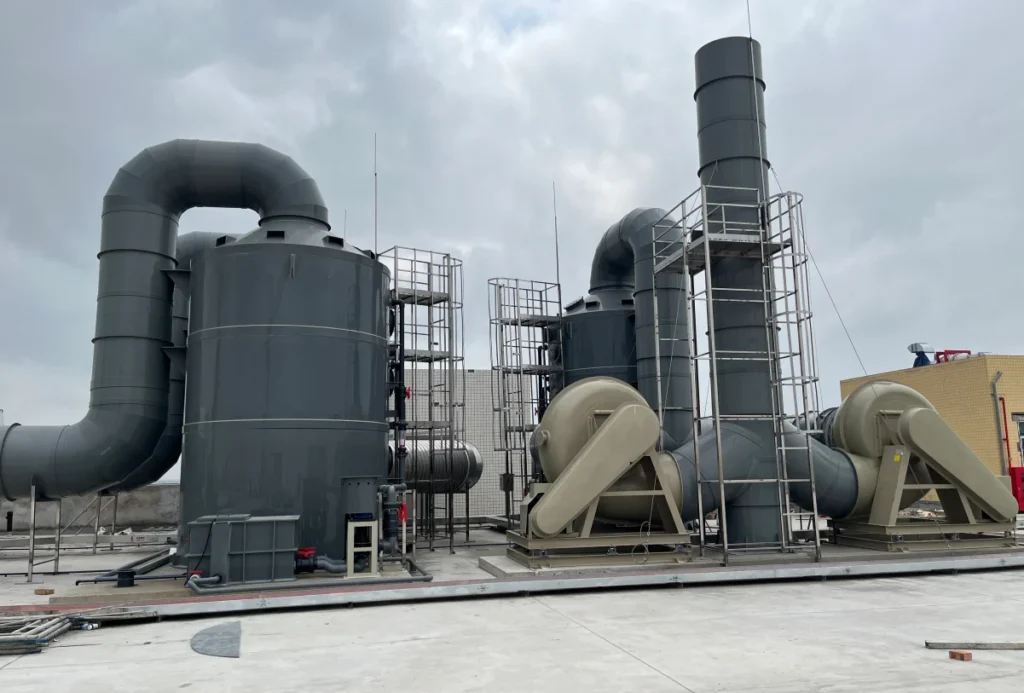
You search for a perforated polypropylene sheet and discover that polypropylene comes in four specialty forms that buyers routinely confuse: a perforated solid sheet, a woven fabric sheet, a bubble-profile board, and a needle-punched felt. The overlooked variable is that each one is a different product with a different spec. A perforated sheet is defined by its open area in percent, a woven sheet by its fabric construction, a bubble board by its layered profile, and a felt by its fiber density.
This guide covers the perforated polypropylene sheet in detail, including the thickness, hole pattern, and open-area options you will be quoted, then introduces the woven, bubble, and felt PP sheets and when each fits a job. It ends with a selection process you can apply across all four. For solid, weldable polypropylene, start with the polypropylene sheet guide.
Key Takeaways
- Four products, one polymer. Perforated, woven, bubble, and felt PP sheets share the polypropylene base but serve different jobs, and none of them substitutes for another.
- Open area is the perforated sheet’s spec. A perforated polypropylene sheet is defined by thickness, hole diameter, hole spacing, and open area from 10 to 40 percent, and a higher open area trades strength for flow.
- Round holes in staggered rows are the standard. The offset pattern balances flow and remaining web strength, and standard patterns are cheaper than custom dies.
- Bubble sheet is not bubble wrap. PP bubble sheet is a rigid three-layer protective board for floors and boxes, distinct from flexible LDPE bubble wrap, and it is part of the same cellular family as hollow sheet.
- Match the type to the job. Flow goes to perforated, flexible barriers to woven, rigid cushioning to bubble, and filtration and sealing to felt, and each type fabricates by a different method.
What Is Perforated Polypropylene Sheet?
A perforated polypropylene sheet is a solid polypropylene panel with a regular pattern of holes punched or drilled through its thickness. The holes turn the panel into a screen: liquid and air pass through, while solid material is held back, and the sheet keeps the chemical resistance and moisture resistance of the base polypropylene. The same polymer that builds a solid plate becomes a filtration screen, a ventilation panel, or a dipping basket, depending on the hole pattern punched into it.
Perforation Patterns and Open Area
Perforation is specified by three numbers that work together: the hole diameter, the center-to-center spacing, and the resulting open area as a percentage of the sheet face. Round holes in staggered rows are the standard pattern, because the offset rows give a more even flow and a stronger remaining web than a square grid. Open area is the figure that matters for the application, and it runs from roughly 10 percent for a strong panel with small holes to 40 percent or more for a light screen that maximizes flow. A 1/8 inch hole on 3/16 inch centers delivers the open area of a fine screen, while a 1/4 inch hole on wider centers gives a coarse panel for drainage and protection.
How Perforated PP Sheet Is Made
Perforation is a secondary operation performed on the finished solid sheet. The sheet is fed through a rotary punch or a CNC drill station that produces the hole pattern in a single pass, and the punched slugs fall away or are recovered for recycling. The process keeps the polypropylene’s chemical and moisture resistance intact, and it leaves a clean hole edge that needs no deburring in most applications. Because the tooling cost sits in the punch or drill pattern, standard hole sizes and spacings are cheaper than custom patterns, and a custom hole layout carries a die charge that the first production run absorbs.
The perforation does not change the material’s behavior, so a perforated panel inherits the full resistance of the base polymer. Polypropylene resists a wide range of acids, alkalis, and solvents at ambient temperature, with the exceptions documented in the Engineering ToolBox polypropylene chemical resistance tables: concentrated oxidizing acids and aromatic and chlorinated hydrocarbons attack it. It is also lighter than most perforated metals, which matters where a screen or basket is handled frequently, and it does not corrode, so it does not shed rust particles into the process. Those three properties, chemical resistance, low weight, and no corrosion, are the reasons perforated polypropylene replaces metal screens in plating, filtration, and ventilation service.
Perforated PP Sheet Specifications
A perforated polypropylene sheet is quoted on four numbers: thickness, hole diameter, hole spacing, and open area, with the hole pattern stated separately. The values below are the ranges that industrial suppliers stock, and the specification that names only “perforated” without the open area leaves the supplier to guess. Compare quotations on the same four numbers, because a 10 percent and a 40 percent open area are different products at the same sheet size.
| Specification | Typical range |
|---|---|
| Thickness | 1/16″–1/4″ (1.5–6 mm) |
| Hole diameter | 1/8″–1/4″ (3–6 mm) |
| Open area | 10–40% |
| Hole spacing (center to center) | 3/16″–1″ |
| Hole pattern | Staggered rows, round holes standard |
| Standard sheet | 48″ × 96″ (1220 × 2440 mm), custom sizes available |
Thickness, Hole Size, and Hole Pattern
Thickness sets the structural duty of the panel. A 1/16 inch sheet is light and flexible, and it suits screens, drying trays, and light guards; a 1/4 inch sheet is stiff and takes a real load, and it works for baskets, structural screens, and protective panels. Hole diameter and spacing set the screening behavior, and the two are traded against each other: a fine hole with tight spacing screens small particles but clogs sooner, while a coarse hole passes more material and stays open. The standard round-hole, staggered-row pattern balances flow and strength, and it is what stock sheets use, with square and slotted holes available by special order for specific screening or louver duties.
Open Area and Its Effect on Strength and Flow
Open area is the design trade at the heart of a perforated panel. Every hole removes material from the load path, so a panel at 40 percent open area is noticeably weaker in bending and tension than the same sheet at 10 percent, and it must be specified for the load, not the flow alone. The open area also sets the flow rate: for a screen or a ventilation panel, the free area of the holes controls how much air or liquid passes, and the designer matches the open area to the required throughput. A useful rule for ventilation is that the free area of the holes should meet or slightly exceed the free area of the duct or opening the panel serves, so the perforation does not become the restriction in the system.
Open area is also the number that drives the panel’s weight and price. A 48 by 96 inch sheet of solid polypropylene at 3 mm thickness weighs about 8 kilograms, and removing 20 percent of the material in holes cuts the weight to about 6.4 kilograms while also reducing the resin cost of the sheet. The weight saving matters for a basket or screen that is lifted and lowered repeatedly, and it is the reason the open area appears on the data sheet rather than being left to the fabricator’s judgment. The density and strength of the base polymer, about 0.90 g/cm³ and roughly 27 MPa tensile for a standard grade, are unchanged by the perforation, per the Engineering ToolBox polymer property tables, so the design check is the remaining web, not the polymer.
Where Perforated PP Sheet Is Used
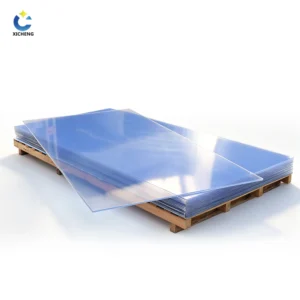
Perforated polypropylene sheet serves industries that need a light, chemical-resistant screen. Dipping baskets and plating racks in surface-finishing lines carry parts in and out of acid and alkali baths, where the open sheet drains freely and the polymer resists the chemicals that would attack a steel basket. Filtration and screening panels separate liquids and bulk solids, ventilation and louver panels let air pass while blocking debris, and drainage mats and dryer trays pass water while holding the product. The clear grade of the material, covered in the transparent polypropylene sheet guide, extends the perforated panel into sight-and-flow duties where a clear screen lets the operator see the process while it vents or drains.
Specialty PP Sheets: Woven, Bubble, and Felt
Beyond the perforated solid sheet, polypropylene is converted into three specialty forms that each solve a different problem. A pp woven sheet is a fabric, a pp bubble sheet is a rigid layered board, and a pp felt sheet is a soft nonwoven mat. They are not perforated panels and they are not interchangeable with solid sheet, and the paragraphs below give the construction, the specification, and the applications for each.
PP Woven Sheet: Fabric Construction
A pp woven sheet is a fabric woven from flat polypropylene tapes, which gives it the tear resistance and flexibility of a textile rather than the stiffness of a board. The tapes are slit from extruded PP film and woven on a loom, and the resulting cloth is used as a barrier, a wrapping, and a bag material. Laminated woven sheet carries a thin PP film coating on one or both faces, which closes the weave and adds moisture resistance while keeping the tear strength. The sheet is sold by the roll, and it weighs and folds like a cloth, not like a plastic panel.
Woven PP sheet is specified for bundling, covering, and containment where a flexible barrier is needed. Bale wrap for agricultural fiber, pallet covers that protect goods in transit, textile packing sheets that bundle finished cloth, and the bags and bulk containers made from the same fabric all use it, and the material is recyclable as polypropylene at end of life. The spec that matters is the fabric weight in grams per square meter and whether the sheet is laminated, because an unlaminated weave breathes while a laminated one blocks moisture.
The strength of a woven sheet is measured by its fabric weight and its tape construction, and the sheet carries load across its whole face because the weave distributes the stress between the tapes. A laminated packing sheet in the 100 to 200 GSM range holds a bundled load of packaged goods on a pallet, and the same fabric forms the body of bulk bags that carry kilogram-scale loads. Tear resistance is the defining property: a woven sheet does not run a tear the way a film does, because the interlaced tapes stop the crack at each crossing, which is why it is used where a puncturing or abrasive load would rip a plastic film. Specify the fabric weight, the laminate, and the roll width, and the supplier’s data sheet confirms the tear and tensile values for the grade.
PP Bubble Sheet: Bubble-Profile Board
A pp bubble sheet is a rigid, three-layer board with a bubble-profile core between two flat polypropylene skins, and it is sold by the sheet or in rolls for surface protection. The construction resembles a corrugated board, and it is part of the same cellular family as the twin-wall panels covered in the PP hollow sheet guide, with the bubble core providing cushioning and stiffness in a light panel. The material runs from about 225 to 2500 GSM and is stocked in widths up to about 1450 millimeters.
It is important not to confuse a pp bubble sheet with the flexible LDPE bubble wrap used to wrap parcels. The PP version is a rigid board that protects a surface from impact and abrasion, not a soft wrap, and it is the standard tile and floor protection sheet laid over finished flooring during renovation and construction. The same board forms turnover boxes, protective packaging inserts, and display panels, and it is waterproof, lightweight, and reusable across many jobs, which is why contractors lay it down and pick it up for years.
The specification for a bubble board is the GSM and the profile depth, because the two set the cushioning and the stiffness. A light board near 225 GSM suits short-duration protection and display panels, while a heavy board above 1500 GSM carries the point loads of tools, ladders, and foot traffic on a floor for weeks. The profile depth controls the crush resistance: a deeper bubble deflects under a point load before the load reaches the floor, which is the cushioning a tile or a finished floor needs. The board is also stocked in roll form for covering large areas quickly, and it is cut with a knife and joined edge to edge without adhesive, so a crew protects a whole floor in minutes and rolls it up for the next job.
PP Felt Sheet: Needle-Punched Nonwoven
A pp felt sheet is a nonwoven mat made by needle-punching polypropylene fibers into a dense, flexible felt with no weave. The interlocked fibers give the sheet a soft, absorbent structure that filters, cushions, and seals, and the polypropylene base keeps the chemical and moisture resistance of the polymer. The felt is specified by its fiber density and its filtration rating, and industrial grades filter down to the 10 to 25 micron range, which suits liquid filtration duties where other fibers swell or degrade.
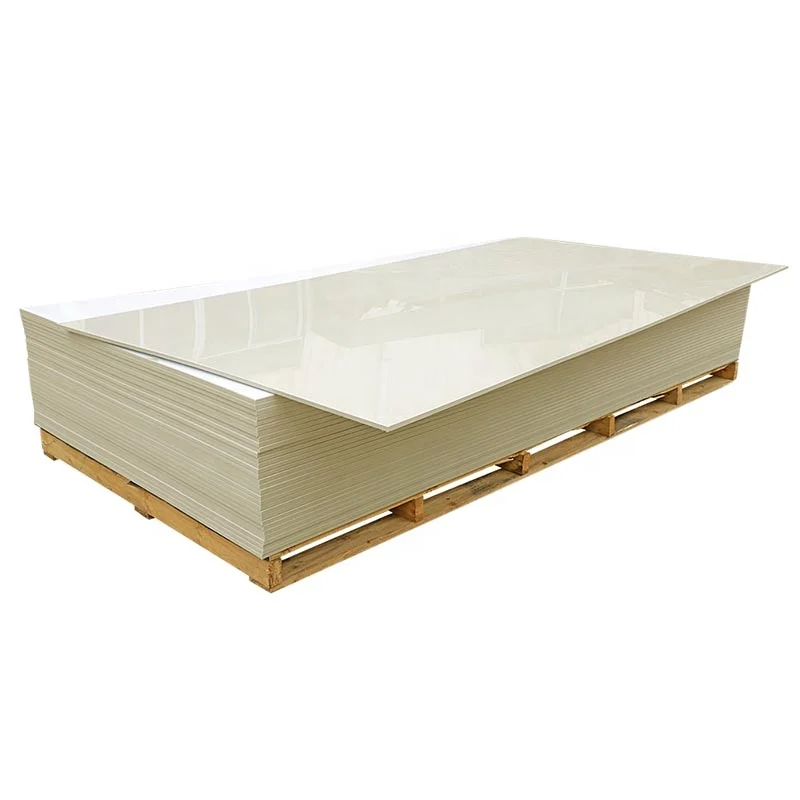
PP felt is used for liquid filtration, gaskets and seals, polishing and buffing pads, sound absorption, and protective layers under loads. It withstands temperatures up to roughly 250 degrees Fahrenheit, about 120 degrees Celsius, and it holds its strength and its dimensions in contact with oils, acids, and moisture where a wool or cotton felt would fail. The felt cuts with a knife or die and bonds to surfaces with adhesive, and it is specified by thickness, density, and micron rating rather than by a sheet dimension alone.
For filtration duty, the micron rating is the selection number, and it describes the largest particle the felt passes. A 10 micron felt removes fine particulates from a process stream, while a 25 micron felt handles coarser filtration with less pressure drop, and the choice is the same trade as any filter: finer filtration, higher pressure drop, faster clogging. The felt is also graded by its thickness, typically in the 1/16 to 1/4 inch range, and by its areal density in grams per square meter, which sets the strength and the absorbency. Because the fibers are bonded by the needle-punch process rather than by a binder, the felt does not shed the chemicals a resin binder would introduce, which matters for clean filtration and gasket service.
Comparing the Four PP Sheet Types
The four polypropylene sheet types are different materials that share a polymer, and the comparison below puts them side by side so the selection starts from the right row. Each type is bought for a different property, and the mistake is to assume that a perforated sheet, a woven cloth, a bubble board, and a felt are substitutes. They are not, and the table states the construction, the defining property, and the typical job for each.
Side-by-Side Type Comparison
| Type | Construction | Key property | Typical use |
|---|---|---|---|
| Perforated | Solid sheet with punched holes | Open area 10–40%, flow and drainage | Baskets, screens, ventilation panels |
| Woven | Flat PP tapes woven into fabric | Flexible, tear-resistant, moisture barrier when laminated | Bale wrap, pallet covers, bags |
| Bubble | Three-layer board with bubble core | Rigid, light, waterproof, cushioned | Floor protection, boxes, displays |
| Felt | Needle-punched nonwoven fibers | Soft, absorbent, filters 10–25 micron | Filtration, pads, gaskets |
Which Type Fits Which Job
Match the type to the duty, and the selection becomes mechanical. Use a perforated polypropylene sheet when the job needs flow through a rigid panel, such as a screen, a basket, or a vent. Use a pp woven sheet when the job needs a flexible barrier or containment that folds and wraps, such as bale wrap, pallet covers, or bag material. Use a pp bubble sheet when the job needs a rigid, light, waterproof board that cushions a surface, such as floor protection or a returnable box. Use a pp felt sheet when the job needs a soft, absorbent, filtering mat, such as liquid filtration or a gasket. If the job needs a solid, weldable panel with no perforation and no cellular structure, the solid polypropylene sheet range is the material, and the product category below covers the options.
Cost and availability order the four the same way every time. Perforated sheet is the dearest per square meter because the perforation is a separate operation with tooling and machining cost, and the price scales with the open area and the fineness of the pattern. Woven sheet is moderate and sold by the roll, with the fabric weight and lamination setting the unit price. Bubble board is the cheapest rigid option because it is a high-speed cellular extrusion with the least resin per square meter, and felt sits between woven and bubble on price, graded by its density and micron rating. Ordering by the application first, then by the required spec, keeps the buyer from paying perforation or lamination cost for a job that a lower-cost type already serves.
How to Choose the Right Specialty PP Sheet
Choosing among the four types comes down to two questions: what the panel must do, and what environment it must survive. A perforated polypropylene sheet is the answer when the job needs flow, and the open area and hole pattern carry the specification. For every one of the four types, the polypropylene base provides the same chemical and moisture resistance, and the selection is about the mechanical job, not the material.
Match the Product to the Job
Start with the physical requirement, then pick the type. If the part must pass air, liquid, or light while holding material, choose a perforated polypropylene sheet and set the open area to the required flow and the hole pattern to the screening size. If the part must wrap, fold, or contain as a flexible barrier, choose a woven sheet and state the fabric weight and whether it is laminated. If the part must protect a surface or build a light, waterproof box, choose a bubble board and state the GSM and thickness. If the part must filter, cushion, or seal as a soft mat, choose a felt and state the micron rating and density. Naming the job first removes most of the confusion, because the four types rarely overlap on the same task.
Fabrication and Sourcing Notes
Each type fabricates differently, and the fabrication method should be part of the sourcing decision. A perforated sheet cuts, welds, and thermoforms like solid polypropylene, so it suits welded baskets and formed panels. A woven sheet cuts with scissors or a hot knife that seals the cut edge, and it joins by sewing, heat sealing, or adhesive rather than by welding. A bubble board cuts with a knife and folds like a corrugated panel, and a felt cuts with a knife or die and bonds with adhesive. When you source, ask for the specification sheet for the exact grade, and confirm that the grade matches the chemical, temperature, and load duty of your application, because a specialty sheet quoted only by its product name can arrive with the wrong density, open area, or micron rating.
Qualify the supplier on three points before committing a production order. First, confirm the grade is made from a documented polypropylene formulation, because a perforated or felt sheet from unverified resin can vary in strength and chemical resistance between batches. Second, ask for the batch data on the number that matters to your application: the open area and hole pattern for a perforated sheet, the fabric weight and tear strength for a woven sheet, the GSM and crush resistance for a bubble board, and the micron rating and density for a felt. Third, confirm the sample against your actual service before the volume order, because a sheet that performs in a lab test can still fail on a hot, chemical, or abrasive job that the datasheet does not cover. A supplier that provides the datasheet and the sample is the one to build the order around.
FAQ
What is a perforated polypropylene sheet used for?
A perforated polypropylene sheet is used wherever a light, chemical-resistant screen is needed: dipping baskets and plating racks, filtration and screening panels, ventilation and louver panels, drainage mats, and drying trays. The holes pass air, liquid, or light while the polypropylene resists the acids, alkalis, and moisture of the duty.
What is a PP woven sheet?
A PP woven sheet is a fabric woven from flat polypropylene tapes, which gives it the flexibility and tear resistance of a textile rather than the stiffness of a board. It is used for bale wrap, pallet covers, textile packing sheets, and bags, and a laminated grade adds a PP film coating that blocks moisture while keeping the tear strength.
What is PP bubble sheet used for?
A PP bubble sheet is a rigid three-layer board with a bubble-profile core, and it is used for tile and floor protection during renovation, turnover boxes, protective packaging inserts, and display panels. It is a rigid protective board, not the flexible LDPE bubble wrap used to wrap parcels.
Is PP felt waterproof?
Polypropylene felt resists moisture and chemicals because the base polymer is hydrophobic, and it does not absorb or swell like a wool or cotton felt. It is used for liquid filtration, gaskets, and protective layers, and it withstands temperatures up to roughly 250 degrees Fahrenheit, about 120 degrees Celsius.
Can perforated polypropylene sheet be welded?
Yes. Perforated polypropylene sheet welds like solid polypropylene sheet, using hot-air or extrusion welding with polypropylene filler rod, because the base material is unchanged by the perforation process. The weldability makes it suitable for welded baskets, screens, and fabricated panels in chemical service.
Conclusion
The specialty polypropylene sheets answer different problems than a solid panel, and the selection is a matter of naming the job first. A perforated polypropylene sheet handles flow and screening with an open area you specify; a woven sheet wraps and contains as a flexible fabric; a bubble board cushions and protects as a rigid panel; and a felt filters and seals as a soft mat. Each one keeps the chemical and moisture resistance of the polymer, and each is specified on its own numbers, not on the product name alone. Name the job, set the spec, and confirm the grade against the service, and the right type does the work without the cost of the wrong one.
When the requirement is a solid, weldable polypropylene sheet for tanks, ductwork, or equipment rather than a specialty form, review the PP sheet product range for rigid and flame-retardant grades, or contact the Xicheng engineering team with your screening, flow, or fabrication duty for a material recommendation.