Buying polypropylene sheet from the first supplier that appears in a search, or from the nearest distributor with stock on the shelf, seems like the fastest path to starting a project. The mistake is that price and proximity say nothing about whether the material will survive a chemical tank, a scrubber duct, or a food-contact fabrication. The polypropylene sheet manufacturer behind the material controls resin selection, extrusion process, and tolerance — and those three variables determine whether the sheet welds cleanly, bends without cracking, and holds dimension in service. This guide explains how to choose a polypropylene sheet manufacturer, what to verify on a certificate of analysis, and where a distributor adds value instead of adding cost. It covers grades and sheet types, standard and custom sizes, fabrication capability, global sourcing across China, India, the United States, and Europe, and the RFQ checklist that separates a reliable polypropylene sheet supplier from one that ships reprocessed resin as virgin. For the full material range, start with the polypropylene sheet overview.
Key Takeaways
- A polypropylene sheet manufacturer controls resin selection, extrusion process, and tolerance — three variables that determine whether the sheet welds, bends, and performs in service.
- Always request a COA that references ASTM D4101 or ISO 1874, states the resin grade, and identifies virgin vs reprocessed resin.
- Verify thickness, flatness, and edge quality on receipt with a micrometer and a flat surface.
- Global sourcing requires comparing the total landed cost — material, freight, duty, and handling — not just the FOB price.
- Use the 8-item RFQ checklist to get an accurate, spec-compliant quote from any polypropylene sheet supplier.
Polypropylene Sheet Manufacturer vs Supplier: Which One You Need
Every polypropylene sheet manufacturer is a supplier, but not every supplier is a manufacturer. A manufacturer owns the extrusion line, controls the resin blend, sets the tolerance, and issues the certificate of analysis. A distributor buys sheet from one or more manufacturers, stocks standard sizes, and resells with a markup. The right choice depends on the project.
What a Manufacturer Controls That a Distributor Does Not
A pp sheet manufacturer chooses the resin — homopolymer, copolymer, or modified — and that choice sets the chemical resistance, impact strength, and welding behavior of the finished sheet. The manufacturer tunes the extrusion temperature, screw speed, and cooling rate to control the sheet’s internal stress, flatness, and dimensional tolerance. These are not details a distributor can adjust after the fact. The resin data in the Engineering ToolBox polymer property tables confirms that density, melt flow, and heat deflection are all set during extrusion.
When a Distributor Is the Right Choice
A distributor earns its role when the project calls for standard sizes, small quantities, or fast delivery from local stock. A 4 × 8 foot sheet of 10 millimeter polypropylene sheet for a prototype does not justify a custom extrusion run. The trade-off is that a distributor cannot change the resin grade, cannot certify the material, and adds a margin that a direct manufacturer order eliminates.
Decision Table: Manufacturer vs Distributor
| Criterion | Manufacturer | Distributor |
|---|---|---|
| Resin selection and grade control | Full control | None — ships manufacturer’s grade |
| Custom thickness and size | Yes — extruded to order | No — cut-to-size from stock only |
| Certificate of Analysis (COA) | Issued per batch | Passed through, not re-issued |
| MOQ and lead time | Higher MOQ, 2–4 week lead | Low/no MOQ, 1–5 day delivery |
| Price per kg | Lower at volume | Higher, but no setup cost |
| Fabrication services | Some offer CNC, welding, bending | Cut-to-size, limited |
| Best for | Production runs, custom specs, QA-critical | Prototypes, small orders, fast delivery |
The decision is not permanent: many buyers start with a distributor for prototyping and switch to a polypropylene sheet manufacturer once the design is locked.
What a Polypropylene Sheet Manufacturer Actually Controls
A polypropylene sheet manufacturer does not simply melt resin and press it into flat panels. The extrusion process is a sequence of controlled decisions, and each one shapes the sheet’s performance.
Resin, Extrusion, and Tolerance
The resin blend is the first decision. A polypropylene sheet manufacturer selects between homopolymer PP (stiffer, higher heat resistance), random copolymer PP (better impact at low temperatures), and impact copolymer (highest impact strength). The manufacturer also decides between virgin and reprocessed resin. A how polypropylene sheet is made guide covers the full process.
Why the Process Matters to the Fabricator
A sheet from a careful polypropylene sheet manufacturer arrives flat, cuts cleanly on a CNC router, bends without whitening, and welds with consistent bead adhesion. The difference is not visible in the product listing — it is visible when the fabrication shop runs the first part.
How to Verify a PP Sheet Manufacturer’s Quality
Trusting a polypropylene sheet manufacturer‘s product listing is not quality verification. Verification means checking the documents and inspecting the material on receipt.
Ask for the COA and Material Classification
The certificate of analysis (COA) is the primary document a polypropylene sheet manufacturer issues with each batch. The COA should list the resin grade, the material classification under ASTM D4101 or ISO 1874, the melt flow rate, density, and any additives. A pp sheet manufacturer that cannot produce a COA with standard references is a risk. The polypropylene sheet properties guide explains why each COA field matters.
Check Thickness, Flatness, and Edge Tolerance on Receipt
Measure the thickness at four corners and the center with a micrometer: a polypropylene sheet manufacturer supplying 10 millimeter sheet should deliver material within ±0.5 millimeter. Check flatness by laying the sheet on a known-flat surface. Inspect the edges for burrs. These three checks take five minutes and catch the problems that a COA cannot show.
Grades and Sheet Types to Specify
A polypropylene sheet manufacturer produces a range of grades, and the grade you specify determines the sheet’s chemical resistance, impact behavior, weldability, and regulatory compliance.
Homopolymer vs Copolymer, Virgin vs Reprocessed
Homopolymer PP (PPH) is the most common grade for polypropylene sheet applications requiring stiffness and chemical resistance. A polypropylene sheet manufacturer should identify the resin type on the COA. Virgin resin delivers consistent melt flow and full chemical resistance. Reprocessed resin reduces cost but introduces variability.
Flame-Retardant, UV, and Modified Grades
A pp sheet manufacturer that serves industrial markets offers flame-retardant grades rated UL 94 V-1 or V-0, and UV-stabilized grades for outdoor applications.
Thickness, Size, and Custom Extrusion
A polypropylene sheet manufacturer defines its capability by the thickness range, standard panel sizes, and custom dimensions. The full thickness-to-load mapping is in the PP sheet thickness guide.
Standard Sizes and Thickness Range
The most common stock size is 1,220 × 2,440 millimeters (4 × 8 feet). Standard thickness ranges start at 0.5 millimeters and extend to 25 millimeters or more. The stock thickness range is the first question to ask a polypropylene sheet manufacturer.
Custom Width, Color, and Roll Supply
Custom extrusion is where a polypropylene sheet manufacturer adds value that a distributor cannot. A manufacturer can extrude custom widths, custom color compounded into the resin, and roll stock for continuous processes. The trade-off is lead time: custom extrusion typically adds two to four weeks.
Fabrication Capability: Cut, Bend, and Weld
A polypropylene sheet manufacturer that also fabricates delivers a different value proposition. When the manufacturer can cut polypropylene sheet, bend polypropylene sheet, and weld it into finished assemblies, the buyer eliminates the handoff between suppliers.
Why the Fabrication Range Matters
A polypropylene sheet manufacturer that performs all three in-house understands how the material behaves at each step. When the same polypropylene sheet manufacturer extrudes the sheet and fabricates the part, the material and the process are optimized together.
One-Stop Supply vs Material-Only
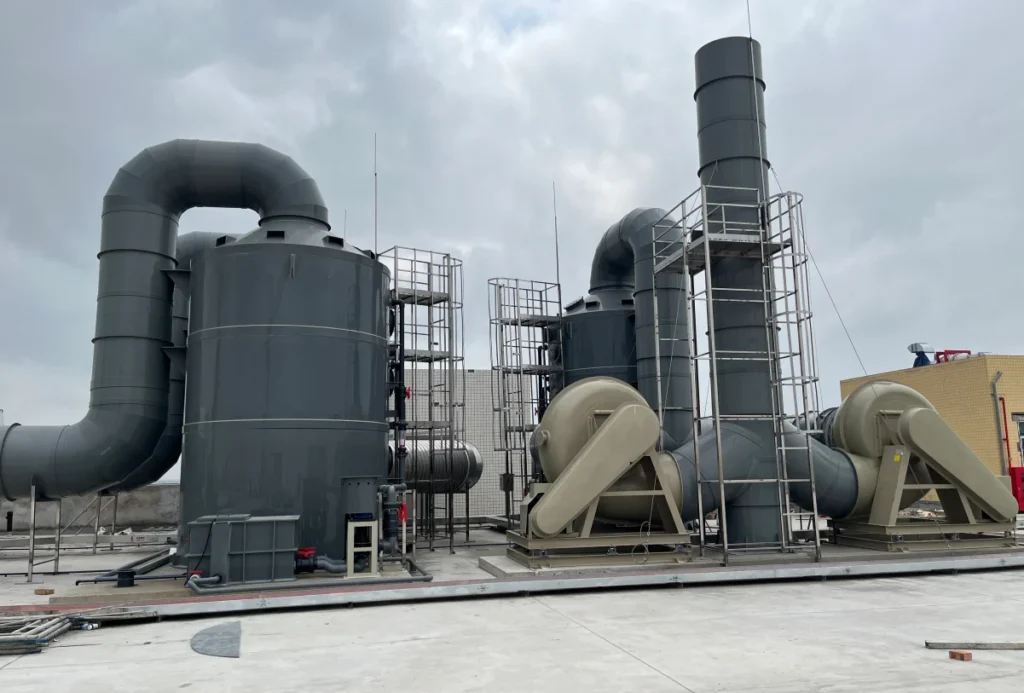
The one-stop model — extrusion, cutting, bending, welding, and assembly under one roof — is the strongest value proposition. For projects like scrubber ductwork or chemical tank assemblies where polypropylene sheet properties must survive every fabrication step, the one-stop model reduces risk at every stage.
Global Sourcing: China, India, the US, and Europe
A polypropylene sheet manufacturer operates in every major market, and each region brings different strengths.
Quality, Certifications, and Process Control by Region
Chinese polypropylene sheet manufacturers offer the lowest per-kilogram cost and the widest range of modified grades. Many hold RoHS and REACH, but ASTM D4101 or ISO 1874 classification is less common. US manufacturers provide the most detailed COA and hold ASTM and ISO certifications, but at a higher price. A pp sheet manufacturer in China may be the right choice for high-volume, cost-sensitive projects, while a US or European polypropylene sheet manufacturer is safer for chemical service or food contact.
MOQ, Lead Time, and Freight Trade-offs
Chinese manufacturers often set MOQ at one metric ton or more. US and European manufacturers accept lower MOQs but price higher. A Chinese polypropylene sheet manufacturer quotes two to four weeks production plus three to five weeks ocean freight. A 20-foot container from Shanghai adds $2,000–$4,000 to the landed cost.
MOQ, Lead Time, and Cost Factors
The price of polypropylene sheet is a function of grade, thickness, size, color, order volume, and delivery terms. A polypropylene sheet manufacturer prices per kilogram or per square meter.
Resin grade is the first cost variable. Virgin homopolymer PP is the baseline; modified grades add 10–30%. Reprocessed resin can reduce cost by 15–25%. For detailed pricing guidance, see the polypropylene sheet price analysis.
| Cost Variable | Impact on Price |
|---|---|
| Resin grade (virgin vs reprocessed) | ±15–25% |
| Modified grade (FR, UV, anti-static) | +10–30% |
| Thickness | Higher thickness = higher per-m² cost |
| Order volume | Higher volume = lower per-kg cost |
| Custom color | +5–15% |
| Custom size | +10–20% |
| Freight (international) | $2,000–$4,000 per 20ft container |
| Lead time (rush) | +10–20% |
Manufacturer Checklist: What to Send for a Quote
A polypropylene sheet manufacturer gives you the best quote when the RFQ contains the data they need.
The 8-Item RFQ Checklist
| # | Item | Why It Matters |
|---|---|---|
| 1 | Resin grade (PPH / PPR / PPB, virgin or reprocessed) | Sets material cost and performance |
| 2 | Thickness and tolerance (e.g., 10 ±0.5 mm) | Affects extrusion setup and price |
| 3 | Sheet size or roll dimensions | Determines die width and yield |
| 4 | Quantity (sheets, kg, or m²) | Volume drives per-unit pricing |
| 5 | Color (natural, white, black, custom RAL code) | Colorant cost and availability |
| 6 | Additives (UV, flame retardant V-1/V-0, anti-static) | Changes resin blend and lead time |
| 7 | Required certifications (ASTM D4101, ISO 1874, FDA, RoHS) | Some grades carry these; some do not |
| 8 | Delivery terms (FOB, CIF, DDP) and timeline | Freight and duty change the landed cost |
Red Flags to Drop a Supplier
Three responses from a polypropylene sheet manufacturer should end the evaluation: (1) No COA or no material standard reference. (2) Cannot state the resin type. (3) The quote arrives within minutes with no questions asked. A polypropylene sheet supplier who asks clarifying questions is doing the work that protects the buyer. Ready to evaluate your next project? Browse our PP sheet range or contact our engineering team for a spec-compliant quote.
Frequently Asked Questions About Polypropylene Sheet Manufacturers
What does a polypropylene sheet manufacturer do?
A polypropylene sheet manufacturer extrudes polypropylene resin into flat sheet or roll stock, selects the resin grade, controls the extrusion temperature, and issues a COA under ASTM D4101 or ISO 1874.
How do I know a PP sheet manufacturer is reliable?
Reliability starts with documentation. A reliable pp sheet manufacturer issues a COA referencing the material standard, states the resin grade and melt flow rate, and identifies virgin vs reprocessed resin.
Manufacturer or distributor: which should I buy from?
Buy from a polypropylene sheet manufacturer when the project requires a specific resin grade, custom thickness, a traceable COA, or volume pricing.
What thickness and size can a polypropylene sheet manufacturer supply?
Most polypropylene sheet manufacturers stock 0.5–25 millimeters in standard 1,220 × 2,440 millimeter panels. Some supply up to 150 millimeters. The PP sheet thickness guide maps thickness to application.
Do PP sheet manufacturers offer fabrication?
Some polypropylene sheet manufacturers offer CNC cutting, cutting polypropylene sheet, bending polypropylene sheet, and welding.
How much does polypropylene sheet cost from a manufacturer?
Virgin homopolymer PP typically costs $1.50–$3.00/kg from a Chinese polypropylene sheet manufacturer, $2.50–$4.50 from India, and $4.00–$7.00 from the US or Europe. See the polypropylene sheet price analysis.