


PP and PVC Duct Flanges — Round and Rectangular Connection Flanges
A flange is where two duct sections meet, where a duct connects to equipment, or where a run terminates at a damper. Its job is simple: provide a flat sealing face around the duct perimeter, drilled with a bolt pattern, so two mating flanges can compress a gasket between them. When the face is flat, the holes align, and the material resists the exhaust chemistry, the connection seals. When any of those conditions fails, the connection leaks corrosive fumes directly into the workspace.
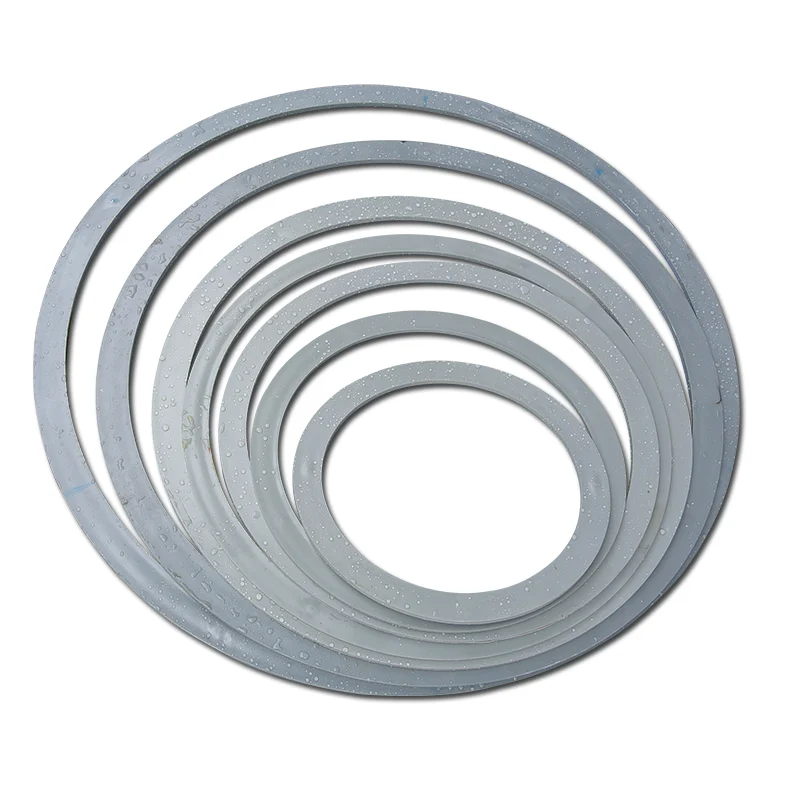
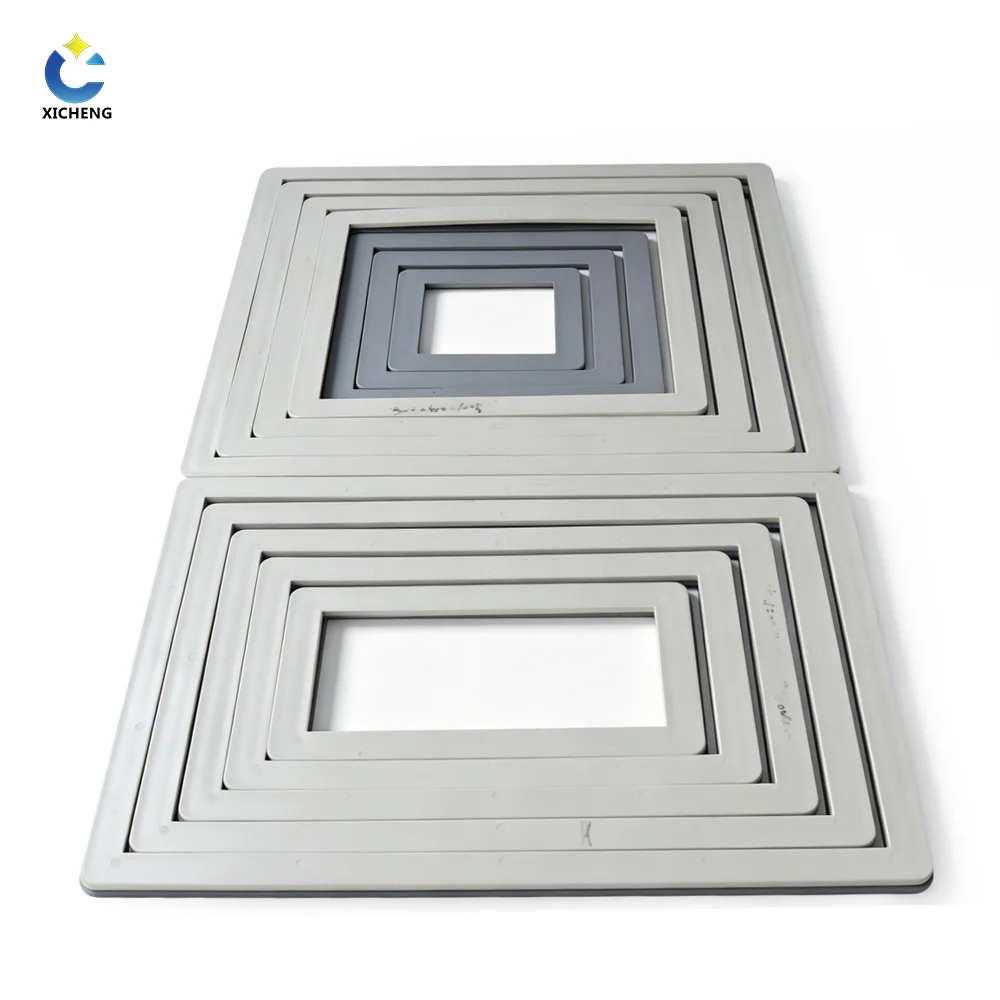
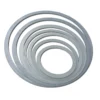
Xicheng manufactures duct flanges in polypropylene and PVC for both round and rectangular duct cross-sections. Round flanges in standard diameters with ANSI, DIN, or JIS drilling are injection-molded as single-piece components — the bolt circle, sealing face, and weld neck formed in one mold cavity. Rectangular flanges are fabricated from PP or PVC sheet to the specific cross-section and bolt pattern of the connecting ductwork. Custom round flanges with non-standard bolt patterns and custom rectangular flanges for any cross-section are fabricated to order.
Round Flanges: Standardized Bolt Patterns
Round flanges follow standardized drilling tables. For a given nominal diameter and pressure class, the bolt circle diameter, number of bolt holes, and hole diameter are defined by the applicable standard. There is no guesswork — but there is also no cross-compatibility.
ANSI 150 flanges serve installations designed to North American specifications. A 200-millimeter ANSI flange has a specific bolt count, bolt circle diameter, and individual hole diameter. A 200-millimeter DIN flange — serving the same nominal duct diameter — has a different bolt count on a different circle diameter. The two will not bolt together. A JIS 200-millimeter flange differs from both. When ordering replacement flanges or flanges for new installations, the drilling standard must match the existing mating flange.
Injection-molded round flanges up to 500 millimeters are produced as single pieces. The bolt circle is formed by fixed pins in the steel mold — the hole positions are identical on every flange from that tooling. The sealing face is flat within 0.2 millimeters across the face width, formed by the mold surface with no post-molding machining. The weld neck is integral to the flange body — one continuous piece of PP or PVC with no joint between the flange ring and the duct connection.
For diameters above 500 millimeters, non-standard bolt patterns, or custom bolt circle diameters, round flanges are fabricated from PP or PVC sheet, drilled to specification, and welded to matching stub ends.
Rectangular Flanges: No Standard Exists
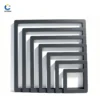
A rectangular flange has no universal drilling standard. There is no ANSI table for a 600-by-300-millimeter rectangular flange. No DIN specification. No JIS catalog entry. Every rectangular flange bolt pattern is specific to the installation that uses it.
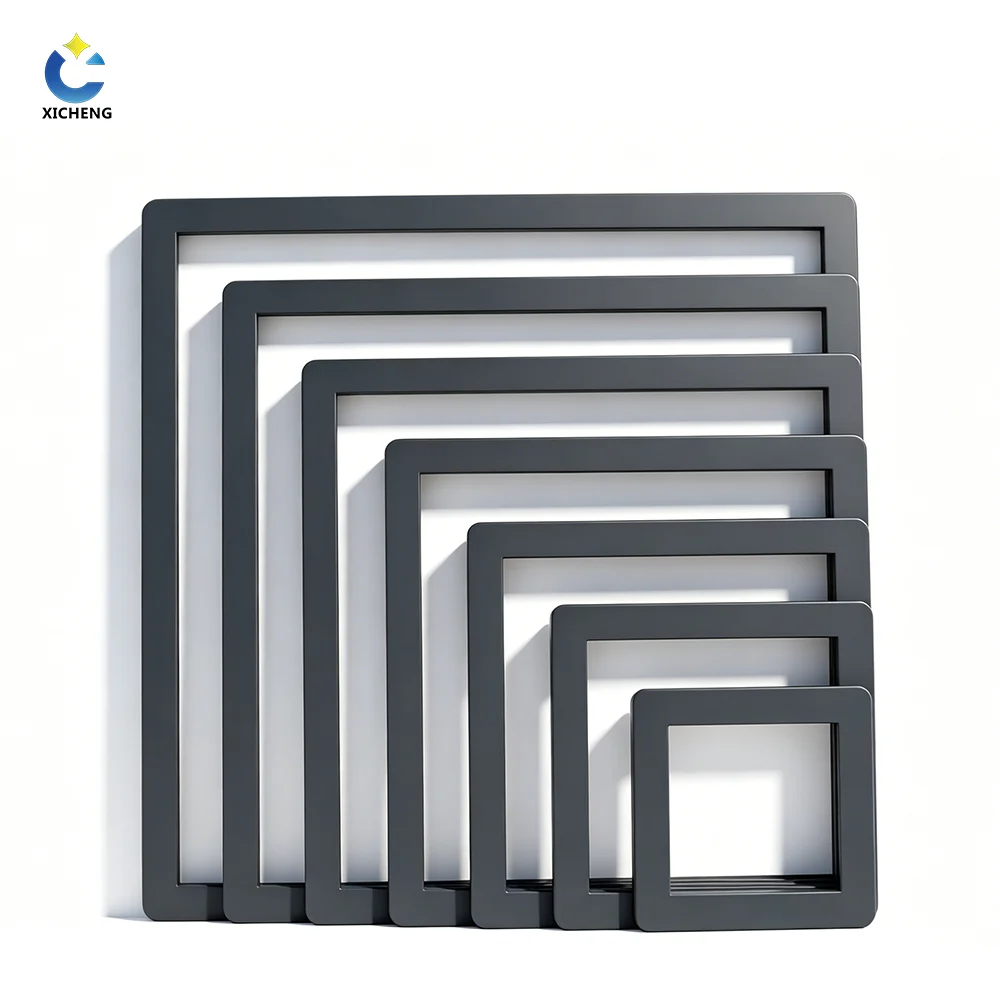
Four variables define a rectangular flange: the duct internal width, the duct internal height, the flange face width beyond the duct external dimensions — typically 30 to 50 millimeters — and the bolt spacing along each edge — typically 100 to 150 millimeters center-to-center. The bolt pattern follows a rectangular perimeter, with corner bolts at the intersection of two perpendicular bolt lines.
Because no two installations share the same combination of duct dimensions, flange width, and bolt spacing, rectangular flanges are always fabricated to order. The flange is cut from PP or PVC sheet as a rectangular frame with the specified external dimensions and internal opening. Bolt holes are drilled along each edge at the specified spacing. For a weld neck flange, a rectangular duct stub of the same material and wall thickness is welded into the opening — four straight sides joined at 90-degree corners, each corner requiring particular attention to full-penetration welding through the sharp internal angle.
A blind rectangular flange — used to blank off an unused duct connection — is a solid plate with no internal opening, drilled to the bolt pattern of the mating flange.
Technical Specifications
| Parameter | Specification |
|---|---|
| Material | Virgin-grade PP (Polypropylene), PVC |
| Round — Standard | ANSI 150, DIN, JIS drilling patterns |
| Round — Injection-Molded | Single-piece, up to 500mm diameter |
| Round — Fabricated | PP/PVC sheet, custom bolt patterns, above 500mm |
| Rectangular | Fabricated to customer cross-section and bolt pattern |
| Types | Weld neck, slip-on, blind |
| Flange Face Width | Round: per standard; Rectangular: 30–50mm typical |
| Density (PP) | 0.90 to 0.91 g/cm3 |
| Operating Temperature (PP) | -10-degrees-Celsius to 90-degrees-Celsius |
| Operating Temperature (PVC) | 0-degrees-Celsius to 60-degrees-Celsius |
| Certifications | ISO 9001, ISO 14001; SGS tested |
| Custom | Non-standard bolt circles, hole counts, rectangular patterns |
Global Compliance and Industrial Trust: Why Customers Choose Xicheng
A flange looks like a simple ring of plastic with holes in it. The simplicity is misleading. The bolt pattern must match the mating flange. The sealing face must be flat enough to achieve uniform gasket compression. The material must resist the exhaust chemistry at the operating temperature. Any one of these requirements, if unmet, means the flange leaks — and a leaking flange at a duct connection releases corrosive fumes into the space where people work.
Xicheng Environmental operates over 40 production bases and offices across China, with 2 dedicated manufacturing facilities in Vietnam. Standard injection-molded round flanges ship from inventory. Fabricated round and rectangular flanges are built to your dimensions and bolt patterns.
ISO 9001 governs quality management. ISO 14001 governs environmental management. PP sheets, PPS, PP pipes, and PVC sheets are SGS tested with current documentation for every order.
Frequently Asked Questions
Q: How do I identify which drilling standard my existing round flanges use?
A: Measure the bolt circle diameter — the circle passing through the center of each bolt hole — and count the number of bolts. Compare against standard ANSI, DIN, and JIS tables for the nominal duct diameter. If the pattern does not match any standard, it is a custom drilling. Send us the bolt circle diameter, hole count, and hole diameter and we fabricate flanges to match.
Q: How do I specify a rectangular flange for fabrication?
A: Provide the duct internal width and height, wall thickness, desired flange face width beyond the duct, and bolt spacing along each edge. If you are matching an existing flange, provide the external dimensions, internal opening dimensions, and the position of each bolt relative to the duct corner. Photographs confirm details that numbers sometimes miss.
Q: Weld neck or slip-on — which should I choose?
A: A weld neck flange has an integral stub that butt-welds directly to the duct. This provides a stronger, more rigid connection and is preferred for larger diameters and ducts that experience vibration or thermal cycling. A slip-on flange slides over the duct end and is fillet-welded on both faces — simpler to install but requires access to both sides and is generally used for smaller diameters.
Q: What is the lead time?
A: Standard injection-molded round flanges ship within 5 to 7 working days. Fabricated round flanges with custom bolt patterns require 7 to 14 working days. Rectangular flanges are always fabricated to order and require 7 to 14 working days depending on size and quantity.
Send us your duct dimensions, flange type, bolt pattern, and exhaust gas composition. You will have a quotation within 48 hours.
Contact Xicheng Environmental Today.
- 🎯 Address: No.34 Zhenxing Road (Shengtaian Heavy Industrial Park B), Loucun, Guangming New Dist, Shenzhen, Guangdong, China
- ☎️ Phone/WhatsApp: +86 18028775826
- 🗺️ Email: xichengepltd@gmail.com
Reviews
There are no reviews yet.