A corrugated polypropylene sheet is a lightweight plastic panel with a hollow, ribbed internal structure, used for signage, packaging, and temporary protection where a high stiffness-to-weight ratio matters more than the full chemical duty of a solid sheet. The same product is sold under several names, and the terminology is the first confusion a buyer meets: it is called corrugated polypropylene, fluted polypropylene, corrugated plastic, or by the brand names of the major producers. This guide resolves the terminology, covers the construction and properties, the sizes, the cutting and fabrication methods, and the applications, and it is part of the PP sheet guide series on this site. Use the tables and the checklist here to specify the right sheet for the sign, the box, or the protective panel you are building.
Key Takeaways
- A corrugated polypropylene sheet is a lightweight panel with two facings and a fluted inner core, giving a high stiffness at roughly 1.2-1.5 kg per square meter at 4 mm thickness, compared with 3.6 kg for a 4 mm solid sheet.
- Fluted and corrugated polypropylene are the same product; fluted is the signage term and corrugated is the packaging term. The sheet is also called corrugated plastic, coroplast, or twin-wall.
- The sheet is waterproof and reusable, which separates it from corrugated cardboard, and it prints cleanly for signage. The outdoor service requires a UV-stabilized grade because standard polypropylene degrades in sunlight.
- The standard size is 4×8 foot (1220 by 2440 mm), and the common thicknesses are 3-4 mm for signage, 5-6 mm for protection, and 6-10 mm for reusable boxes. The flute direction sets the bending: stiff along the flutes, flexible across them.
- The sheet cuts with a knife score and folds along a scored line into a living hinge, which suits the signage and packaging shops. It is joined by hinge, fastener, or adhesive, not by welding, because the hollow core leaves little material at the edge.
What Is Corrugated Polypropylene Sheet?
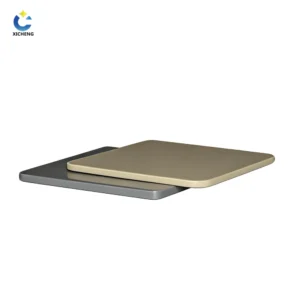
A corrugated polypropylene sheet is a lightweight panel made from two flat polypropylene facing layers separated by a corrugated or fluted inner core. The hollow structure gives the sheet a high stiffness at a fraction of the weight of a solid polypropylene sheet, and it is the standard material for signage, reusable packaging, and temporary protection. The construction is the defining feature: the fluted channels run the length of the sheet and give it the strength of a panel many times its weight.
Fluted vs Corrugated Terminology
The fluted polypropylene sheet and the corrugated polypropylene sheet are the same product, and the two names are used interchangeably across the industry and the regions. Fluted is the more common term in signage and display, where the running channels are called flutes; corrugated is the more common term in packaging and general use. The polypropylene corrugated sheet is sometimes also called corrugated plastic, coroplast, or twin-wall sheet, and all of these names describe the same ribbed polypropylene construction. The terminology matters for the search, not for the material, and a buyer can use either name to specify the same pp corrugated sheet.
Construction and Structure
The sheet is built from three elements: two facing layers and the corrugated core between them. The facing layers are flat polypropylene films, and the core is a corrugated profile that bonds to both facings, forming the hollow channels. The flute direction runs along the sheet length, and it sets the bending strength: the sheet is stiff along the flute direction and flexible across it. The construction is extruded in one continuous process, and the resulting panel weighs a fraction of a solid sheet of the same thickness. A 4 mm corrugated sheet weighs roughly 1.2-1.5 kg per square meter, compared with 3.6 kg for a 4 mm solid sheet.
Corrugated PP vs Solid PP Sheet
The corrugated sheet and the solid sheet serve different duties. The solid polypropylene sheet, covered in the polypropylene sheet guide, carries the full chemical resistance, the weldability, and the temperature duty, and it is used for tanks, ductwork, and structural fabrication. The corrugated sheet trades that full duty for a much lower weight and a higher stiffness-to-weight ratio, and it is used where the panel must be light, stiff, and easy to cut, such as a sign board or a reusable box. The selection between them is set by the load and the duty, and the corrugated sheet is the lightweight choice in the family.
The flute profile and the facing thickness vary with the grade, and the construction sets the sheet’s limits as well as its strengths. The hollow core makes the sheet unsuitable for a tank, a duct, or any pressure or chemical-holding duty, because the facings are thin and the flutes are open to the edge. The corrugated sheet is a panel product for a dry, light load, and the same polypropylene in the solid grade carries the chemical and the structural duty. The buyer who selects the corrugated sheet for a chemical tank is using the wrong member of the family, and the distinction between the panel duty and the structural duty is the first check in the specification.
The corrugated polypropylene sheet entered the market as a durable replacement for corrugated cardboard in signage and reusable packaging, and its adoption grew with the print technology that made it economical to print directly on the panel. The sheet now dominates the political and real-estate sign market, the reusable tote market, and the temporary floor protection market, and the volume drives the standard sizes and the low price. The sheet is sold through the sign supply houses and the plastic distributors, and the manufacturer supplies the sheet and the grade control that the volume applications need. The market is mature, and the selection is a specification exercise against the well-established sizes and grades.
Properties of Corrugated Polypropylene Sheet
The corrugated polypropylene sheet properties are the reason it dominates signage and reusable packaging, and the three that set the selection are the stiffness-to-weight ratio, the water resistance, and the printability.
Stiffness-to-Weight Ratio
The hollow flute construction gives the sheet a stiffness that a solid sheet of the same weight cannot match. The sheet resists bending along the flute direction at a weight of roughly 1.2-1.5 kg per square meter at 4 mm thickness, and the stiffness allows a sign panel or a box wall to span its width without a frame. The trade-off is the lower impact and point-load resistance compared with a solid sheet, because the hollow core crushes under a concentrated load. The polypropylene corrugated sheet is selected where the panel carries a distributed load over a span, and the solid sheet is selected where the part takes a point load or a chemical duty.
Waterproof and Weather Resistance
The corrugated sheet is waterproof, because the polypropylene does not absorb water and the flute core does not wick moisture. The sheet resists rain, humidity, and washdown, which is the property that separates it from corrugated cardboard. A corrugated cardboard sign or box softens and fails in moisture; a corrugated polypropylene sheet carries on through the rain and is reusable. The weather resistance is limited by the UV, because standard polypropylene degrades in prolonged sunlight, and a UV-stabilized grade is specified for outdoor signage with a long service life. The material properties follow the polypropylene base, documented in the Engineering Toolbox PP properties and the ASTM D4101 standard.
Printability and Surface
The corrugated sheet accepts screen printing, UV inkjet, and digital print, which makes it the standard material for printed signs and displays. The surface accepts the ink directly or after a corona treatment that improves the adhesion, and the print holds on the smooth facing layer. The sheet is also easy to cut and fold, which completes the fabrication advantage. The printability, the light weight, and the water resistance together make the corrugated polypropylene sheet the default sign material, and the comparison below shows where it sits against the alternatives.
| Property | Corrugated PP | Solid PP | Corrugated cardboard |
|---|---|---|---|
| Weight (4mm, kg/m2) | 1.2-1.5 | 3.6 | 0.4-0.7 |
| Waterproof | Yes | Yes | No |
| Reusable | Yes | Yes | Limited |
| Chemical resistance | Good | Excellent | Poor |
| Printability | Excellent | Good | Good |
| Outdoor UV life | Fair (needs UV grade) | Fair (needs UV grade) | Poor |
| Relative cost index | 1.0 | 1.4 | 0.3 |
The table shows the corrugated polypropylene sheet as the waterproof, reusable midpoint between the solid sheet and the cardboard, and the selection is set by the service life and the moisture exposure.
The sheet also offers a predictable handling benefit. The light weight reduces the shipping cost and the installation labor, because a panel that one person can carry and cut needs no lifting equipment and no special tooling. The sheet is supplied flat and stores flat, which reduces the warehouse space compared with a rigid panel, and the panels nest for transport. The handling advantage is part of the total cost, because the labor and the freight savings are real line items on the project. The corrugated polypropylene sheet is selected for the signage and packaging shops where the handling, the cutting, and the folding are done by hand, and the low weight is the property that makes the manual fabrication practical.
Sizes and Specifications
The corrugated polypropylene sheet is available in standard sizes, a range of thicknesses, and multiple colors, and the specification matches the panel to the application.
Standard Sizes
The standard size is the 4×8 foot sheet, 1220 by 2440 mm, which is the default for signage and fabrication and the size most corrugated plastic sheet 4×8 buyers specify. The sheet is also supplied in 4×6, 4×10, and other cut sizes, and the polypropylene sheets 4×8 guide covers the size selection. A sign or a box design that fits the 4×8 sheet wastes less material, and the sheet is cut to the panel size at the fabricator. The standard sheet is the economical unit, and a project that needs many identical panels is planned against the 4×8 layout.
Thickness and Flute Profile
The common thicknesses are 2, 3, 4, 5, 6, and 10 mm, with 3 and 4 mm the standard for signage and 5-10 mm for heavier panels and reusable boxes. The flute profile sets the bending strength, and the flute direction runs along the sheet length. The pp corrugated sheet thickness is selected by the span and the load: a display sign uses 3-4 mm, a floor protection panel uses 5-6 mm, and a reusable shipping box uses 6-10 mm. The flute direction is specified so the panel bends across the flutes where the flexibility is needed, and the thickness and the flute orientation are the two structural inputs.
Colors and Surface
The sheet is available in white, black, and a range of standard colors, with white the default for printed signs and black the default for UV-stabilized outdoor service. The surface can be smooth on both sides, or one side coated for a specific print or a matte finish. The color and the surface are specified for the print method and the use, and a sign printed in white is ordered in white while a protective panel is ordered in black. The surface treatment for the ink adhesion is applied at the printer, and the sheet color is the base that the print sits on.
The sheet tolerance and the flute consistency are the quality inputs for a printed or a fabricated panel. A print that runs across a sheet with a variable flute depth shows the variation in the ink coverage, and a box that folds along a flute that is out of line does not square up. The fabricator checks the sheet for a straight flute, a consistent thickness, and a flat panel on receipt, because the print and the fold both depend on the sheet quality. The corrugated polypropylene sheet from a manufacturer is extruded to a tight tolerance, and the specification should state the thickness and the flute tolerance where the panel is printed or folded to a precise dimension.
The sheet is also available with a special surface for the specific print or the specific use. A corona-treated surface improves the ink adhesion for a water-based print, and a smooth white surface is specified for the laminated graphic. A matte surface reduces the glare on a display, and a textured surface provides the grip on a floor protection panel. The surface options are the finishing details that set the sheet for the application, and the supplier confirms the surface treatment when the print method is known. The corrugated polypropylene sheet specification should state the surface, the color, and the thickness together, because the three set the final appearance and the performance of the panel.
Cutting and Fabricating Corrugated PP Sheet
The corrugated polypropylene sheet is one of the easiest plastics to fabricate, and the cutting and folding methods are the reason it suits signage and packaging shops.
Cutting Methods
The sheet cuts cleanly with a sharp utility knife, because the hollow flute core offers little resistance. A fabricator scores the facing layer and the core with a knife, snaps the sheet along the score, and produces a clean edge without a saw. A guillotine cutter or a table saw with a fine blade cuts the sheet to a straight edge at volume, and a CNC router or a laser cuts the panel to a shaped outline. The knife scoring is the fastest method for a straight cut, the router handles the curved and shaped panels, and the laser produces the cleanest edge for a fine detail. The cutting does not require the heat control that a solid plastic needs, because the thin facing and the hollow core cut without melting or binding.
Folding and Joining
The flute core lets the sheet fold along a line scored on one face, which creates a living hinge for a box or a stand. A box is made by scoring the fold lines, folding the panels, and joining the edges with a plastic hinge, an adhesive, or a mechanical fastener. The sheet does not weld as readily as a solid sheet, because the hollow core leaves little material at the edge, so the joining uses a hinge, a rivet, a screw, or a self-adhesive. The fabrication is the opposite of the solid-sheet welding: the corrugated sheet is folded and fastened instead of welded, and the fastening method is specified for the load the panel carries. A display stand is folded and fastened, and a reusable box is folded with a hinge that allows the box to collapse flat.
The cutting method is matched to the volume and the edge quality. A knife score is the fastest and cheapest method for a straight cut on a single panel, and a guillotine handles the straight cuts on a stack of panels at volume. A table saw with a fine-tooth blade cuts a clean edge on a thicker panel, and a CNC router cuts the shaped and curved panels that a knife cannot produce. A laser cuts the finest detail and the cleanest edge, but it requires the fume extraction and the sheet color suited to the laser. The corrugated polypropylene sheet is the rare plastic that a small shop can fabricate with a knife and a straightedge, and the low barrier to fabrication is one of the reasons it dominates the sign industry.
The edge treatment completes the fabrication. A raw cut edge exposes the open flute core, which collects dirt and moisture on a long-service panel, and an edge cap or a heat-sealed edge closes the flute. A sign frame covers the raw edge, and a box uses a folded hem or an edge profile to close the open channel. The edge treatment is specified for the service, because an open flute on an outdoor sign collects water and dirt, and a closed edge keeps the panel clean. The corrugated polypropylene sheet fabrication includes the edge as part of the design, and the fabricator specifies the edge treatment with the cutting and the folding.
Applications of Corrugated Polypropylene Sheet
The corrugated polypropylene sheet applications span signage, packaging, and temporary protection, and the polypropylene sheet uses guide covers the full range.
Signage and Display
The largest use is signage and display, where the sheet’s printability, light weight, and water resistance make it the standard material. A fluted polypropylene for signs panel is printed, cut, and framed into a real-estate sign, an election sign, a construction sign, or a point-of-purchase display, and the sheet carries the print through rain and reuses across campaigns. The sheet replaces the corrugated cardboard that softens in moisture, and the print holds on the smooth facing. The signage application drives the white color and the 3-4 mm thickness that dominate the market.
Packaging and Protection
The sheet serves reusable packaging and temporary protection. A reusable box or tote is folded from the sheet, carries a load, and collapses flat for return, and the water resistance lets the box serve outdoors and in washdown areas where cardboard fails. The sheet protects floors, walls, and surfaces during construction and renovation, and the temporary floor protection panel is laid over a finished floor and removed when the work is done. The packaging and protection applications use the 4-10 mm thicknesses, and the black grade is common for the protective panels.
Industrial and Temporary Use
The industrial and temporary uses apply the sheet where a light, waterproof panel is needed. A greenhouse uses the sheet for the cladding and the dividers, and a cleanroom or a warehouse uses it for the partitions and the totes. The sheet serves a campaign sign, a one-off protective cover, or a reusable bin, and the short-to-medium service life is the fit. The corrugated polypropylene sheet is selected where the panel must be light, waterproof, printable, and affordable, and the application list is the guide to the fit.
The sheet also serves the agricultural and the logistics sectors. A greenhouse uses the translucent sheet for the cladding where a light, waterproof panel is needed, and a farm uses it for the poultry and the crop covers. A logistics operation uses the reusable tote and the divider panels that the corrugated sheet provides, and the barcode and the label print directly on the panel. The sheet replaces the single-use cardboard in the returnable packaging loops, and the washability lets the tote be cleaned between the trips. The corrugated polypropylene sheet is the reusable packaging material, and the applications that need a panel that survives the repeated use are the natural fit.
Selecting Corrugated Polypropylene Sheet
The corrugated polypropylene sheet selection converges on the thickness, the flute direction, the UV grade, and the size, and the four inputs are checked before the order.
Selection Checklist
The first input is the thickness, set by the span and the load. A display sign uses 3-4 mm, a protective panel uses 5-6 mm, and a reusable box uses 6-10 mm. The second input is the flute direction, set by the bending requirement: the panel is stiff along the flutes and flexible across them, so the flute direction is specified so the panel bends where the design wants the flexibility. The third input is the UV grade, set by the outdoor service: a sign with a long outdoor life uses a UV-stabilized black or treated grade, and an indoor display uses the standard grade. The fourth input is the size, set by the fabrication layout against the 4×8 standard sheet. A sheet selected against these four inputs fits the application, and a sheet ordered by price alone does not.
Supplier and Cost
The cost is set by the thickness, the size, the color, and the quantity. The corrugated sheet is priced per square meter, and the 3-4 mm signage sheet is the low-cost standard while the 10 mm industrial sheet costs more. The black UV grade adds a small premium, and the quantity discount applies to a full pallet or a sheet order. The supplier choice is between a distributor stocking standard sheets and a manufacturer supplying the grade and the fabrication support, and the corrugated polypropylene sheet is ordered from the source that matches the quantity and the lead time. The cost comparison includes the fabrication, because a sheet that cuts and folds easily lowers the total project cost.
For a specific panel, browse the PP sheet product range or contact our engineering team with the size, the thickness, and the application, and receive a corrugated polypropylene sheet matched to the duty.
The selection also checks the print and the fastening compatibility. A sign that carries a digital print needs a sheet with a surface that accepts the ink, and a panel that carries a laminated graphic needs a smooth facing. A box that carries a rivet or a screw needs a flute and a thickness that hold the fastener, and a panel that carries a hinge needs the flute direction that aligns with the fold. The compatibility between the sheet and the finishing is the last check, and a sheet selected without it produces a part that prints poorly or fastens weakly. The corrugated polypropylene sheet is specified with the finishing method in the design, and the supplier confirms the surface and the flute for the intended use.
The order quantity and the lead time close the purchase. A corrugated polypropylene sheet is ordered in a sheet quantity or a roll quantity, and the price per square meter falls with the volume and the pallet quantity. The lead time for a standard sheet from a distributor is short, and the lead time for a custom size, a custom color, or a treated surface from a manufacturer is longer. A project with a fixed launch date orders the sheet early enough for the fabrication, and a campaign sign run orders the sheet with the print. The quantity and the schedule are the last inputs, and a corrugated polypropylene sheet purchase that fits the volume and the deadline completes the selection.
FAQ
What is corrugated polypropylene sheet?
A corrugated polypropylene sheet is a lightweight panel made from two polypropylene facing layers separated by a fluted inner core. The hollow structure gives it a high stiffness at a low weight, and it is used for signage, packaging, and temporary protection.
What is the difference between fluted and corrugated polypropylene?
Fluted polypropylene and corrugated polypropylene are the same product. Fluted is the common term in signage and display, where the running channels are called flutes; corrugated is the common term in packaging and general use. The material and the construction are identical.
Is corrugated plastic waterproof?
Yes. A corrugated plastic sheet is waterproof because the polypropylene does not absorb water and the fluted core does not wick moisture. It carries on through rain and washdown where corrugated cardboard fails, which is the property that separates it from cardboard.
What is corrugated polypropylene sheet used for?
It is used for printed signage and displays, reusable packaging and boxes, temporary floor and surface protection, and greenhouse and partition panels. The printability, light weight, and water resistance set these applications.
How do you cut corrugated plastic?
A corrugated polypropylene sheet cuts cleanly with a sharp utility knife: score the facing and the core, snap the sheet along the score, and produce a clean edge. A guillotine, a table saw, a CNC router, or a laser cuts the sheet at volume or to a shaped outline.
What thickness corrugated polypropylene sheet do I need?
A display sign uses 3-4 mm, a protective panel uses 5-6 mm, and a reusable shipping box uses 6-10 mm. The thickness is set by the span and the load, and the flute direction is specified so the panel bends where the design wants the flexibility.
Is corrugated polypropylene UV resistant?
Standard corrugated polypropylene degrades in prolonged sunlight. A UV-stabilized black or treated grade is used for outdoor signs with a long service life, and the standard grade is used for indoor display and short-term outdoor use.
Can you laser cut corrugated polypropylene?
Yes. A laser cuts corrugated polypropylene with a clean edge and a fine detail, which suits a shaped sign or a panel with a cut-out. The laser requires a fume extraction and a sheet color suited to the laser, and the edge may need a light cleanup. A knife or a router is the faster method for a straight or a bulk cut.