A high density polypropylene sheet is the stiffer, higher-crystallinity grade of polypropylene sheet, selected where the panel must hold its shape under load and resist a higher temperature than the standard grade. The term causes a persistent confusion in the market: high density polypropylene is not the same as HDPE, high density polyethylene, and a buyer who treats the two as interchangeable orders the wrong material. This guide resolves the terminology, covers the density and the property values, compares the high density polypropylene grade with the standard grade and with HDPE, and explains the applications and the selection. It is part of the PP sheet guide series, and it builds on the polypropylene sheet properties covered in the cluster pillar.
Key Takeaways
- A high density polypropylene sheet is the homopolymer grade with a density of 0.90-0.92 g/cm3, higher stiffness, and a higher melting point than the standard copolymer grade. It is not the same as HDPE, which is high density polyethylene at 0.95-0.97 g/cm3.
- The homopolymer grade is stiffer by roughly 10-15% and runs at a continuous service limit near 90-100 degC, a small step above the copolymer, but it is more brittle under impact and at low temperature.
- The high density grade is selected where the deflection and the temperature lead the design: a large unsupported span, a machine guard, a tank wall, or a warm duct. The standard copolymer grade is selected where impact and cold service dominate.
- PP and HDPE are both polyolefins but different polymers: polypropylene has a higher melting point (160-170 degC vs 125-135 degC) and a lower density, and polypropylene welds more easily. The comparison table gives the numbers.
- Specify the grade, not just the name: confirm the homopolymer density and the property data with the supplier, because a distributor may stock the standard copolymer and label it polypropylene without stating the grade.
What Is High Density Polypropylene Sheet?
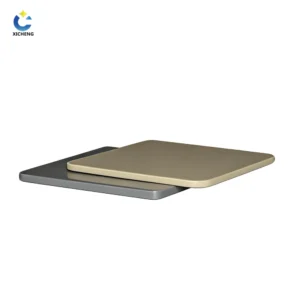
A high density polypropylene sheet is a polypropylene sheet made from the homopolymer grade, which has a higher crystallinity, a higher density, and a higher stiffness than the standard copolymer grade. The sheet is selected where the panel must hold its shape under a load and resist a higher temperature, and it is the stiffer member of the polypropylene sheet family covered in the polypropylene sheet guide.
The Terminology Clarification
The most important fact about the high density polypropylene term is that it does not mean HDPE. HDPE is high density polyethylene, a different polymer entirely, with a density of 0.95-0.97 g/cm3 and a lower melting point. High density polypropylene is the homopolymer grade of polypropylene, with a density of 0.90-0.92 g/cm3. The two are confused because the names sound similar and both are dense versions of a plastic, but the polymer chemistry, the properties, and the applications are different. A buyer who orders an HDPE sheet when the specification calls for high density polypropylene receives a material with a different melting point, a different stiffness, and a different weld behavior.
Homopolymer vs Copolymer
The high density grade is the homopolymer, made from propylene monomer alone, and it is contrasted with the copolymer, which adds a small amount of ethylene comonomer. The homopolymer crystallizes more completely, which gives it the higher density, the higher stiffness, and the higher melting point, but it is more brittle at low temperature and under impact. The copolymer is tougher and absorbs more impact at low temperature, but it is less stiff and has a slightly lower density. The selection between the two is the standard polypropylene choice: the homopolymer for stiffness and temperature, the copolymer for impact and cold service. A high density polypropylene sheet is the homopolymer, and a standard polypropylene sheet material in the copolymer grade is the tougher alternative.
High Density vs Standard Polypropylene Sheet
Within the polypropylene sheet range, the high density grade is specified where the stiffness and the temperature carry the design. A panel that must not sag under its own weight or a service temperature near the upper limit uses the high density grade, and a panel that takes an impact or serves a cold environment uses the standard copolymer grade. The difference in the density and the stiffness is a few percent, but it is enough to shift the sag and the deflection in a large span, and it is the reason the grade is specified for the structural fabrication instead of the general panel duty.
The high density grade is also the grade that a fabricator specifies for a precision dimension. A panel that must hold a tolerance, a flange that must stay flat, or a cover that must seal against a tank rim uses the stiffer grade, because the homopolymer resists the warpage and the sag that a softer copolymer allows. The dimensional stability is the hidden benefit of the higher stiffness, and it matters for a fabrication where the panel must fit a mating part. The high density polypropylene sheet is specified for the fit as well as the span, and the stiffness is the property that holds the dimension.
The high density grade is widely available because it is the standard resin for the extruded sheet and the injection-molded parts across the industry. The homopolymer polypropylene is the higher-volume resin grade, and the sheet is stocked by the distributors in the standard sizes and thicknesses. The availability means the high density sheet carries no premium over the standard grade, and the selection is a performance decision instead of a cost decision. A project that specifies the high density grade for the stiffness and the temperature receives the material at the standard price, and the structural benefit is gained at no cost penalty.
Polypropylene Sheet Density
The pp sheet density is the property that gives the high density grade its name, and it sets the weight, the stiffness, and the material selection.
The Density Value
The density of a polypropylene sheet depends on the grade. A homopolymer polypropylene sheet, the high density grade, has a density of 0.90-0.92 g/cm3. A copolymer sheet, the standard grade, has a density of 0.89-0.91 g/cm3. The polypropylene sheet density g/cm3 value is one of the first numbers on the material data sheet, and it is documented in the Engineering Toolbox PP properties reference and the polypropylene sheet properties guide. The difference between the homopolymer and the copolymer density is small, but it tracks the difference in the crystallinity and the stiffness.
Why Density Matters
The density sets the sheet weight, and the weight sets the handling, the shipping, and the structural load. A polypropylene sheet at 0.91 g/cm3 weighs 0.91 kg per square meter per millimeter of thickness, and a high density sheet at 0.92 g/cm3 weighs 0.92 kg per square meter per millimeter. The density also tracks the stiffness: the higher-crystallinity homopolymer is stiffer, so the same thickness of the high density grade deflects less under a load. The density is the single number that connects the material chemistry to the panel performance, and a specifier who compares the density of a polypropylene sheet with the density of an alternative plastic makes the first cut of the selection.
The density also distinguishes the material family. The high density polypropylene sheet at 0.90-0.92 g/cm3 is lighter than an HDPE sheet at 0.95-0.97 g/cm3 and far lighter than a PVC sheet at 1.4 g/cm3. The low density is the polypropylene advantage: the same panel weighs less and costs less per square meter, and the density comparison is the starting point for the polypropylene vs HDPE vs PVC decision.
The density also sets the material’s position in the plastic family. Polypropylene at 0.91 g/cm3 is one of the lightest engineering plastics, lighter than HDPE, PVC, and acrylic, and the low density gives it a cost advantage per unit area and a handling advantage in the shop. A fabricator that lifts and moves the panels day after day values the weight saving, and a project that ships the fabricated panels values the freight saving. The density is the starting number in the material comparison, and the pp sheet density is checked against the density of the alternative plastic before any other property. The selection that starts with the density anchors the whole material decision.
The density also feeds the weight calculation that sets the structural and the shipping cost. A high density polypropylene sheet at 0.92 g/cm3 weighs 0.92 kg per square meter per millimeter, and a 6 mm sheet weighs 5.5 kg per square meter. A 4×8 foot sheet at 6 mm weighs about 16.4 kg, and the weight sets the handling, the support, and the freight. The weight calculation is the same 0.91-0.92 kg per square meter per millimeter that the cluster pillar covers, and the density value is the only input that differs between the grades. The structural design uses the weight for the support and the shipping quote uses it for the freight, and the density is the number that both calculations share.
Properties of the High Density Grade
The high density polypropylene sheet properties are the reason the homopolymer grade is specified for the structural fabrication, and the three that drive the selection are the stiffness, the temperature resistance, and the chemical resistance.
Stiffness and Strength
The homopolymer grade has the highest stiffness and tensile strength of the polypropylene grades, because the higher crystallinity packs the polymer chains more tightly. The sheet resists bending and holds its shape under a load better than the copolymer sheet of the same thickness, which makes it the choice for a large unsupported span, a machine guard, or a structural panel. The polypropylene sheet stiffness is specified by the flexural modulus, and the homopolymer value is roughly 10-15% higher than the copolymer value. The trade-off is the lower impact resistance: the stiffer homopolymer is more brittle under a sharp impact and at low temperature, so the selection balances the stiffness against the impact duty.
Temperature Resistance
The homopolymer grade has the higher melting point of the polypropylene grades, near 165-170 degC, and a continuous service limit near 90-100 degC, which is a small step above the copolymer. The higher crystallinity resists the softening that occurs near the service limit, so a panel that runs hot uses the high density grade. The temperature benefit is modest in absolute terms, but it matters at the edge of the service envelope, where a few degrees of margin separate a stable panel from a sagging one. The ASTM D4101 standard classifies the polypropylene materials by the property values, and the high temperature duty is the classic homopolymer application.
Chemical Resistance
The chemical resistance of the high density grade matches the polypropylene family: broad resistance to acids, alkalis, and organic solvents at ambient temperature, with the exceptions of the strong oxidizing acids and the aromatic and chlorinated hydrocarbons. The chemical resistance does not change with the grade, because it is a property of the polymer, not the crystallinity. A high density polypropylene sheet in a chemical tank or a duct carries the same chemical duty as the standard grade, and the selection of the high density grade for a chemical application is driven by the stiffness and the temperature, not by a chemical-resistance difference.
The property values are nominal and the data sheet confirms the grade. A homopolymer polypropylene sheet from one manufacturer can differ slightly from another in the density and the flexural modulus, and the data sheet from the supplier gives the actual values. The specifier should request the property data for the specific sheet, because a sheet ordered as high density without the data may be a borderline grade. The ASTM D4101 classification and the manufacturer data sheet together define the material, and the property values in this guide are the reference range for the selection. The high density polypropylene sheet is specified with the data sheet, and the property confirmation closes the gap between the catalogue and the delivered sheet.
The fabrication of the high density grade follows the polypropylene methods, and the stiffer grade holds a cleaner weld than a soft copolymer. The hot air welding and the extrusion welding that the fabricators use on the polypropylene sheet work the same on the homopolymer, and the higher stiffness keeps the panel flat in the jig while the weld cools. The machining is also cleaner, because the stiffer sheet cuts with less edge tear. The fabrication benefit is a practical consequence of the stiffness, and it is one of the reasons the structural fabricators specify the high density grade for a welded tank or a duct. The high density polypropylene sheet is a fabrication-grade material as well as a structural one.
High Density PP vs HDPE Sheet
The pp vs hdpe comparison is the most common confusion in the plastic sheet selection, and the table below resolves it with the numbers.
The Confusion Resolved
The confusion starts with the names: high density polypropylene and high density polyethylene both contain the words high density, but they are different polymers. Polypropylene and polyethylene are both polyolefins, but the polypropylene chain has a methyl side group that the polyethylene chain lacks, and that difference changes the melting point, the stiffness, and the weld behavior. An HDPE sheet is made from polyethylene, and a high density polypropylene sheet is made from polypropylene. The two cannot be substituted without checking the application, because an HDPE sheet in a hot polypropylene application softens and an HDPE sheet in a welded polypropylene fabrication welds differently.
The Comparison Table
| Property | Homopolymer PP | Copolymer PP | HDPE |
|---|---|---|---|
| Density (g/cm3) | 0.90-0.92 | 0.89-0.91 | 0.95-0.97 |
| Melting point (degC) | 160-170 | 155-165 | 125-135 |
| Max continuous temp (degC) | 90-100 | 80-90 | 60-70 |
| Stiffness (flexural modulus) | Highest | Medium | Lower |
| Low-temperature impact | Poor | Good | Excellent |
| Chemical resistance | Excellent | Excellent | Excellent |
| Weldability | Excellent | Excellent | Good |
| Relative cost index | 1.0 | 0.95 | 1.1 |
The table shows the high density polypropylene sheet as the stiffest and highest-temperature grade, the copolymer as the tougher mid-point, and the HDPE as the higher-density but lower-temperature material with the best low-temperature impact. The selection is made against the temperature, the stiffness, and the impact duty, and the high density polypropylene sheet is chosen where the temperature and the stiffness lead the design.
The comparison also extends to the fabrication. Polypropylene welds by the hot air and extrusion methods that the fabricators use, and the weld behavior of the homopolymer grade is the same as the copolymer. HDPE welds with the same equipment but at a different temperature, because the melting point is lower, and a weld designed for polypropylene run on an HDPE sheet softens the HDPE and produces a weak joint. The welding difference is a practical consequence of the polymer difference, and a fabricator that welds the sheet must know which polymer it is welding. The high density polypropylene sheet and the HDPE sheet are not interchangeable in a welded fabrication, and the polymer identification is the first check before the welding.
The confusion also reaches the purchase. A buyer searching for high density polypropylene sheet is often presented with HDPE sheet by the search results and the catalogues, and the two are not the same material. The purchase should state the polymer and the grade, not the density alone, because the density ranges overlap in the buyer’s perception. A high density polypropylene sheet order specifies polypropylene and the homopolymer grade, and an HDPE order specifies polyethylene. The specification that names the polymer removes the ambiguity, and the buyer who receives the wrong polymer because the order said density instead of polymer is the recurring error in the plastic sheet market.
Applications of High Density Polypropylene Sheet
The high density polypropylene sheet applications are the structural fabrications where the stiffness and the temperature carry the design, and the polypropylene sheet material family covers the general applications in the cluster.
Industrial Applications
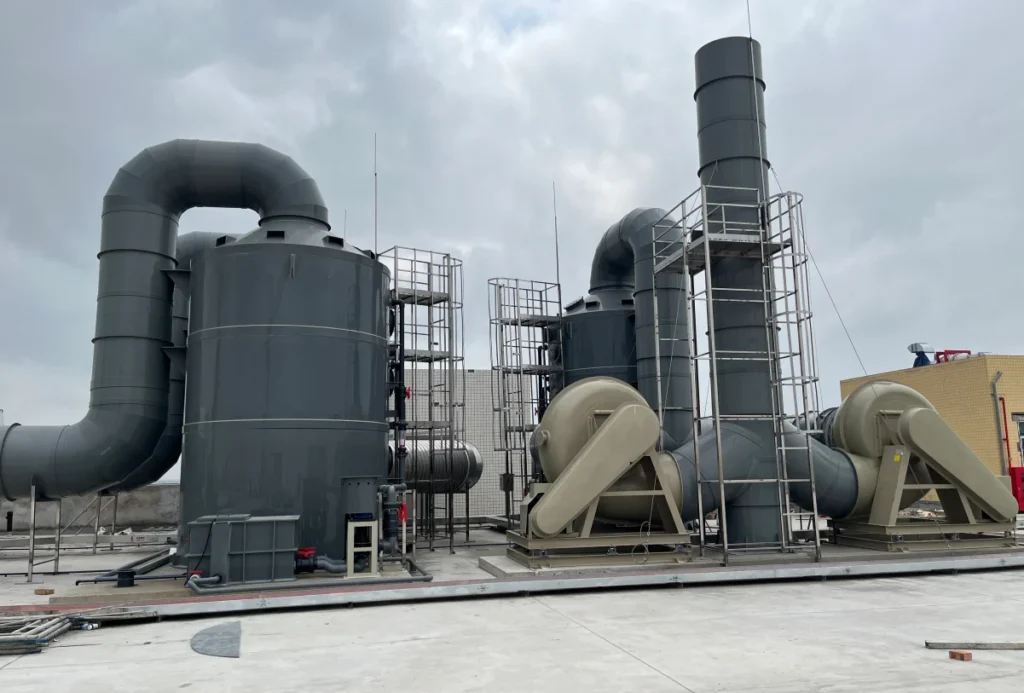
The high density grade serves the structural fabrication in the chemical and environmental industries. A machine guard that must hold its shape and resist the process heat uses the stiffer grade. A tank wall or a scrubber body that spans a large section uses the high density grade to limit the deflection. A duct that carries a warm corrosive fume uses the grade for the temperature margin. The Xicheng scrubbers, tanks, and ductwork are fabricated from the polypropylene sheet, and the high density grade is specified where the panel takes the structural or the temperature load. The industrial application is the fit for the stiffer grade, because the structural duty is exactly what the higher crystallinity provides.
Where the Stiffer Grade Is Selected
The high density grade is selected by the deflection and the temperature, not by a general preference. A panel that sags under its own weight, a span that deflects under a load, or a service that runs near the temperature limit is the fit. A panel that takes an impact, serves a cold environment, or carries a general dry load uses the standard copolymer grade, which is tougher and less expensive. The selection is a stiffness-versus-impact trade, and the high density grade is the choice where the stiffness and the temperature lead. A fabrication that is welded into a tank or a duct uses the high density grade for the span, and a fabrication that is folded or fastened into a panel uses the standard grade. The application sets the grade, and the high density polypropylene sheet is the structural member of the family.
The high density grade also serves the electrical and the mechanical protection. A cable tray or a bus bar cover uses the sheet for the insulation and the stiffness, and a machine enclosure uses it for the guard that resists the process heat. The sheet serves the water and the wastewater plant for the tank covers and the troughs, and the corrosion resistance that the family provides is the base. Each application specifies the high density grade where the panel spans, resists a temperature, or holds a dimension, and the standard grade where the impact or the cost leads. The application list is the guide to the fit, and the high density polypropylene sheet is the structural selection within it.
The cost of the high density grade is the same as the standard grade, because the homopolymer resin is the higher-volume and lower-cost polypropylene resin. The selection therefore costs nothing extra, and the stiffness and the temperature benefit are gained at the standard price. The cost comparison with HDPE is set by the density: the polypropylene sheet costs less per square meter at the same thickness because the lower density means less material, and the difference is the material volume, not the per-kilogram price. A high density polypropylene sheet project costs less than the same panel in HDPE, and the structural benefit is the deciding input instead of the price.
Selecting High Density Polypropylene Sheet
The high density polypropylene sheet selection converges on the stiffness, the temperature, the thickness, and the grade, and the four inputs are checked before the order.
Selection Checklist
The first input is the stiffness requirement, set by the span and the load. A panel that must not deflect uses the homopolymer high density grade, and a panel that must absorb an impact uses the tougher copolymer. The second input is the temperature, set by the service. A panel that runs above 80 degC uses the high density grade for the margin, and a cold service uses the copolymer for the low-temperature impact. The third input is the thickness, set by the structural load, because the thickness and the stiffness together resist the deflection. The fourth input is the grade confirmation, because the supplier must state whether the sheet is the homopolymer or the copolymer grade, and a sheet ordered as high density polypropylene must be confirmed as the homopolymer. A sheet selected against these four inputs fits the duty.
Supplier and Grade
The grade control is the buying decision. A distributor may stock a standard copolymer sheet and label it polypropylene without stating the grade, and a manufacturer supplies the homopolymer high density grade with the grade and the property data. The polypropylene sheet manufacturer guide covers the supplier evaluation, and the specification should state the density and the grade so the buyer and the supplier agree on the material. The cost of the high density grade is near the standard grade, and the selection is driven by the performance, not the price.
For a structural sheet, browse the PP sheet product range or contact our engineering team with the span, the load, and the temperature, and receive a high density polypropylene sheet matched to the duty.
The selection also checks the sheet finish and the edge quality. A high density polypropylene sheet with a smooth surface is specified for a fabrication where the chemical must not collect in surface defects, and a sheet with a consistent thickness is specified for a panel that fits a slot or a groove. The sheet tolerance and the flatness are checked on receipt, because a homopolymer sheet that is out of flat does not hold the dimension that the grade was chosen to provide. The quality inputs matter more for the high density grade, because the reason for choosing it is the precision and the stability, and a sheet that fails the tolerance defeats the selection. The specification states the finish, the tolerance, and the flatness alongside the grade.
FAQ
What is high density polypropylene sheet?
A high density polypropylene sheet is a polypropylene sheet made from the homopolymer grade, which has a higher crystallinity, a higher density of 0.90-0.92 g/cm3, and a higher stiffness than the standard copolymer grade. It is selected where the panel must hold its shape and resist a higher temperature.
Is high density polypropylene the same as HDPE?
No. High density polypropylene is the homopolymer grade of polypropylene. HDPE is high density polyethylene, a different polymer with a higher density of 0.95-0.97 g/cm3 and a lower melting point. The names are similar, but the chemistry, the properties, and the applications are different.
What is the density of polypropylene sheet?
The density of a polypropylene sheet is 0.89-0.92 g/cm3 depending on the grade. A homopolymer high density sheet is 0.90-0.92 g/cm3, and a copolymer standard sheet is 0.89-0.91 g/cm3. The density is the weight per square meter per millimeter of thickness.
What is the difference between homopolymer and copolymer polypropylene?
Homopolymer polypropylene is stiffer, has a higher melting point, and is more brittle at low temperature. Copolymer polypropylene is tougher and absorbs more impact at low temperature but is less stiff. The high density polypropylene sheet is the homopolymer, and the standard sheet is often the copolymer.
What is the difference between PP and HDPE sheet?
Polypropylene is stiffer and has a higher melting point (160-170 degC vs 125-135 degC) and a lower density (0.91 vs 0.96 g/cm3) than HDPE. HDPE has better low-temperature impact strength. Polypropylene welds more easily, and the two are chosen by the temperature, the impact, and the fabrication.
What is high density polypropylene used for?
It is used for the structural fabrications where stiffness and temperature carry the design: machine guards, tank walls, scrubber bodies, and duct that spans a large section or runs warm. The stiffer grade limits the deflection and adds the temperature margin.
How do I choose between high density polypropylene and standard polypropylene sheet?
Choose the high density homopolymer grade where the panel must not deflect under a load or the service runs above 80 degC. Choose the standard copolymer grade where the panel takes an impact or serves a cold environment. The stiffness-versus-impact trade sets the selection.
Can high density polypropylene sheet be welded?
Yes. A high density polypropylene sheet welds by the hot air and extrusion welding methods, and the weld retains most of the parent material strength. The homopolymer grade welds the same as the standard grade, and the welded fabrication is the standard use for the sheet.
Does high density polypropylene sheet have good chemical resistance?
Yes. The high density grade has the same broad chemical resistance as the polypropylene family, covering most acids, alkalis, and organic solvents at ambient temperature. The chemical resistance does not change with the grade, and the exceptions are the strong oxidizing acids and the aromatic and chlorinated hydrocarbons.