You order “polypropylene sheet” and the supplier asks roll or sheet, and the wrong answer wastes the budget. The overlooked variable is that the format follows the thickness: a thin polypropylene sheet under about 2 millimeters is supplied in a roll, and a rigid polypropylene sheet above that thickness is supplied as a flat panel or a large board. Buying thin material as panels wastes money, and ordering thick board on a roll is physically impossible.
This guide explains the two formats of polypropylene sheet material, their specifications and weights, and the applications each one serves. It covers the polypropylene sheet roll for thin, flexible service and the large polypropylene sheet for rigid fabrication, and it ends with a selection process for choosing the format. For the complete material range, start with the polypropylene sheet guide.
Key Takeaways
- The format follows the thickness. A polypropylene sheet under about 2 millimeters is supplied in rolls for thin, flexible service, and a sheet above that thickness is supplied as flat panels or large boards for rigid fabrication.
- A roll is priced by area and weighed by density. At 0.90 g/cm³, polypropylene weighs about 0.90 kg per square meter per millimeter, so a roll 1 meter wide and 200 meters long at 0.5 mm comes to about 90 kg.
- Rolls feed continuous processes. Thermoforming, liner application, and wide-format printing pull material off the roll, and the roll format provides the length a production run needs without a seam.
- Large sheets minimize welds. A tank wall or a duct run built from a 2000 by 6000 millimeter board carries fewer welded seams than one built from 4 by 8 panels, and fewer seams mean fewer potential leaks.
- Choose by load, volume, and process. The thickness sets the format, the volume sets roll versus box, and the process sets 4 by 8 panel versus large board, and planning the handling before the order prevents damage on arrival.
What Is a Polypropylene Sheet Roll?
A polypropylene sheet roll is a thin, flexible polypropylene sheet wound onto a core, and it is the economical format for material under about 2 millimeters thick. The thin sheet cannot stand alone as a rigid panel, so it is rolled for handling, transport, and feeding into converting machines, and a single roll carries hundreds of meters of material that a stack of panels could not hold. The roll format is the link between the extruder and the thermoformer, the printer, and the fabrication line.
Roll Format vs Cut Sheet vs Panel
The three supply formats cover different thickness ranges, and each is an economic decision, not a preference. A thin polypropylene sheet, from about 0.2 to 2 millimeters, is sold by the roll, because winding gives the length that converting processes need and keeps the freight cost per square meter low. A rigid polypropylene sheet from about 1 to 6 millimeters is sold as cut sheets, usually in standard 4 by 8 foot panels, and it is the format for boxes, guards, and small fabrications. A thick polypropylene sheet above about 6 millimeters is sold as large boards or custom panels, and it is the format for tanks, ductwork, and structural parts. A pp sheet roll is therefore the thin end of the range, and the boundary between roll and panel sits near 2 millimeters, where the sheet becomes too stiff to wind tightly.
How Thin PP Sheet Is Produced
The roll material is produced by thin-gauge extrusion: molten polypropylene is pulled through a die and over cooling rolls to a controlled thickness, then wound onto a core at the end of the line. The process holds the gauge across the web width and the roll length, which is what a thermoformer or a printer depends on, because a variation in thickness changes the wall of a formed part or the ink laydown of a print. The sheet surface can be clear, matte, or textured, and it is often corona treated to accept printing and adhesion, and the same extrusion family that makes rigid sheet, described in the how polypropylene sheet is made guide, runs at the thinner gauge for roll stock.
The roll format is also the cost advantage of thin polypropylene, because it carries more material per handling operation than any stack of sheets. A single roll holds the area of a dozen or more boxes of cut panels, so the freight cost per square meter falls, the storage footprint shrinks, and the material is loaded into the machine in one operation instead of one panel at a time. That is why a converter who uses thin polypropylene in volume buys it on a roll without a second thought: the unit cost of the material is the same, but the cost of handling it, shipping it, and feeding it is a fraction of the cut-sheet route.
Polypropylene Sheet Roll Specifications
A pp sheet roll is quoted on four numbers: thickness, width, length, and weight, and the weight is the one that freight and handling budgets are built on. The table below gives the typical range of a stock polypropylene sheet roll, and the calculation that produces the roll weight is simple enough to do on a quote before the supplier does. A roll is priced by the square meter and weighed by the kilogram, and both numbers come from the same four dimensions.
| Specification | Typical range |
|---|---|
| Thickness | 0.2–2 mm |
| Width | 0.9–2.0 m (36–80 in) |
| Length per roll | 25–1000 m |
| Density | 0.90 g/cm³ |
| Roll weight | width × length × thickness × 0.90 kg |
| Surface | Clear, matte, textured; corona treated for printing |
Thickness, Width, and Length
The thickness range of a polypropylene sheet roll runs from about 0.2 millimeter for a print or a light liner up to about 2 millimeters for a structural thermoformed part, and it is the first number on the spec because it sets the stiffness and the cost. The width is set by the extruder die and the converting line, and stock rolls run from about 0.9 to 2.0 meters, with slitting down to narrower widths for specific machines. The length is a function of the thickness and the core size, because a roll that must fit a 3 inch core and a standard rack can only carry so many meters of material, so the length and the weight are traded against each other on every roll.
Roll Weight and How to Calculate It
The weight of a polypropylene sheet roll is the area times the thickness times the density, and it is the number that controls freight, handling, and the machine that must carry the roll. Because polypropylene has a density of 0.90 g/cm³, the material weighs about 0.90 kg per square meter per millimeter of thickness, per the Engineering ToolBox polymer property tables. A roll one meter wide and 200 meters long at 0.5 millimeter thickness therefore weighs about 90 kilograms, and the calculation lets a buyer check a quotation before a truck is booked. The same density value converts any sheet size to its weight, so the formula travels from the roll to the panel and the large board.
Gauge and Formability
The gauge of a polypropylene sheet roll sets what the material can be formed into. A thin gauge, around 0.2 to 0.5 millimeter, is flexible enough to wrap, line, and print, and it is the basis of thermoforming packaging, banner media, and protective sheeting. A heavier gauge, from 1 to 2 millimeters, is stiff enough to hold a thermoformed shape, and it is used for trays, containers, and formed panels. Polypropylene has a relatively narrow forming window, so the material is heated and formed just below its softening temperature, and a roll with consistent gauge produces parts with consistent wall thickness. The forming behavior is why a polypropylene sheet roll is chosen over a rigid panel for volume conversion: the roll feeds a machine continuously, and the panel must be cut and handled piece by piece.
What Is a Large Polypropylene Sheet?
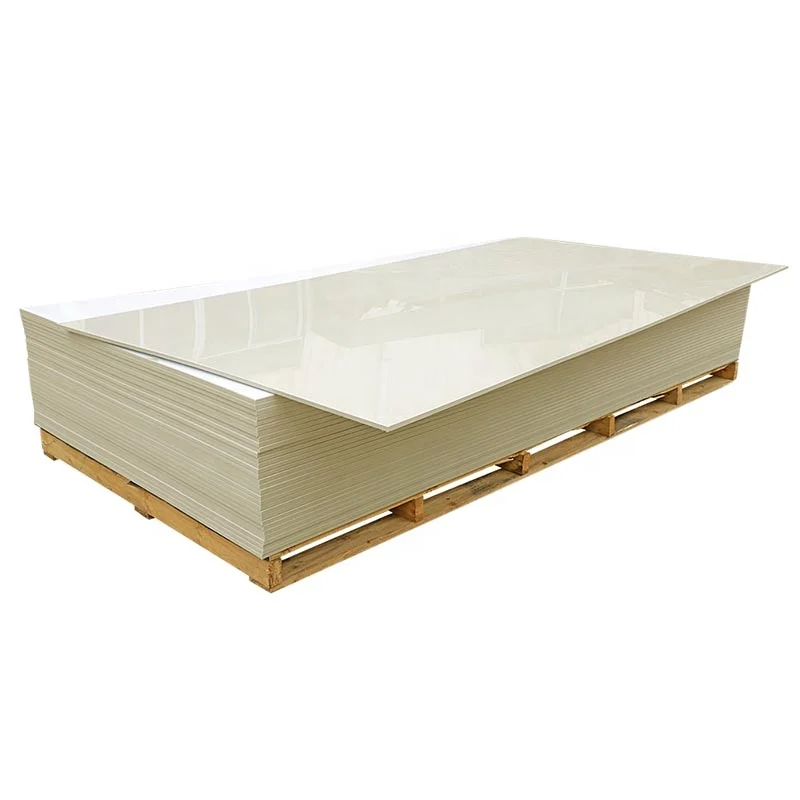
A large polypropylene sheet is a rigid polypropylene panel supplied in a large board format, and it is the material for fabricating tanks, ductwork, guards, and structural panels. The standard large format is a 4 by 8 foot board, about 1220 by 2440 millimeters, and industrial suppliers extend it further to panels up to 2000 by 6000 millimeters for welding into large equipment. The sheet is rigid at these thicknesses, from about 2 to 30 millimeters, and it is cut, welded, and machined like a structural material rather than wound and converted like a film.
The weight of a large polypropylene sheet is easy to estimate and essential to plan for. At 0.90 g/cm³, a 10 millimeter sheet weighs about 9 kg per square meter, so a 2000 by 6000 millimeter board at 10 millimeters comes to roughly 108 kg, and a 20 millimeter board of the same size to more than 200 kg. Those numbers decide the handling: a board near 100 kg needs two people with clamps or a lift, and a board above 200 kg needs a crane and a rack. The density that makes polypropylene light compared with steel still produces a heavy board at industrial thickness, so the weight is part of the order planning, not an afterthought.
Large Panel Formats (4×8 to 2000×6000)
Large polypropylene sheet is supplied in a hierarchy of formats that match the fabrication. The 4 by 8 foot panel is the standard building block, and it is the size that small fabricators and maintenance shops stock, because it fits on standard cutting tables and welds into moderate equipment. Larger panels, up to 2000 by 6000 millimeters, minimize the welds in a big tank or a long duct run, because a single board covers a wall or a run that a 4 by 8 panel would join with an extra seam. The trade is handling: a 2000 by 6000 millimeter board is a large, heavy sheet that needs a crane or a rack, so the format is chosen by the size of the part and the reach of the shop. The 4 by 8 sizing, its variants, and the weight per panel are covered in the polypropylene sheets 4×8 guide.
Large Sheets vs Rolls: The Thickness Divide
The divide between a roll and a large sheet is a thickness line, and it sits near 2 millimeters. Below that line, polypropylene is a thin, flexible sheet that must be wound to handle economically, and it is used for liners, thermoforming, and printing. Above it, the sheet is rigid enough to stand as a panel, and it is cut and welded rather than wound, because the bend radius of a 10 millimeter board is far too tight for a roll core. The thickness choice drives the format, and the thickness requirement is set by the load, not the other way around, so the selection starts with the thickness guide for the application. The PP sheet thickness guide gives the load-based thickness for each duty, and the format then follows the number.
Applications of PP Sheet Rolls
A polypropylene sheet roll serves the converting industries, where the material is fed continuously from the roll into a machine that forms, prints, or cuts it. The applications fall into three groups, and each one uses the roll format because the process is continuous: a thermoformer pulls film off the roll into a mold, a packaging line lays a liner from a roll across a surface, and a printer feeds roll media through a wide-format press. The roll is the unit that keeps these lines running.
Thermoforming and Packaging
Thermoforming is the largest consumer of polypropylene sheet rolls, because the process is continuous and the material is fed from the roll into the forming station. The sheet is heated and drawn over a mold to form trays, containers, clamshells, and industrial packaging, and polypropylene is chosen for the parts because it is food-safe, chemical-resistant, and cheap per part. The roll format matters because a thermoformer runs hundreds of parts an hour, and a roll feeds the machine without the stop-start of loading individual panels. The gauge of the roll sets the wall thickness of the formed part, and a consistent gauge produces a part with consistent strength and a predictable cost.
Protective Sheeting and Liners
Thin polypropylene sheet from a roll protects surfaces and lines equipment. The sheet is laid as a temporary floor or surface protector, wound as an interleaving layer between stacked products, and used as a liner that isolates a material from a container. Polypropylene is chosen because it does not absorb moisture, it resists chemicals, and it is cheap enough to use as a single-layer barrier. The roll format gives the length to cover a floor, a table, or a production run without a seam, and the material is peeled off and discarded or recycled when the job is done.
The liner duty also shows why polypropylene is specified over other thin films. A polyethylene liner is cheaper but softer and reads differently on a hot or chemical surface; a PVC liner is stiffer but carries plasticizer concerns; and polypropylene sits between them with a higher softening temperature and a cleaner chemical profile. For a liner that must survive a warm process stream or contact with oil and dilute chemicals, the polypropylene roll holds up where a general-purpose film degrades. The choice of gauge is the liner specification: a thin 0.2 millimeter sheet is a light barrier, and a 1 millimeter sheet becomes a handling pad that survives repeated placement.
Crafts, Display, and Banner Media
The flexible grade of polypropylene sheet roll is a printing and display substrate. Wide-format banner media in the thin gauges prints with UV and solvent inks and hangs or mounts as signage, and the material is dimensionally stable where a vinyl banner would stretch. The same roll feeds crafts, stencils, and display fabrication, where the sheet is cut, folded, and shaped by hand or by a CNC cutter. The corona-treated surface carries the print, and the low weight of the thin sheet makes a large banner easy to hang. When the display job is over, the material prints again or recycles with other polypropylene.
Applications of Large PP Sheets
A large polypropylene sheet is the building block of chemical and industrial fabrication, where the material is welded into equipment that contains chemicals and air. The large format exists to minimize the number of welded seams, because each seam is a potential leak, and a 2000 by 6000 millimeter board covers a tank wall or a duct run that would need several smaller panels. The applications below are where the large sheet format earns its freight and its handling cost.
Tank, Duct, and Equipment Fabrication
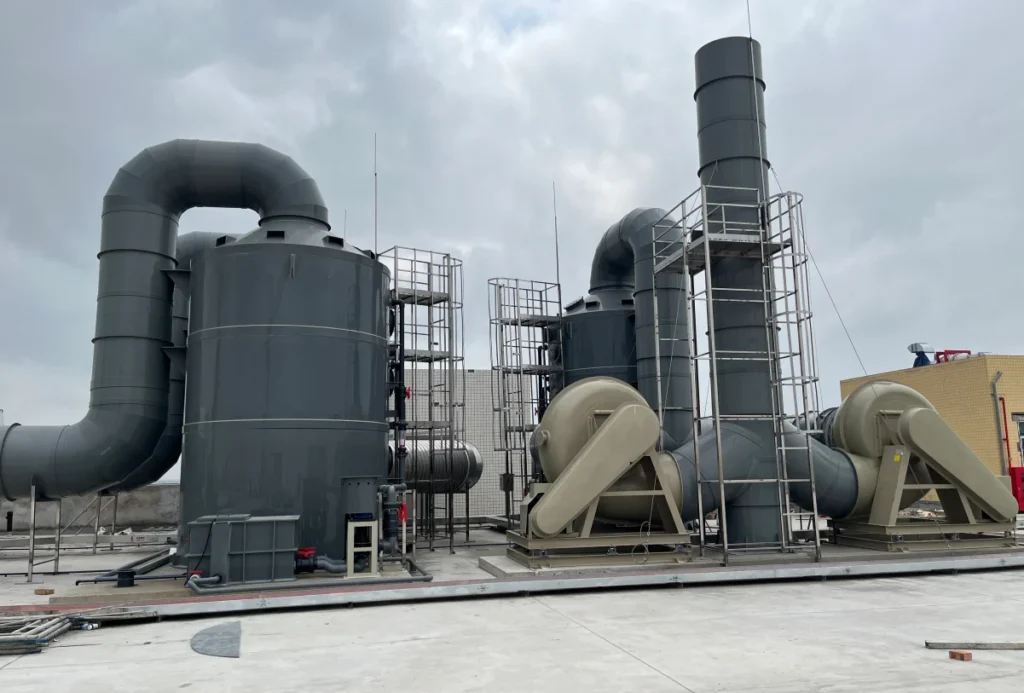
The core application of large polypropylene sheet is welding it into chemical-resistant equipment. Storage tanks, wet scrubbers, fume hoods, and ventilation ductwork are built by cutting the large boards to size and joining them with hot-air and extrusion welds, and the large format keeps the seam count low and the welds long and straight. A tank wall fabricated from a single 2000 by 6000 millimeter sheet has fewer joints than one built from 4 by 8 panels, and fewer joints means fewer places for a chemical leak to start. The thickness of the large sheet is set by the hydrostatic or pressure load, and the fabrication shop welds the same material it bought, so the sheet is specified with the weldability and the chemical duty in mind, with the resistance profile checked against the Engineering ToolBox polypropylene chemical resistance tables for the specific process chemicals.
Large Panels, Guards, and Flooring
Large polypropylene sheets also build the flat, rigid panels that protect and cover. Machine guards, wall liners, tank covers, and heavy flooring panels are cut from the large board, and the low weight of polypropylene makes a large panel manageable where a steel panel of the same size would need a crane. The material’s impact resistance and chemical resistance suit it to shop and plant surfaces that see splash and impact, and the large format delivers a joint-free panel for a wall, a floor, or a divider. For a cleanroom or a wet area, the sheet welds and seals at the joints, creating a watertight surface that a bolted panel cannot match.
Cutting Large Sheets to Size
Large sheets are cut to the fabrication drawing with the same tools as smaller panels, and the cutting plan matters more because the sheet is worth more. A sheet is laid out to nest the required parts with the least scrap, then cut with a saw or a CNC router, with the flute-free solid material cutting cleanly at any angle. Cutting on the large board before welding keeps the tolerance on the final assembly, and a CNC table with a vacuum hold-down handles the 2000 by 6000 millimeter footprint without flex. The offcuts are not waste: they are reclaimed as smaller parts or recycled as polypropylene regrind, which keeps the large-format economics tight.
How to Choose: Roll or Large Sheet
Choosing between a polypropylene sheet roll and a large sheet is decided by the thickness, the volume, and the process, in that order. The thickness is set by the load the material must carry, the volume by how much material the job consumes, and the process by whether the material feeds a machine or a weld table. Answer those three and the format chooses itself, and the wrong format is usually a thickness error rather than a supply error.
Match the Format to the Job
Start with the load, then the volume, then the process. If the part is a thin, flexible liner, a formed package, or a printed banner, the thickness is under 2 millimeters and the job is a roll: the material feeds continuously and the length comes off the roll. If the part is a rigid panel, a tank wall, or a structural component, the thickness is above 2 millimeters and the job is a sheet or a large board, cut and welded on the shop floor. Volume decides whether the thin material is worth a roll or a box of cut sheets, and process decides whether the thick material is a 4 by 8 panel or a 2000 by 6000 board, because a long duct run or a tall tank wall favors the large board and the fewer welds it brings.
Weight, Handling, and Storage
The two formats handle differently, and the difference shows up in freight and storage. A roll is handled by its core and stored on a rack or a spindle, and a 90 kilogram roll needs a hoist or a roll stand, while a large 2000 by 6000 millimeter board is flat, stackable, and moved with a clamp or a crane. Rolls store upright on end and unroll on the machine, and boards store flat in a rack and must stay flat to avoid warp. The storage rule for both is polypropylene’s enemy, heat and UV: keep the material out of direct sunlight and away from hot surfaces, or the sheet will degrade and distort. Plan the handling before the order, because a format that the shop cannot lift or store is a format that will be damaged on arrival.
The final check is the unit economics of the purchase. Thin polypropylene on a roll is priced per square meter, and the roll minimizes freight and waste because the material is cut to the job length instead of trimming a standard panel. Large sheets are priced per sheet and per kilogram, and the large format pays for itself when the fabrication consumes the full board, because buying a 2000 by 6000 sheet to cut a 1800 by 4000 part is cheaper than joining two 4 by 8 panels for the same part. Compare the delivered cost per square meter of usable material, not the headline sheet price, and the right format is the one that minimizes the total of material, freight, handling, and seams.
FAQ
Is polypropylene available in rolls?
Yes. Thin polypropylene sheet under about 2 millimeters thick is supplied in rolls, wound onto a core for handling and feeding into converting machines. A roll carries hundreds of meters of material, and it is the standard format for thermoforming, liners, and printing, while rigid sheet above 2 millimeters is supplied as flat panels or large boards.
What is a polypropylene sheet roll used for?
A polypropylene sheet roll is used for thermoforming packaging trays and containers, protective sheeting and interleaving liners, and wide-format printing and banner media. The thin, flexible sheet feeds continuously into a forming or printing machine, and the roll format provides the length a production run needs without a seam.
How much does a polypropylene sheet weigh?
Polypropylene has a density of about 0.90 g/cm³, so it weighs about 0.90 kg per square meter per millimeter of thickness. A 3 mm sheet weighs about 2.7 kg per square meter, and a roll 1 meter wide and 200 meters long at 0.5 mm weighs about 90 kg.
What sizes do polypropylene sheets come in?
Polypropylene sheet is supplied in three format families. Thin sheet comes in rolls from about 0.9 to 2 meters wide and 25 to 1000 meters long; rigid sheet is stocked in standard 4 by 8 foot panels, about 1220 by 2440 millimeters; and large sheets extend to 2000 by 6000 millimeters for welded fabrication.
Is polypropylene sheeting flexible?
It depends on the thickness. A thin polypropylene sheet under about 2 millimeters is flexible and is wound into rolls for liners, packaging, and printing. Above 2 millimeters the material becomes rigid and is supplied as flat panels for tanks, ductwork, and guards, where it is cut and welded rather than flexed.
Conclusion
A polypropylene sheet roll and a large polypropylene sheet are the two ends of the same material, divided by a thickness line near 2 millimeters. The thin roll feeds the converting machines that make packaging, liners, and banners, and the large board feeds the weld tables that build tanks, ductwork, and panels, and each format is the economical answer to its thickness range. Specify the thickness for the load, choose the format for the process, and check the weight against the handling, and the material does the job at the right price.
When you are ready to specify, review the PP sheet product range for rigid sheets and large-format boards up to 2000 by 6000 millimeters, or contact the Xicheng engineering team with your thickness, size, and fabrication requirement for a material and format recommendation.