



Injection-Molded Duct Elbow — Precision-Formed Ventilation Elbow
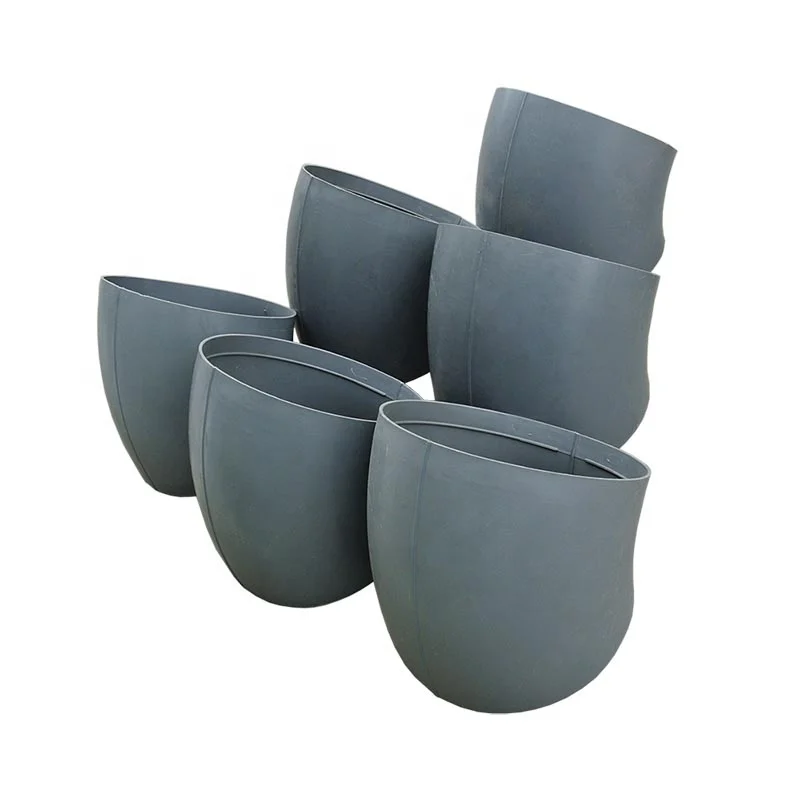
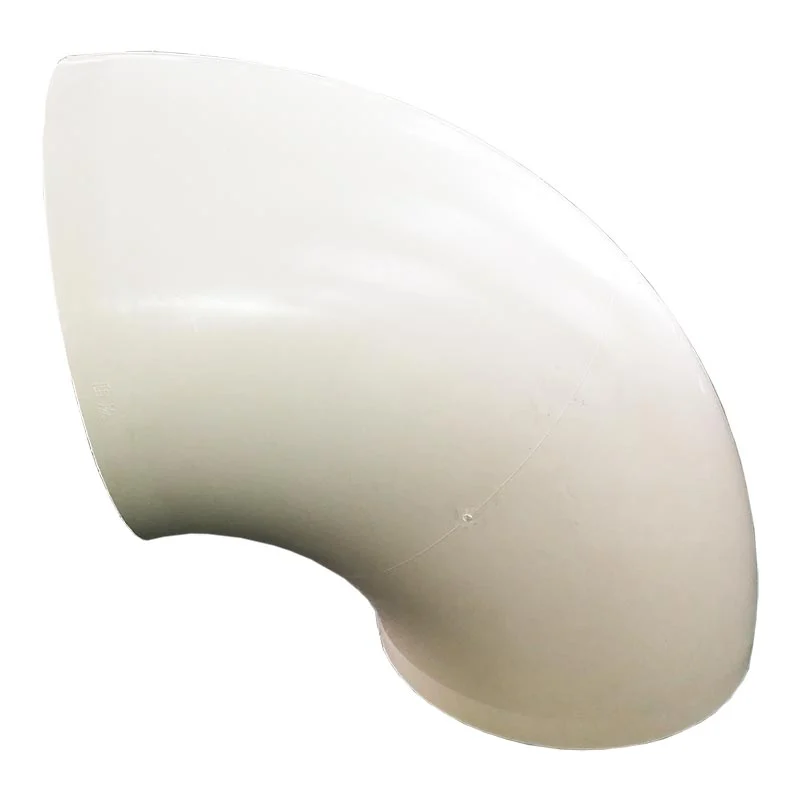
An injection-molded duct elbow is a ventilation fitting formed as a single, seamless part from virgin polypropylene or PVC resin. Unlike fabricated elbows assembled from welded sheet segments, injection-molded elbows contain no weld seams, no heat-affected zones, and no material joints — eliminating the most common structural failure point in industrial exhaust ductwork.
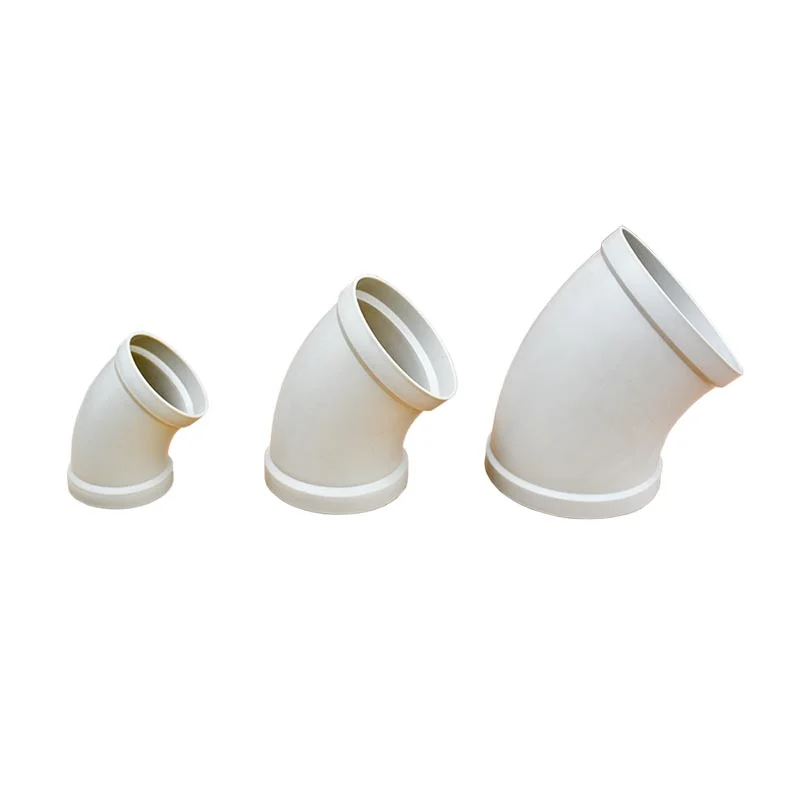
Xicheng manufactures injection-molded duct elbows in 45-degree and 90-degree standard angles from its facility, using hardened steel tooling and controlled melt-temperature processing. Every elbow in a production batch shares identical dimensions: uniform wall thickness, a concentric bore, and a flange face flat enough to seal on first assembly.
A corroded fitting that costs a fraction of a single shift’s output can shut down an entire exhaust system. In chemical processing, electroplating, electronics manufacturing, and wastewater treatment, a duct elbow failure triggers compliance violations, worker exposure to hazardous fumes, and unbudgeted emergency maintenance.
Procurement managers and EHS engineers who have cycled through fabricated elbows that fail at the weld seam eventually arrive at the same conclusion: the manufacturing process matters as much as the material.
What Separates Injection-Molded Elbows From Fabricated Ones
Most B2B buyers we talk to are anxious about three things when sourcing duct elbows:
- The Weld-Seam Failure: Hand-fabricated elbows are built from PP sheet segments welded together. The weld seam introduces a zone where the polymer structure differs from the parent material. Under thermal cycling or vibration, that zone concentrates stress — and fails.
- The Inconsistency Problem: A batch of fabricated elbows depends on individual welder skill. One good elbow, one marginal elbow, and suddenly your installation crew is shimming and reworking fittings that should have fit out of the box.
- The Replacement Cycle: Even when fabricated elbows work initially, they fail faster than injection-molded equivalents. Weld-seam failure accounts for the majority of non-corrosion fitting replacements.
We engineered the injection-molding process to erase those problems.
One Mold, One Part, Zero Welds
During injection molding, molten polymer fills every cavity in a closed steel mold simultaneously under 80 to 120 MPa of pressure. Cooling is controlled and uniform across the entire part.
The proof? Wall thickness varies by no more than plus-or-minus 0.3mm across any single elbow. The bore is concentric from end to end. The flange face is flat — no post-molding machining required.
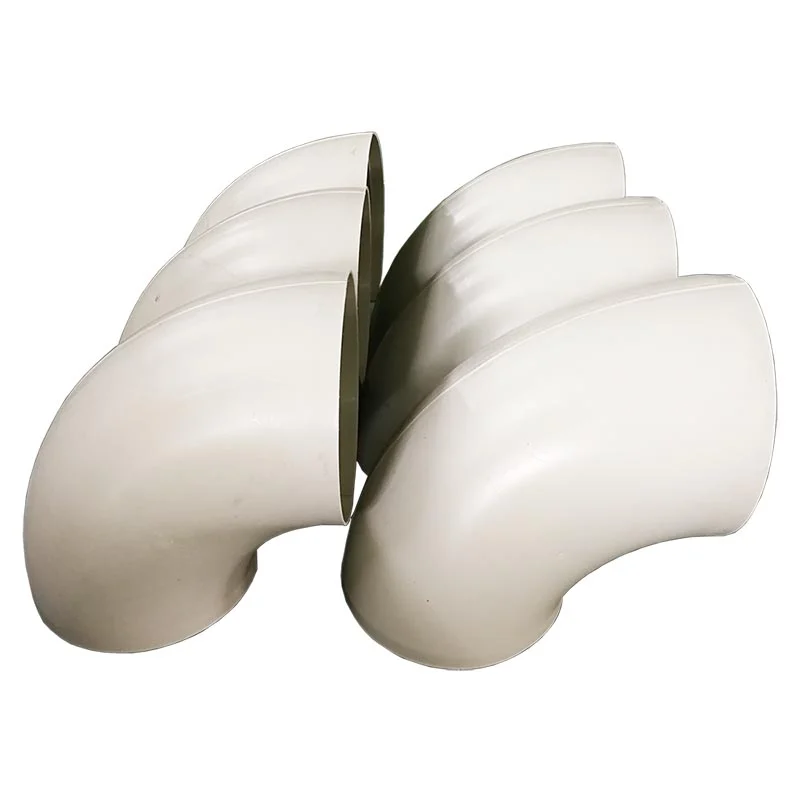
The result? A batch of 500 injection-molded elbows is 500 identical parts. The elbow you receive next quarter is dimensionally identical to the one you received last quarter. Your installation team does not adjust, shim, or rework.
Available Configurations
Injection-molded duct elbows are produced in standard 45-degree and 90-degree angles, available in a wide range of diameters. Custom angles and non-standard diameters are available on request.
The material choice depends on your application:
- Polypropylene (PP): Handles aggressive chemical environments — hydrochloric acid mist, sulfuric acid fumes, nitric acid vapors — at temperatures up to 90-degrees-Celsius. The material is chemically inert to the acid, not coated against it. No lining to delaminate. No passive layer to scratch through.
- PVC: A cost-effective alternative for moderate exhaust conditions below 60-degrees-Celsius. Lower material cost, same injection-molded consistency.
- Need PPS or FRP? If your exhaust temperature exceeds 90-degrees-Celsius or your chemical mix includes solvents that attack polypropylene, ask our engineering team about PPS or FRP alternatives.
Technical Specifications
| Parameter | Specification |
|---|---|
| Material Options | Virgin-grade PP (Polypropylene), PVC |
| Standard Angles | 45-degree, 90-degree |
| Manufacturing Process | Injection-molded in steel tooling |
| Density (PP) | 0.90 to 0.91 g/cm3 |
| Operating Temperature (PP) | -10-degrees-Celsius to 90-degrees-Celsius |
| Operating Temperature (PVC) | 0-degrees-Celsius to 60-degrees-Celsius |
| Color | Beige (natural PP), gray, white (PVC) |
| Connection Type | Socket weld, butt weld, or flanged |
| Certifications | ISO 9001 (Quality), ISO 14001 (Environmental); SGS tested |
| Custom Orders | Angles, diameters, and drilling patterns available on request |
Global Compliance and Industrial Trust: Why Customers Choose Xicheng
Buying heavy environmental equipment from overseas can feel like a gamble. Are they a real factory? Will the equipment clear customs? Can they handle my scale?
Let’s put your mind at ease.
Xicheng Environmental is a 16-year veteran manufacturer with over 40 production bases and offices across China, alongside 2 dedicated manufacturing facilities in Vietnam. We aren’t a trading company operating out of a shared laptop; we are an industrial powerhouse.
Our materials, products, and management processes are independently vetted and fully certified:
- System Certifications: ISO 9001 (Quality Management), ISO 14001 (Environmental Management).
- Material Compliance: SGS Tested PP sheets, PPS, PP pipes, and PVC sheets.
We have successfully designed and delivered custom duct fittings and ventilation components for chemical processing, electronics manufacturing, electroplating, food production, textile, and heavy industrial facilities across more than 50 countries. From standard injection-molded elbows to custom-fabricated duct transitions, we have seen your application before — and we have already solved it.
Where Injection-Molded Elbows Run Every Day
Xicheng injection-molded duct elbows are in service across four continents. These are not hypothetical use cases:
Electronics manufacturing facilities use 200mm and 250mm 90-degree injection-molded PP elbows in acid etching exhaust lines carrying mixed HF and HNO3 fumes. Where previous fabricated elbows required replacement every 14 months on a scheduled maintenance cycle, the injection-molded replacements have exceeded four years of continuous service with no scheduled replacement interval.
Chemical processing plants run 400mm and 500mm 45-degree injection-molded elbows on reactor vent headers. The 45-degree angle reduces particulate dropout at the bend compared to a 90-degree turn — critical when the exhaust stream carries residual process solids. The smooth internal bore of a molded part eliminates the internal weld beads that trap particulates in fabricated alternatives.
Metal finishing operations use injection-molded elbows from 110mm to 315mm on pickling tank extraction systems, where the daily sulfuric acid environment demands material that does not rely on coatings.
One-Stop Engineering Support: From Spec to Shipment
If you are a procurement manager or an EPC contractor, you do not just need a fitting. You need a supplier who delivers on time, with documentation that clears customs, and engineering support that answers before you ask.
Xicheng provides a comprehensive service cycle:
- Technical Review: Send us your duct diameter, angle, and exhaust gas composition. Our engineering team confirms material compatibility and fitting specifications before you place the order.
- Quality-Controlled Manufacturing: Every injection-molded elbow is produced under ISO 9001 and ISO 14001 certified processes. Material traceability is maintained from raw resin to finished part.
- Export Documentation: We provide SGS test reports, certificates of origin, and all customs documentation. You receive container loading photos before your shipment departs, and tracking information the same day.
- Post-Delivery Support: Our engineers are available by phone, email, or WhatsApp for installation and commissioning questions. If something is not right, we answer directly — not through a chain of intermediaries.
Frequently Asked Questions
Q: Why choose an injection-molded elbow over a fabricated one?
A: An injection-molded duct elbow is formed as a single part inside a steel mold — no welding, no seams, no material joints. This eliminates the weld-seam failure mode responsible for the majority of non-corrosion fitting replacements. Injection molding also produces identical parts across an entire production batch, delivering dimensional consistency that hand fabrication cannot reliably achieve.
Q: What materials are available for injection-molded elbows?
A: PP (polypropylene) and PVC are standard. PP handles aggressive acid environments at temperatures up to 90-degrees-Celsius. PVC offers a lower-cost option for moderate conditions below 60-degrees-Celsius. For high-temperature applications or solvent-heavy exhaust streams, our engineering team can recommend PPS or FRP alternatives.
Q: Can you produce custom angles or non-standard diameters?
A: Custom angles, non-standard diameters, and specialized drilling patterns are available. Send us your specification and we will confirm feasibility and lead time. There is no tooling charge for custom modifications.
Q: What is the typical lead time?
A: Standard injection-molded elbows in common diameters ship from inventory within 5 to 7 working days. Custom configurations require 10 to 15 working days depending on order specifications.
Send us your duct diameter, angle requirement, and exhaust gas composition. If the material you specified is not the right choice, our engineering team will recommend the correct alternative — and you will have a quotation within 48 hours.
Contact Xicheng Environmental Today. Our engineering team will review your project parameters and provide a customized quotation.
- 🎯 Address: No.34 Zhenxing Road (Shengtaian Heavy Industrial Park B), Loucun, Guangming New Dist, Shenzhen, Guangdong, China
- ☎️ Phone/WhatsApp: +86 18028775826
- 🗺️ Email: xichengepltd@gmail.com

Reviews
There are no reviews yet.