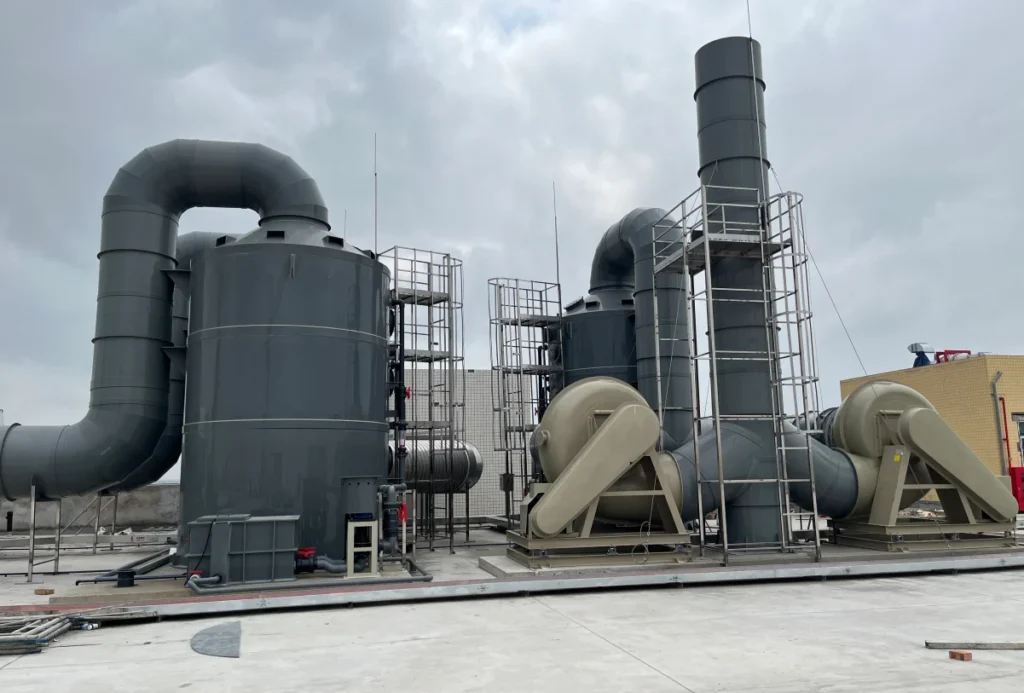
Buy an oem activated carbon adsorption box when your stream, footprint, or process needs a geometry and a media grade that catalogue units cannot carry. Off-the-shelf is cheaper for standard jobs; custom is the answer when the spec does not fit the catalogue.
Three buy modes, not one. Off-the-shelf buys a fixed design fast. Custom (OEM) applies your drawings and your stream data to a box built for that duty. ODM takes the factory’s proven design and puts your brand on it.
Send the data pack before you ask for a price. Flow rate, contaminant inventory, duty hours, media grade, and housing material turn a placeholder quote into an engineering quote. A supplier cannot size what you have not described.
Vet the factory before you wire a deposit. Check certificates, run a live video audit, and keep platform escrow between you and the payment until the goods match the drawing. A rushed deposit is the most expensive mistake in the process.
Approve the drawing, then build. Drawing approval is the contract. Sign off the carbon grade, the fill weight, the seam and door details, and the change-out plan on paper, and every later argument disappears.
When an OEM Activated Carbon Adsorption Box Is the Right Buy
Most adsorption boxes are bought from a catalogue, and for most plants that is the correct decision. A catalogue unit has a tested geometry, a published price, and a delivery date you can plan around. But at the moment your process stops fitting the catalogue — the duct climbs at an angle the standard box cannot match, the stream carries a solvent the standard media were not graded for, or the plant floor has a gap where no standard footprint sits — you are in the market for something built to your data, not the other way round. That is the moment an oem activated carbon adsorption box starts to make sense.
OEM here means exactly what the three letters say: the factory builds to your specification rather than selling you theirs. It is not a synonym for “cheap Chinese equipment”, although China is where most of the world’s adsorption boxes are now made, and it is not an excuse to skip engineering. The phrase carries a promise — the box is made for your stream — and a price, paid in specification writing, factory vetting, and lead time. This guide walks the process in the order a real buyer should run it: decide the buy type, write the data pack, vet the factory, approve the drawing, watch the QC, and settle the payment and delivery terms. The buy-type logic underneath it all is covered in the pillar article on the activated carbon adsorption box, and the applications that justify the custom route are catalogued in the VOC and odour treatment article.
Three warnings up front. First, an OEM box is a piece of process equipment and should be specified like one: flow at operating temperature, not fan-brand nominal; contaminants by name, not by smell. Second, the price you are quoted is a function of the data you send, so the buyer who sends half a page of boilerplate gets a placeholder, and the buyer who sends a data pack gets an engineering quote. Third, the factory relationship does not end at the gate: the carbon media, the spare cartridges, and the change-out consumables come from the same factory for the life of the unit, and that after-sales chain is part of the purchase price. Every step below exists to make that relationship safe.
Off-the-Shelf, Custom, or ODM: Three Ways to Buy
The entire buying conversation collapses into one decision: which of the three modes fits your job. Each mode changes what you send, what you receive, and how much control you buy. Table 1 sets out the three side by side; the paragraphs below explain the use of each one.
Off-the-Shelf: Fast, Lowest Cost, Fixed Geometry
A standard box has a fixed bed area, a fixed carbon charge, and a fixed set of inlet and outlet collars. Its advantage is discipline: the geometry is proven, the delivery is short, and the unit cost is the lowest of the three modes. A plant with a routine solvent load and a standard 6000 m³/h duct finds the catalogue unit finishes the job on day one. Its price is the danger hidden inside the word “standard” — the standard box may be over- or under-sized for your real stream, and the money saved on the housing is then spent on early breakthrough or on a bed that idles at a fraction of its capacity. The sizing buttons that tell you which standard unit is actually right are the same ones the activated carbon box design guide runs by hand.
Custom (OEM): Your Drawings, Matched to the Stream
In the custom mode the factory builds an oem activated carbon adsorption box from your specification: your flow, your contaminant inventory, your space envelope, your media grade, your housing material, your instrumentation. This is the mode the rest of this guide assumes. It costs more per unit and takes longer than the catalogue, and in exchange it gives the unit that the process actually needs — the exact bed depth for the load, the housing that survives the chemistry, the footprint that clears the floor. The engineering duty falls on the buyer: the factory machines what you specify, and an incomplete specification returns an incomplete machine. Full custom also covers the “badge-engineered” middle step, where a standard housing is re-collared or re-media’d to match your stream while the geometry stays close to the catalogue.
ODM: The Factory’s Design, Your Brand
In original design manufacturing, you bring neither drawings nor a unique process — you bring a market, and the factory brings a proven design that you sell under your own brand. This is how most trading companies, distributors, and private-label programmes buy: the factory’s standard box, sometimes with your paint colour and your nameplate, bolted to your logo. ODM is the cheapest route to “owning” a product line without running a factory, and it is the correct mode for a reseller. Its limit is control: the internals are the factory’s design, so what you sell is only as good as what they had in mind, and there is no engineering reason to expect a change-out interval or a removal curve that was never sized against your data.
| Mode | Choose when | You get | Price you pay |
|---|---|---|---|
| Off-the-shelf | Standard flow, standard media, standard footprint | Fastest delivery, lowest unit cost, proven geometry | Fixed design; may be over- or under-built |
| Custom (OEM) | Your stream, your space, your media grade | Matched geometry, housing, media and instrumentation | Higher unit cost; you must write the specification |
| ODM | You have a market and a brand, not a unique process | Factory design under your nameplate | No control of internals; credence taken from the factory’s standard design |
The decision reduces to a single question. Does the standard box already do the job at a defensible size? If yes, buy the catalogue. If the gap is real — the media wrong, the geometry wrong, the housing wrong for the chemistry — then the custom route pays for itself in the first change-out it saves. The pillar treatment of what the box must contain at each mode is in the activated carbon adsorption box article.
The RFQ Data Pack That Gets a Useful Quote
Every OEM supplier quotes the same way: they read what you send, and they reply to what they read. Send an oem activated carbon adsorption box request that says “please quote for VOC treatment” and the reply is a price for a box of unknown duty, usually the cheapest standard unit in the building. Send the data pack below and the reply is a design with a bed depth, a media grade, a housing material, and a change-out estimate attached. The difference between the two replies is the difference between a quote and a placeholder.
Flow, Contaminants, and Duty Hours
Start with the flow: actual cubic metres per hour at operating temperature, not the fan’s nominal rating and not the design figure from the old drawings. The flow sets the face area and the fan. Then the contaminant inventory: every compound in the stream, its typical concentration, and the worst-case peak. The inventory sets the media grade and the bed depth, and it is the single most common omission in OEM requests. State the duty hours as well — eight hours a day, three shifts, batch or continuous — because the calendar for carbon change-out scales directly with hours under load. A unit sized for an eight-hour day is undersized at twenty-four.
Media Grade and Housing Material
Activated carbon is not one material. Standard coconut-shell or coal-based organic grades handle the common solvents; impregnated grades take over the moment the stream includes acids, chlorine, ammonia, or hydrogen sulfide; a permanganate or multi-gas blend serves mixed loads. Write the grade you have chosen into the RFQ, along with the housing material — painted or galvanised steel for ordinary duty, stainless where the chemistry attacks steel, polypropylene where corrosion and weight matter together. These two lines in the data pack decide the box’s entire service life, and a factory that quotes material options without asking which one your stream needs is telling you how little they intend to check.
What a Factory Counts as Custom
The word “custom” covers very different amounts of work at different factories. For some, changing the collars from one diameter to another is custom; for others, only a new bed geometry counts. The European filter engineers at Desotec define the design variables that genuinely matter in their technical guidance: flow through the mass transfer zone, operating temperature kept below about 60 °C, relative humidity that must not condense water into the pores, dust filtered before the bed, and the pressure drop the fan must overcome. Quote against those variables explicitly. When the factory’s reply addresses flow, temperature, humidity, dust, and pressure drop rather than only the unit price, you are talking to an engineer; when it does not, keep looking. The extended sizing arithmetic that turns a data pack into a carbon charge is worked in the activated carbon box design and sizing guide.
Vet the Factory Before You Wire a Deposit
An oem activated carbon adsorption box is built by a company you will not watch work. The factory vetting phase exists to reduce that distance to a manageable risk, and it runs in three layers: what the certificates actually prove, what a live look at the factory shows, and how the payment platform holds the money. None of the three is sufficient alone; together they close most of the gap.
Certificates: What They Prove, What They Don’t
A certificate is evidence that a process happened, not that the process produced a good box. A company registration proves a legal entity exists; a quality-system certificate in the ISO family proves the factory has a documented management system, not that the weld on your housing is sound; an export certificate proves the goods cleared a border on another day. Read each certificate for what it actually certifies and ask for the ones that prove engineering competence — pressure-test reports, carbon grade certificates of analysis for the exact batch to be installed, and weld inspection records from past projects. A factory that hands you its certificates and then goes quiet when you ask to see the carbon COA for the quote in question has told you something useful.
Video Audit and Factory Tour Checklist
A scheduled site visit to a factory on the other side of the world is expensive; a live video call is not. Ask to walk the production floor in real time: the welding bay, the carbon fill station, the pressure-test rig, the finished-goods yard. Watch for the things brochures hide — how clean the floor is, whether there is a real test bench or only a desk, whether the staff can talk about the design variables in the data pack. The checklist is short: can they show a unit under test, can they show the carbon grade being filled, can they show the seam welds on a finished housing, and can they explain, in numbers, how they size the bed. The factories that dominate the Chinese B2B directories, the ones whose supplier pages promise ninety-nine percent efficiency with no number attached, usually fail that last question. The factories that pass it are the ones worth the follow-up sample order.
The Platform Escrow Layer
Much of the world’s cross-border industrial buying runs through the B2B platforms, and the platforms have built the payment-protection machinery that plain bank transfers lack. Made-in-China’s Secured Trading Service holds the payment in escrow until the buyer confirms delivery and quality, and mediates disputes on the evidence; Alibaba’s Trade Assurance operates in the same way. The escrow layer does not vet the engineering — it secures the money against the failure to deliver what the order describes. Use it for the first orders until the factory has earned a relationship. The platform escrow is the layer that makes the deposit question safe, and it costs nothing compared with wiring a fifty percent payment against a factory you have never seen.
Drawings and Samples: Kill Mistakes Early
Every expensive error in an OEM project starts as a mismatch between what the buyer imagined and what the drawing says. The drawing and the sample stages exist to surface every one of those mismatches while they still cost money to fix. A buyer who skips this phase to save two weeks is buying the fastest possible route to a field failure.
Drawing Approval Is the Contract
The signed approval of the general-arrangement drawing is the moment the order becomes real. Before the signature, the factory is free to trim material, shorten the bed, or change the collar position; after it, every deviation is a dispute with a paper trail. Approve deliberately. Check the overall dimensions against the floor plan, the collar sizes against the duct, the access-door position against the space you will change the carbon in, and the bed depth against the media volume in the data pack. Make the factory stamp the drawing and return the stamped copy with every revision noted. The drawing is the contract, and contracts are not signed on a phone screen.
Sample Box vs Production Box
Request a sample before production when the order size justifies it, and read the difference between the two. A sample box proves the factory can build the geometry; it does not prove the production run will reproduce it, because production quality is a function of the operator filling the carbon, the welder on shift, and the seams on that batch. Many factories offer free samples with paid shipping, exactly as the US custom OEM houses do, because a sample is the cheapest sale they will ever make. The sample’s real value is the conversation it forces: hand the sample housing to your own engineer, measure it against the drawing, weigh the carbon density, and then carry that measured data into the QC stage for the production units.
Agree the Change-Out Variables Now
The operational contract — how the box is changed out and how long the media lasts — belongs in the drawing stage, not the field. Agree on paper the carbon fill weight per tray or per bed, the change-out signal the factory expects you to use, the recommended pressure-drop reading at which the media is spent, and the replacement-cartridge price and lead time. A factory that quotes the change-out consumables on the same line as the box is a better partner than one that quotes the box alone, because the consumables are where the relationship either matures or dies. The change-out mathematics that turns a contaminant load into a calendar is the subject of the activated carbon adsorption principle article, and it belongs on the drawing before you sign.
Production QC and the Packing Slip
Quality control on an oem activated carbon adsorption box is not one inspection at the end; it is a sequence of small checks at the points where errors are cheap to fix. Table 2 sets out the checkpoint sequence, and the paragraphs below explain the two checks that matter most — the carbon itself and the pressure boundary.
Carbon Grade and Fill Verification
The carbon is the heart of the machine, and it is also the component easiest to fake. Verify two things before the bed is closed. First, the grade: the delivered carbon should carry a certificate of analysis matching the grade specified in the data pack — same source, same activation, same impregnation for the specialty grades. Second, the fill: the actual weight of carbon installed, checked against the specified kilogram counter per bed or per tray. The difference between six hundred kilograms of carbon and five hundred looks like nothing in a photo and shows up as a season of early breakthrough in service. Weigh tickets, bag counts, and a video of the filling from the top of the bed are the evidence to require; the factories that send them unprompted are the ones that are actually filling it.
Seal, Weld, and Pressure Checks
The pressure boundary decides whether the box treats the stream or vents it past the media. Check the welds on the housing, the gasketing of the access door, and the seating of the trays, then have the factory run a pressure or leak test at the design flow and supply the number. The carbon columns in the European technical references highlight the same boundary: dust must be filtered before the bed, temperature must stay below about 60 °C, and the pressure drop across the packed bed grows with flow and with dust loading, so the fan and the seals both assume a number. If the housing leaks, the box can pass a fill test and still deliver a stream nobody filtered. The pressure test is the one check that cannot be skipped and cannot be photographed convincingly from a desk.
Photos, Video Call, Third-Party Inspection
Sequester the evidence in stages. Require dated photos at each checkpoint, run a live video call for the kill points — carbon filling and pressure test — and for the first order of any significant value, pay for a third-party inspection at the factory before release. The third-party inspector checks dimensions, weights, and certificates against your purchase order and issues a report that becomes part of the shipping record. Third-party inspection costs a fraction of a percent of the order value and converts the factory’s claims into third-party findings, which is what you will actually be arguing from if the box arrives wrong.
| Checkpoint | What to check | Evidence to require |
|---|---|---|
| Pre-production | Carbon grade of analysis; housing material certs | COA, mill certificates, approved drawing revision |
| Fabrication | Weld quality, gasket seating, access-door seal | Dated photos, seam inspection records |
| Carbon fill | Grade batch, installed weight per bed/tray | Weigh tickets, bag counts, fill video |
| Pressure boundary | Leak test at design flow; pressure-drop reading | Test report, live video call |
| Function | Fan direction, PLC input/output, damper travel | Commissioning video, call logs |
| Packing | Moisture barrier, export pallet, spares, packing list | Packed-condition photos, packing list |
The checkpoint list in Table 2 doubles as the annex to your purchase order. Reference it by number in the order text and the factory knows exactly what it will be held to. The design variables that each checkpoint verifies — bed depth, flow, pressure drop — are the ones worked through numerically in the activated carbon box design and sizing guide.
Payment, Lead Time, and Delivery
Three financial questions sit between an approved drawing and a box on your floor: how the money moves, how long the box actually takes, and who owns the freight risk. Each one has a standard answer and a way to get it wrong, and each belongs in the order text, not in a friendly afterthought.
Payment Terms: Escrow, T/T, Milestones
For the first orders, the platform escrow routes are the safest money path because they hold the funds until the delivery and quality gate clears. Outside the platforms, the common terms are T/T against milestones — typically thirty percent to start production, sixty to seventy percent against the inspection release or the bill of lading, and the balance against acceptance — and a clean letter of credit for very large values. The milestone structure matters more than the percentages: tie each payment to a verifiable event (drawing approval, inspection report, packing slip), not to a calendar date, so that the money follows the evidence. Any supplier who demands full payment before the packing slip on a first order is telling you exactly how they intend to treat the relationship.
Lead Time: What “30 Days” Means
A lead time is a promise about the future and should be read with the same suspicion. The typical floor for a custom carbon steel box is four to six weeks after drawing approval; stainless, polypropylene, and anything with instrumentation or imported carbon run longer — eight to twelve weeks is common. When the factory says thirty days, ask what it includes: the raw steel delivery, the carbon supply lead, the weekends and the Chinese national holidays, the sea freight transit, and the customs release on your side. The one number that protects you is the date in the purchase order with a liquidated-damages figure attached, because a box delivered a month after the ramp stands on the floor while your compliance window closes.
Incoterms, Packaging, and Spares
The point at which responsibility for the goods passes from factory to buyer is defined by the Incoterms rules, and it is the line every dispute about damaged goods crosses. Ex-works hands the risk to you at the factory gate; FOB gives you the risk from the loading port; CIF and DDP push the freight and insurance obligations onto the supplier. Quote the term, not a vague “delivered”. Then insist on sea-worthy export packing — welded carbon on an open flat-rack without a moisture barrier arrives as hunks of rust, and the ocean is where most OEM boxes die — and on a spares kit: door gaskets, a spare prefilter set, and every consumable that will be needed at the first change-out. The activated carbon filter box product range, and its airline in corrosion-resistant polypropylene, is the kind of delivered configuration an OEM order should specify rather than improvise.
Configurations Worth Specing from China
Within one oem activated carbon adsorption box order, several configuration decisions decide how the unit behaves in your plant and how hard it is to maintain. The ones below recur in every serious factory catalog, and each one changes the price, the footprint, or the media life. Specify them deliberately rather than accepting what the standard unit happens to include.
Honeycomb Carbon Panels and Drawer Trays
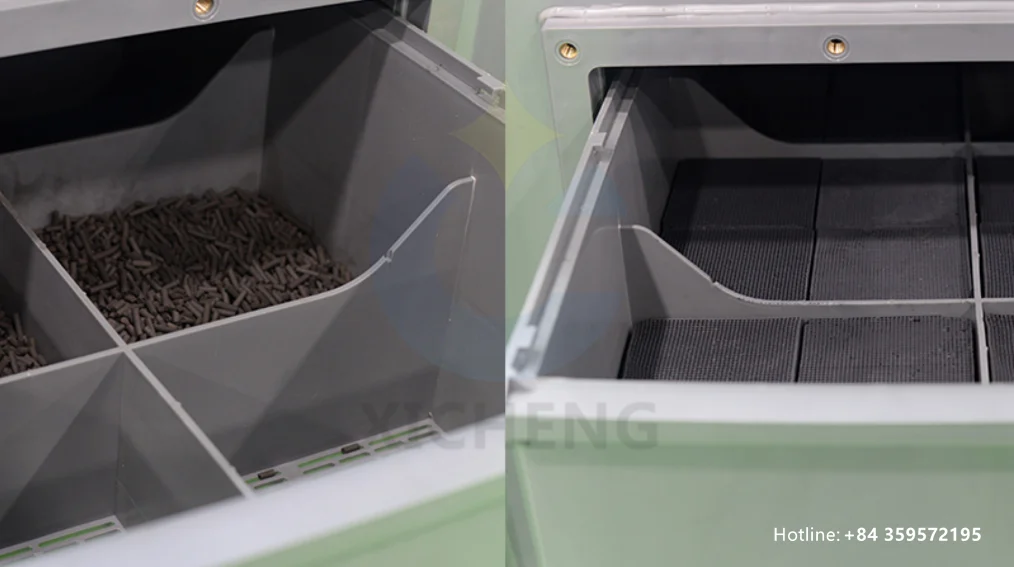
Ask for the fill geometry that matches your change-out labor. Honeycomb carbon panels give a much lower pressure drop per unit of flow than a packed bed, which lets a shallower housing do the work of a deeper one; drawer trays let one operator swap media in minutes without entering the box. The trade is price per kilogram of carbon capacity, and it is worth paying when the box sits in a space where a full bed unload is awkward. For a stream that stays within a narrow contaminant range, the panel-and-drawer configuration keeps the change-out on a tray schedule instead of a crane call.
Integrated vs Remote Fan
Decide where the fan lives. An integrated fan on top of the housing gives a compact, self-contained unit with one vendor accountable for the whole flow path, but it puts a motor above the carbon in a location that collects heat and makes seal maintenance awkward. A remote fan on the clean side pulls the housing at negative pressure and keeps the motor out of the wetted or dusty zone, at the cost of extra duct and a second footprint. Negative-pressure operation is also the safer arrangement when the stream contains flammable vapors, because any leak at the housing draws air in rather than pushing fume out. State the choice in the RFQ, and give the factory the static pressure the fan must overcome — the value that decides the motor size.
PP, Coated Steel, and Stainless Housings
Match the housing to the full service envelope, not just the launch chemistry. Polypropylene suits wet, corrosive, and weight-sensitive streams and resists almost everything except solvents that attack the polymer itself. Coated carbon steel is the economical default for dry organic duty; stainless earns its premium where temperature climbs, where cleaning chemicals are aggressive, or where the box is pressure-washed in place. The housing decision is permanent — you can change carbon, fan, and trays later, but you will not re-build the shell — so read it against the stream chemistry in the data pack before you sign. The activated carbon adsorption tower range shows how the same media strategy is packaged in a vessel geometry, and the polypropylene ductwork customization line covers the corrosion-resistant duct that a PP-housed box belongs in.
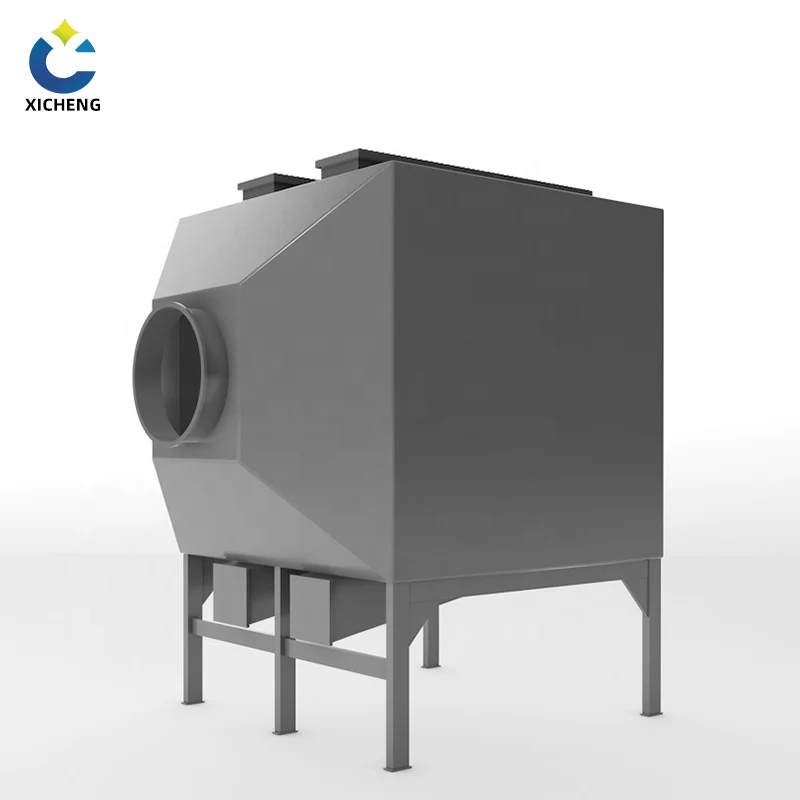
The range of delivered options — panel, tray, fan placement, shell material — is what separates a quoted standard box from a quoted activated carbon filter box built to a drawing. Every configuration above feeds straight back into the checkpoints in Table 2, because the factory builds exactly what the approved drawing says and nothing else.
After-Sales: The Media Supply Behind the Machine
The box is a one-time purchase; the carbon is a recurring one. Every oem activated carbon adsorption box project quietly becomes a media supply contract the moment commissioning ends, and that second contract deserves the same care as the first. Three questions decide whether the relationship pays off: how the carbon is re-supplied, whether spent media is reactivated or thrown away, and how the whole system stays safe in oily and wet duty.
Carbon Re-Supply and Grade Certificates
Buy the first box from a factory that can also supply the refill media, and make the re-supply terms part of the original order: price per tonne, lead time, and the guarantee that every shipment carries a certificate of analysis for the exact grade specified. Media bought on the open spot market after commissioning is how a plant ends up with a different activation, a different particle size, and a different bed life than the design assumed. Lock the grade in writing at the front, and require the COA with every refill, exactly as you did for the first fill inside the box.
Reactivate vs Replace
Spent carbon is not always waste. For high-volume, single-contaminant duty — the kind a packed bed serves for months — thermal reactivation returns much of the original adsorption capacity at a fraction of the virgin price, and the reactivation vendor should give you a capacity figure, not a story. For toxic or mixed-organic loads, or where the spent carbon itself is a regulated waste stream, replacement with virgin media is the simpler compliance path because you never hold the spent material longer than the drum transit. Decide which route your plant and your waste permits allow before the first bed is spent, because that answer changes the change-out logistics you put in the purchase order.
Fire Safety in Oily and Wet Duty
An adsorption bed is a packed store of combustible material, and the U.S. EPA’s monitoring guidance on activated carbon adsorbers is blunt about the hazards: the carbon can ignite when oils, solvents, or hot reactive streams reach the bed, and whitish smoke from the outlet or localized heat at the housing are the signs to act on. Keep the inlet stream below the ignition temperature, keep oily aerosols out of the bed with a prefilter, and give the box the ventilation, the pressure gauge, and the shutdown logic that the duty deserves. Wet duty brings its own rule — the European filter guidance in the earlier sections warns that humidity must not condense into the pores, because water in the pores steals the bed’s capacity. The full treatment of what the stream composition does to the media is in the VOC treatment with activated carbon boxes article, and the machine-level safety audit belongs in the runbook that ships with the unit, alongside the activated carbon adsorption box guide.
OEM Activated Carbon Adsorption Box: FAQ
Short answers to the questions that come up at the buying desk, before the RFQ goes out.
How much does an oem activated carbon adsorption box cost, and what drives the price? The realistic range runs from about one thousand dollars for a small standard blower-mounted unit to tens of thousands for a large custom vessel, and the price is driven by housing material, carbon type and fill weight, instrumentation, and the fan. A data pack with flow, contaminants, and duty hours is what turns “price” from a number into a defensible quote.
What information do I need to send before I can get a real quote? The same five numbers every design needs: actual cubic metres per hour, the full contaminant inventory with typical and peak concentrations, duty hours, the media grade you have chosen, and the housing material. Send those and the factory can size a bed; send less and you will be quoted a placeholder.
Can a Chinese factory build to my drawing or my brand? Yes, in three degrees. Off-the-shelf takes a standard unit; custom OEM changes dimensions, collars, materials, and fill to your drawing under your approval; full ODM adds your brand, your controller logic, and your documentation on top. Say which degree you want in the RFQ so the quote reflects the actual design workload.
How do I protect the deposit on a first order? Run the payment through the platform escrow services — Made-in-China’s Secured Trading Service or Alibaba’s Trade Assurance — so the money is held until you confirm delivery and quality, and structure any outside payment against verifiable milestones rather than a calendar.
What proof should I require that the box is built right? The QC checkpoint list in Table 2: carbon COA against the batch installed, installed fill weight, a pressure or leak test number at design flow, dated photos at each stage, and a third-party inspection report for the first order of significant value.
The full design arithmetic that turns flow and contaminant load into a bed size and a change-out calendar is worked through numerically in the activated carbon box design and sizing guide, and the adsorption principle that every change-out decision rests on is explained in the activated carbon adsorption working principle article.