Key Takeaways
- A chemical resistant exhaust fan is the end element of an exhaust system, not an isolated machine — the hood, duct, scrubber or filter, fan, and stack must obey the same corrosion logic.
- Genuine chemical resistant exhaust fans are built from the corrosion-resistant material itself across the wetted wall, with the motor kept outside the airstream.
- Classify the exhaust stream first — acid, solvent, halogen, or wet — and let the worst member of that stream set the material tier and the temperature ceiling.
- Match the fan on certified curves at the operating point: CFM, total static pressure, and horsepower, not catalogue page numbers.
- Regulatory anchors belong in the spec sheet: spark-proof construction compatible with the chemicals carried, and the fan at the negative-pressure end of the duct.
Chemical Resistant Exhaust Fans Are an Exhaust System, Not a Component
Chemical resistant exhaust fans earn the name when the whole path they serve — hood, duct, scrubber or filter, fan, and stack — shares the same corrosion logic. Treating the fan as a standalone corrosion-proof part is how facilities buy a machine that survives while its duct corrodes beside it, and why the truly corrosion-resistant order is a system order, not a fan order.
Where the Exhaust Fan Sits in the Hood-to-Stack Train
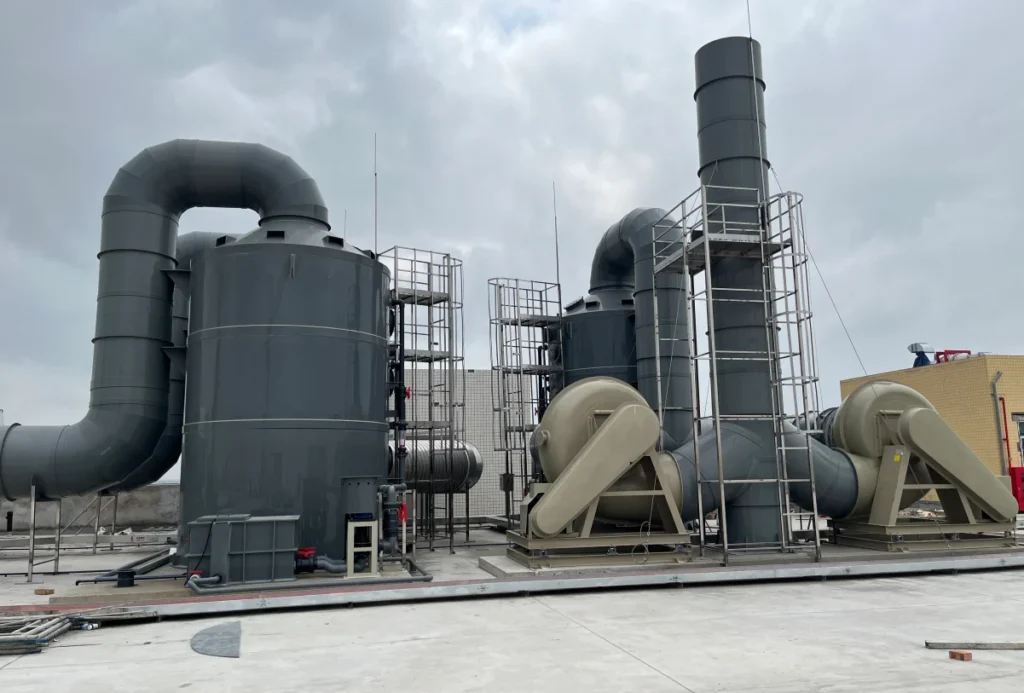
Every corrosive exhaust shares one shape: the pollutant is born at a process surface, is captured at a hood or fume cupboard, travels a duct, passes through a scrubber or filter where the installation uses one, and is pushed out a discharge stack by the fan. The fan is the only powered element in the train, which puts it last — downstream of every contaminant the stream has already carried through the hood and duct. By the time the airstream reaches the wheel it has already deposited its moisture, its acid droplets, and its salt at every low point along the way. Corrosion resistant exhaust fans that survive that airstream perfectly do no good if the hood-to-fan path was built from coated steel and failed first.
That ordering — fan last, at the discharge — is also a code habit, not just physics. When the fan is the final element, the entire duct run upstream is under negative pressure, so leaks pull clean room air into the system instead of pushing contaminated air into the occupied space. Good exhaust design keeps the occupant side of the building out of the contaminated stream entirely. Where the train includes a scrubber, the scrubber body and the corrosion-resistant blowers guide classes the whole family; the industrial wet scrubber line on this site carries that matching from the scrubber side.
Why the Materials Must Match Across the Whole Train
Chemical resistant exhaust fans are usually specified from just one material family — polypropylene, fiberglass-reinforced plastic, or stainless steel — and the rest of the train should be ordered from that same family, not from a different sheet of the compatibility chart. A polypropylene fan on an FRP duct is a genuine design only when both materials suit the chemistry; the more common failure is the mixed family, where the duct and scrubber shell were bought on price in coated steel and the “chemical resistant” fan is left pushing fumes past metal that was never questioned. The corrosive stream does not care which component you paid extra for. It attacks the weakest member of the train first, and the weakest member is where the system leaks.
So the first decision is not material at all — it is the stream classification that later sections lay out, because the same chemistry that selects the fan wall selects the duct, the hood, and the scrubber shell. When chemical resistant exhaust fans are selected this way, the train fails together slowly instead of piecemeal, maintenance cost follows the corrosion-resistant parts instead of the metal under them, and the “system” behaves like the engineered assembly it is.
What Makes an Exhaust Fan Genuinely Chemical Resistant
The Wetted Wall Is the Only Part That Counts
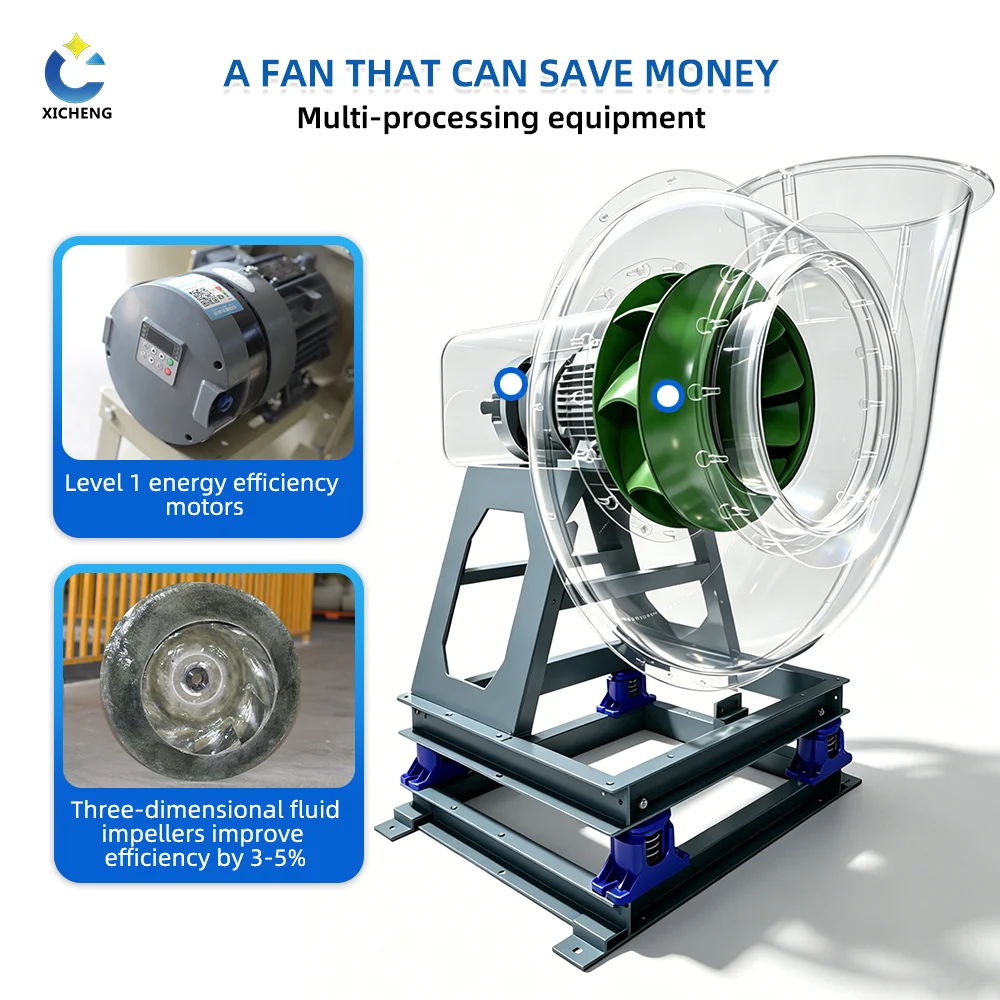
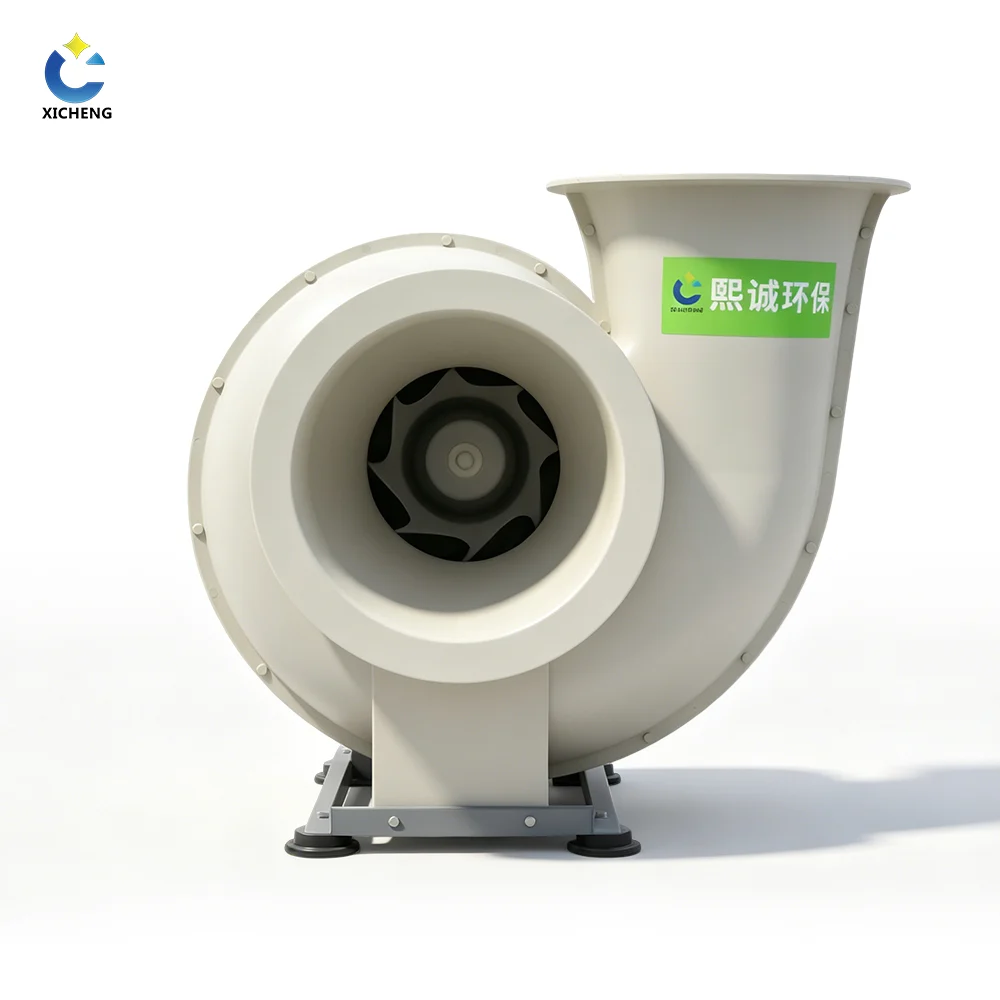
A chemical resistant exhaust fan is chemical resistant where the airstream touches it, and nowhere else. That surface — the casing interior, the wheel, the inlet cone — is the wetted wall, and the wetted wall decides the machine’s lifetime. A coated-steel exhaust fan carries a protective film over a metal body; the film chips at welds, blade edges, and the fasteners that hold the housing together, moisture reaches the substrate, and corrosion proceeds invisibly behind the coating. A genuinely chemical resistant exhaust fan is made of the corrosion-resistant material itself through the entire wall — polypropylene, fiberglass-reinforced plastic, or the right alloy — so there is no film to lose and no substrate to creep under it.
| Wetted-wall material | Temperature ceiling | Best at | Watch out for |
|---|---|---|---|
| PVC | Roughly 140 °F | Low-cost lab and light acid duty | Heat, impact, UV exposure |
| Polypropylene (PP) | Roughly 190 °F | Aqueous acids, bases, salts at low first cost | Solvents, strong oxidizers, flame |
| FRP (fiberglass, matched resin) | Roughly 250 °F | Wet chlorine, oxidizers, hot or pressurized gas | Resin grade must carry the duty |
| 316 stainless and alloys | 500 °F and up | High-temperature corner of the envelope | Pitting and stress cracking in wet chlorides |
That table is the material quick-map this page keeps referencing; the same four rows govern the duct, the scrubber shell, and the fan. Corrosion resistant exhaust fans specified from the same row as their duct and scrubber behave as one system, which is the point of the earlier section.
Motor Outside the Airstream, Spark-Proof Construction
Exhaust duty differs from a general fan in one construction detail that matters more than any other: the motor should never sit where the corrosive airstream reaches it. Motors and bearings fail fast in acid vapor, and a motor in the airstream drags its cable, breather, and cooling fins into the same attack. The established build puts the motor outboard, on a pedestal or behind a shaft seal, drives the wheel through a belt or a thermally separated coupling, and keeps the wetted wall purely to the casing and impeller. The material guides below cover the two standard builds: the FRP blower guide for the fiberglass machine and the polypropylene blower guide for the PP machine.
Spark resistance is the second construction point, and it runs on a separate axis from corrosion. A non-conductive plastic wall moving solvent-bearing or flammable vapor is an ignition surface unless the charge bleeds away. The fix is a conductive build — carbon-impregnated polypropylene for PP wheels, or a conductive veil and grounding for FRP — together with explosion-rated electrical components when the zone is classified. Two ideas sit under the loose phrase “explosion proof”: spark resistance in the airstream itself, and explosive-atmosphere-rated motors and wiring. Keep them separate in the spec, because an exhaust fan can be fully chemical resistant and still need the conductive overlay to be safe in its own airstream.
Acid, Solvent, and Halogen: Classify the Exhaust Stream First
Chemical exhaust fan selection starts with the contaminant, not with the fan. The same machine that runs ten years on a plating bench exhaust will be eaten in weeks if the stream carries wet chlorine, and the reverse is just as true — an FRP machine built for oxidizers is waste of money on a plain acid bench. So the first filter is a chemical act: name what the airstream actually carries, in what concentration, and at what temperature. Everything downstream of that classification is a lookup.
Stream Classes and the Material Tier Each Demands
| Stream class | Typical sources | Material tier | First constraint |
|---|---|---|---|
| Warm acid and alkali vapor | Plating tanks, pickling, lab benches | PP up to roughly 190 °F; PVC on light bench duty | Temperature |
| Solvent vapor and VOC | Cleanrooms, coating, degreasing | FRP with a matching resin; conductive overlay | Flame and static |
| Wet chlorine, hypochlorite, oxidizers | Chlor-alkali, water treatment, bleaching | FRP with vinyl-ester or bisphenol resin | Resin grade, not the word “fiberglass” |
| Halogen acids (HCl, HF, bromine) | Chemical processing, etching | FRP bisphenol/vinyl ester; alloys on the hot corner | Resin grade and temperature |
| Humid or marine air | Wet wells, coastal plants, washdown | FRP or PP with good drainage | Condensation and pooling |
Every row assumes the fan and its hood-to-stack path are built together, because the classifying act here is the same act that selects the duct and the scrubber shell. The full decision logic for the two dominant tiers lives in the PP versus FRP choice guide, and the FRP and PP blower range on this site covers both builds underneath.
The Temperature Ceiling Is the First Filter
Apply temperature before chemistry, because temperature quietly disqualifies. A plastic wall that survives a given acid perfectly will still soften, creep, and sag if the inlet runs hot. Polypropylene holds to roughly 190 °F, FRP to roughly 250 °F with a matched resin, and PVC well below both. The stream classes that sit at the temperature boundary — hot solvent vapor, chlorine gas leaving a reactor — drop straight out of plastic territory and into FRP-with-resin or alloy territory before a single compatibility chart is opened. Chemical resistant exhaust fans that survive the chemistry perfectly will still creep and soften if the continuous operating temperature crosses the ceiling, which is why the temperature column above is loaded first in every row.
One habit keeps this section honest in practice: classify the worst member of the stream, not the average. A bench that mostly exhausts dilute acid but occasionally sees chrome mist or a solvent wash must be sized for the chrome mist, because the occasional peak is what breaks the machine. If your stream straddles two rows, the higher tier wins, and the price difference is cheaper than a mid-life replacement.
Which Exhaust Fan Form Fits the Duty
Centrifugal, Tubeaxial, Mixed-Flow, and Roof Exhaust
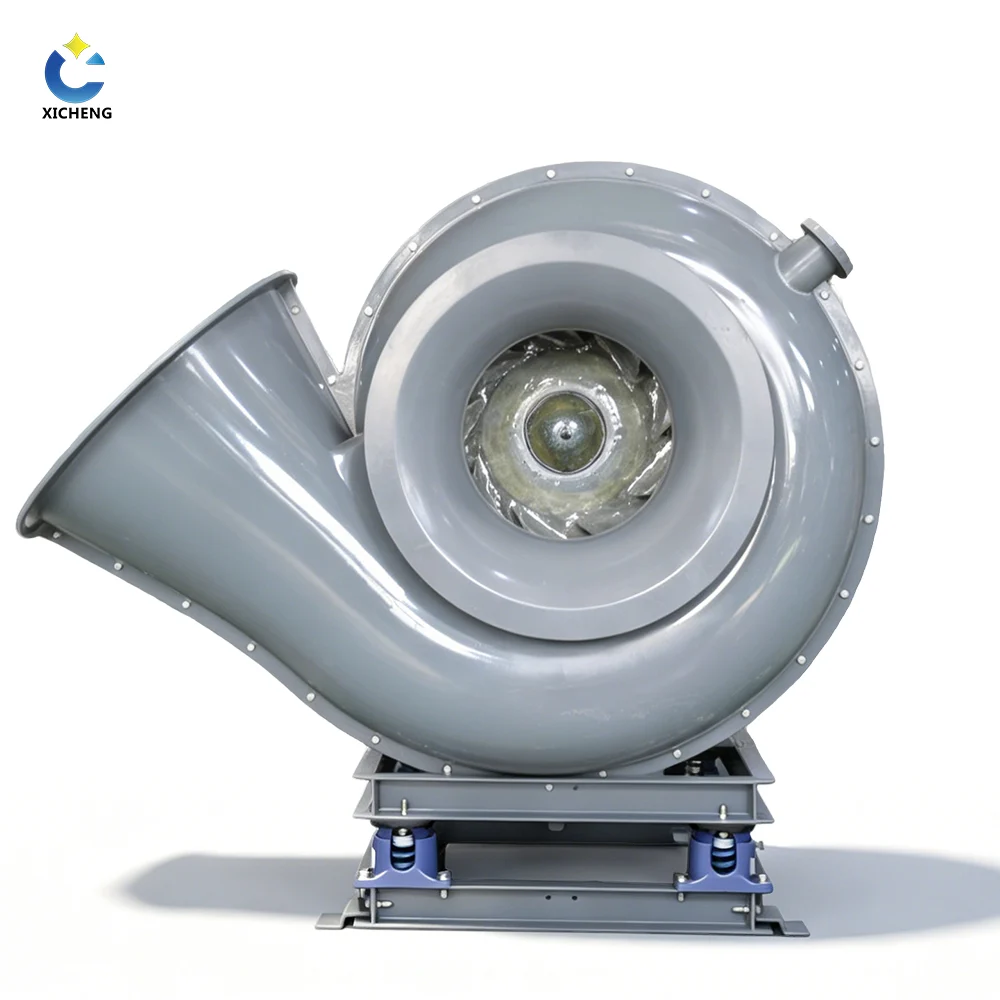
Corrosive exhaust is rarely a straight-through draft. A fume cupboard, a scrubber, a filter, a long duct run — each adds resistance that the fan must overcome in static pressure, and the fan form that wins is the centrifugal form, which is why most chemical resistant exhaust fans on a plant are centrifugal machines. Their wheels build pressure with a compact footprint, from roughly 1 to 30 inches of water gauge on corrosive duty. An axial or tubeaxial fan moves volume instead, at low pressure, and loses the argument the moment the duct runs long or a scrubber enters the path.
| Exhaust fan form | Strength | Typical exhaust duty |
|---|---|---|
| Centrifugal (forward-curved, backward-curved, radial) | 1–30 in WG static pressure; duct-matched | Fume hoods, scrubbers, chemical process exhaust |
| Tubeaxial (axial) | High airflow at low pressure | Short ducts, wall discharge, odor-control draft |
| Inline centrifugal | Centrifugal pressure in an axial footprint | Confined runs, retrofit into existing duct |
| Mixed-flow | Middle static pressure, compact | Laboratory stacks, clean-room exhaust |
| Roof and wall exhaust | Weather-protected building ventilation | Chemical storage rooms, acid-wash bays, discharge to atmosphere |
The wheel family inside the centrifugal form does the same job it does on any industrial fan. Forward-curved wheels move the most air per footprint at low pressure — the classic bench and fume-hood exhaust fan. Backward-curved wheels deliver higher efficiency and near-flat non-overloading power, the machine for a scrubber circuit that must keep moving air while pressure rises. Radial blades handle dirty or abrasive streams where plating mist and salts ride the airstream. The full taxonomy sits in the types of centrifugal fans guide, the operating physics in the how a centrifugal blower works article, and the curved-wheel trade-off in the forward curved versus backward curved decision guide.
Match CFM, Static Pressure, and Horsepower, Fan by Fan
Wherever the fan sits in the train, its wetted wall only guarantees survival — it guarantees nothing about airflow. Chemical resistant exhaust fans whose curves are wrong for the duct are corrosion-resistant motor loads and nothing else, so every machine here is judged on certified performance data. Manufacturers rate industrial fans under AMCA standards, AMCA 210 for the performance test, and the discipline transfers whole to plastic and fiberglass: compare suppliers on the curve at the operating point, not on catalogue page numbers.
Two power rules dominate selection once the curve is real. First, corrosive exhaust nearly always runs a system — a filter, a scrubber, a stack — so the fan must be chosen on total static pressure at the operating point, and the wheel family follows that number. Second, respect the power curve: backward-curved wheels are non-overloading, motor current peaking mid-range and falling toward free delivery, while forward-curved wheels are overloading machines whose motor must be sized for the open end of the system. A corrosion-resistant installation that ignores either rule underperforms or trips its protection no matter how well the material survives. Chemical resistant exhaust fans selected this way — on certified CFM, static pressure, and horsepower at the operating point — carry a defensible spec sheet into any review.
When the duct run is long or the building is low, the static-pressure rule bends one way: an inline centrifugal drops centrifugal performance into a run of straight duct, and many retrofit projects that cannot spare a floor for a scroll housing choose it. When the discharge is to atmosphere from a storage room or a bench, a roof or wall exhaust unit does the weather protection that an indoor centrifugal does not. The compromise is always the same — find the form whose certified static pressure matches the system, then confirm the curve at the point, then let the material tier ride on top unchanged. Across each of those forms, the two selection halves stay independent: the material decision protects the machine, and the curve decision makes it useful, and chemical resistant exhaust fans that miss either half underperform no matter which form was chosen.
Where Chemical Resistant Exhaust Fans Do Their Work
Laboratory Fume Hoods and Chemical Storage Rooms
The fume hood is the purest exhaust duty there is. A hood captures contaminant at the bench face and relies on a fan to keep that face at the design capture velocity, so the fan is sized for the hood’s specific airflow and static-pressure demand, not for a generic room. Laboratories build this on a disciplined rule chain: the exhaust fan must be spark-proof and built or coated for the chemicals being transported, it is conventionally located at the final discharge so the hood-to-fan duct stays under negative pressure, and each fan assembly is matched to its own hood in CFM, static pressure, and horsepower. The familiar reference for that setup is the fume hood article, and the chemical storage rooms beside the labs run the same logic at lower airflow: a small roof- or wall-mounted exhaust unit keeps vapor from pooling over stored acids, again on spark-rated construction.
Plating, Acid-Wash, and Process Exhaust
Plating and acid-wash lines are the densest corrosive-exhaust population per unit of floor area in any industry. Every tank — nickel, chrome, zinc, anodising, pickling, degreasing — vents acid and chrome mist that condenses on the first cool surface it meets, so the hood-to-fan path must be short, upward-sloped for drainage, and built of a material that rinses clean. The workhorse is a compact polypropylene centrifugal fan tucked under the bench, facing aqueous acid chemistry under roughly 190 °F, where the salt residue that PP sheds would collect and corrode steel. Acid fume exhaust at this scale is the classic low-pressure bench duty for a forward-curved PP fan, and the polypropylene blower line on this site carries exactly that build.
As the line’s vent pressure climbs, the temperature rises, or the stream picks up chrome mist, oxidizers, or solvents, the machine steps to FRP — the same escalation the stream-class table set out earlier. Process exhaust goes further still: halogen service (hydrogen chloride, hydrogen fluoride, wet chlorine) and solvent service push the spec into FRP with a matched resin, an explosion overlay, or both, and the discharge usually ends at the roof. Chemical resistant exhaust fans carrying those plants’ vents are selected on the same two axes the whole page has used — classify the worst member of the stream, then match CFM, static pressure, and horsepower at the operating point — with the ventilation serving the space checked against the general industry requirements of OSHA 29 CFR 1910.94 as a floor for exhaust ducting and fan placement in manufacturing environments.
Two installation habits decide service life before the material ever does. Condensation is the first: warm acid vapor moving through a cooler duct pools at low points, so the hood-to-fan path should slope upward, drain at its lowest point, and never let a puddle sit on the wheel or inlet cone. The second is the push-versus-pull question — whether the fan sits before or after the scrubber decides whether the whole train shares the corrosive medium or only part of it. Both habits are free, both are a matter of layout, and both matter more than the material spec when the duty is wet.
The Regulatory Anchors That Drive the Spec
Spark-Proof Construction and Material Compatibility (NFPA 45)
Exhaust duty earns a set of written requirements that a general fan never meets, and the most-cited one appears verbatim in laboratory design guidance from institutional sources. The Stanford University Laboratory Standard and Design Guidelines state the requirement plainly: laboratory ventilation exhaust fans shall be spark-proof and constructed of materials, or coated with corrosion-resistant materials, for the chemicals being transported, with conductive V-belt drives. Three words carry the engineering — “for the chemicals being transported.” A spark-proof fan built of the wrong material is still a fire-safe failure; a corrosion-resistant fan with an unclassified motor still ignites a flammable stream. Both halves of the sentence are on the order.
That quoted clause is a lab rule (NFPA 45 and ANSI/AIHA Z9.5 govern it), but it generalizes to every exhaust duty this page covers. Where a stream is flammable, solvent-laden, or likely to build static on a plastic wall, the same spark-proof construction applies on the plant floor that applies in the laboratory, and the conductive overlay — carbon-impregnated polypropylene or a conductive veil on FRP — is the standard answer.
Negative-Pressure Duct and Roof-End Discharge
The second cluster of requirements is about where the fan lives, and it follows directly from the train logic in the opening section. Exhaust fans should sit outside the building at the point of final discharge, as the last element of the system, so the ductwork through the occupied space is under negative pressure and any leak pulls inward rather than pushing contaminated air into the room. When the fan is roof-mounted at the stack, the building’s occupied zone never sees the contaminated stream under positive pressure.
The third anchor is the pair each fan assembly is sized against: each exhaust fan must be individually matched to the system it serves in CFM, static pressure, and brake horsepower. This is the regulatory phrasing of the “match the curve” rule from the fan-forms section, and it closes the loop the whole page has pushed: classify the stream, choose the material, pick the form, then prove each fan against its own system curve. Chemical resistant exhaust fans bought on that chain carry a spec that survives any audit, and the same documentation — material cert for the wetted wall, certified performance curve, spark-rating certificate — is what the supplier checklist on the next section asks for.
Chemical Resistant Exhaust Fan FAQ
What is a chemical resistant exhaust fan?
A chemical resistant exhaust fan is the powered end element of a corrosive-ventilation train — hood, duct, scrubber or filter, fan, stack. It earns the name when its wetted wall is built from the corrosion-resistant material itself and the motor stays outside the airstream, and it functions only as well as the rest of the train it exhausts with.
Which material is best for a chemical resistant exhaust fan?
There is no single best material; there is a stream classification. Polypropylene serves aqueous acids, bases, and salts below roughly 190 °F at the lowest first cost. FRP extends that envelope to roughly 250 °F and covers wet chlorine, strong oxidizers, and many solvents. PVC covers light bench duty below roughly 140 °F. Stainless and specialty alloys take the high-temperature corner. Classify the worst member of the stream first, then let the material tier fall out of the classification.
Can chemical resistant exhaust fans handle solvent vapor or wet chlorine?
Yes, when the tier is specified for it. Solvent vapor and VOC streams call for FRP with a matched resin plus a conductive overlay for static and flame safety. Wet chlorine, hypochlorite, and oxidizers call for FRP with a vinyl-ester or bisphenol resin — the resin grade, not the word “fiberglass”, is the specification that carries the duty.
Are chemical resistant exhaust fans explosion-proof?
Not by default. A non-conductive plastic wall moving solvent-bearing or flammable vapor is an ignition surface unless the charge bleeds away. Specify a conductive construction — carbon-impregnated polypropylene, or a conductive veil and grounding on FRP — plus explosion-rated electrical components in a classified zone, and keep the two concepts separate: spark resistance in the airstream versus explosion-proof motor and wiring.
What static pressure does an exhaust fan need in corrosive service?
Exactly what the system demands — a fume hood and its duct, a scrubber, a filter, and a stack each add resistance. Corrosive exhaust typically runs 1 to 30 inches of water gauge of static pressure, and the fan must be selected on total static pressure at the operating point from a certified curve, then confirmed for CFM and horsepower the same way.
Do I need a fume hood or just a chemical exhaust fan?
Hazardous, regulated, or volatile work belongs under a fume hood or capture device, because capture velocity at the work face is what protects the operator — a bare exhaust fan lowers general background levels but does not capture at the source. A chemical exhaust fan is the correct answer for lower-hazard storage rooms, low-level vapor drift, and process exhaust where a hood is not required, always on the same material-and-curve logic this page describes.
Chemical Resistant Exhaust Fan Supplier Checklist
What the Datasheet Must Prove
Every supplier can write “corrosion resistant” on a brochure; few can prove it. Work down this sheet before comparing prices, because the difference between a genuine chemical resistant exhaust fan and a coated-metal machine wearing the label shows up on documents, not on paint. First, the wetted wall: the datasheet must name the corrosion-resistant material through the casing, wheel, and inlet cone — polypropylene, FRP with the specific resin grade, or the alloy — and the same material family should extend to the duct and scrubber your order specifies alongside it. Second, the motor: it must sit outside the airstream, and the datasheet should say where it sits and how it is sealed. Third, the construction safety rating: spark-resistant or explosion-rated, stated for the airstream and for the electrical components separately.
Fourth, performance: a certified fan curve giving CFM, static pressure, and horsepower over the operating range, ideally under AMCA 210 discipline, with the curve confirmed at your operating point rather than at the catalogue’s best-efficiency row. Fifth, the temperature column: the continuous operating ceiling for your stream class, stated in degrees, because the plastic table row you chose was picked on a temperature filter first. A datasheet that carries all five — material through the wetted wall, motor out of the airstream, spark rating, certified curve, temperature ceiling — is a spec your plant can live with.
What the Shop Must Prove
The documents close the technical case, and the shop closes the warranty case. Ask what the same vendor’s equipment looks like on the train your plant actually runs — an exhaust fan supplier that also supplies the plastic duct, the scrubber shell, or the hood from the same material family is a supplier that already made the system decisions this page recommends, and one that will be accountable for the train, not just the wheel. Ask for material certification for the wetted-wall laminate or sheet, and for the resin batch where FRP is involved. Ask how the weld or lay-up joints are finished, since the flash and pin holes at joints are where plastic fans begin to weep under acid. Ask the lead time and the installed examples, then look at a live or photographed installation that has run the same stream class long enough to show real wear, not a showroom.
That discipline is what the earlier sections built toward. The FRP blower range on this site walks the fiberglass build of the same story. When the supplier’s answers line up with your stream classification, material tier, fan form, and curve, chemical resistant exhaust fans selected as a system — not a standalone machine — are exactly what arrives on the dock.
Get a Recommendation for Your Exhaust Duty
Every selection in this guide starts with the same three facts — the stream chemistry including its worst component, the continuous operating temperature, and the static-pressure demand of the hood-to-stack system. Fire those three facts at the Xicheng team and the response comes back as a concrete machine: the material tier, the fan form, the motor position, the curve, and the price, for chemical resistant exhaust fans and for the duct and scrubber that travel with them.
Send the stream details and get a matched recommendation — a classifier’s answer, not a catalogue page, for your bench, your scrubber circuit, or your process stack.