Key Takeaways: Polypropylene Fan Blades
- Polypropylene fan blades are a packaged answer to corrosion, weight, and spark risk: PP ignores rust, adds very little to bearing load, and cannot throw an impact spark the way aluminum or steel can, which is why it is the blade of choice in paint booths and mixing rooms.
- The component lives in two markets at once. Replacement buyers order stock polypropylene fan blades from a spec table of diameter, shaft size, pitch, and CFM; OEM buyers have polypropylene fan blades injection-molded as one-piece impellers tuned to their exact duty.
- Honor the temperature ceiling. A polypropylene blade alloy runs continuously to roughly 180-190°F; above that line, or past about 18 inches of diameter, hand the job to an FRP wheel or a metal blade.
- Non-sparking is a property, not a coating. On a tube axial fan, plastic blades mount on an aluminum hub and carry the fan safely into paint and powder-coat work that calls for a non-sparking build.
- Order from the same table every time: diameter, hub bore and shaft size, blade count, pitch, rotation direction facing the exhaust, rated RPM, and horsepower. Get that line right and the replacement drops in and runs true.
What Are Polypropylene Fan Blades?
Polypropylene fan blades are injection-molded air-moving components made from polypropylene homopolymer or copolymer, with or without glass reinforcement, and fitted to axial, centrifugal, crossflow, and motor-cooling fans. They are not the accessory shelf of a whole-blower page, even though most catalog listings treat them that way. A polypropylene fan blade is a separately purchased part with a spec sheet of its own: diameter, hub bore, shaft size, pitch, blade count, and the CFM the geometry earns at a given speed. When a blade is pitted, cracked, or simply outlived by the motor driving it, buyers replace the component alone, not the fan.
That purchasing reality splits the market into two worlds. In the replacement world, a farm or plant fan throws one blade into the air and needs an off-the-shelf 24-inch, four-blade unit with a cast aluminum hub, ordered against motor RPM and shaft size. In the OEM world, a blower builder asks a mold shop for a one-piece forward-curved impeller molded to a corrosion duty, and the polypropylene fan blades arrive as a single balanced rotor, hub included. Both worlds buy polypropylene fan blades; only the ordering code differs.
This guide walks the two worlds in order. Read the grade-level material science first, because temperature and chemistry decide whether polypropylene is in the running at all. Then read how the blades are molded, which fan forms accept them, how to read the replacement spec table, and where the part earns its keep. When you hold the stream chemistry, the continuous operating temperature, and your shaft geometry in hand, the step-by-step selection below leads to a concrete part number or an OEM drawing.
The material family behind the part is covered in depth on two companion pages: the polypropylene blower pillar walks the whole-machine side, and the FRP-versus-polypropylene material decision sets the boundary against fiberglass-built wheels.
Polypropylene as a Blade Material: Grade-Level Science
Polypropylene earns a fan-blade position because it is a crystalline thermoplastic with strong chemical resistance, a density near 0.91 g/cm3, and a melting region around 320°F. Those three facts explain what a buyer actually pays for: the part rides lightly on the motor, shrugs off acids, alkalis, and salt, and holds shape to a continuous service ceiling near 180-190°F before creep and softening take over. That ceiling sits in the same 80-100°C zone where blade suppliers warn that standard polymer alloys begin to deform, and it is the line where the job hands over to fiberglass-reinforced wheels built from FRP laminate.
Homopolymer vs Copolymer
Blade-grade polypropylene comes in two base resins. Homopolymer delivers the higher stiffness, which suits larger-diameter blades and faster centrifugal duty, and holds its heat resistance a little longer. Copolymer trades a little rigidity for low-temperature impact strength, the right choice when the fan sits outdoors in cold weather; the IEC motor-cooling blade family, for example, is rated down to minus 20°C. A mold shop or sales sheet that names the base resin is giving you a real spec, not filler.
Glass-Reinforced Grades
When a polypropylene blade must span a larger diameter or push against higher rotational loads, the resin is compounded with glass fiber. Fiberglass reinforced polypropylene fan blades carry 10-30 percent glass by weight, which lifts stiffness and fatigue life while keeping the chemical resistance of the matrix. Short glass improves rigidity at a low price; long-glass compounds resist fatigue better and keep the impeller true in continuous duty. The commercial proof sits on the replacement shelf itself: the 24-inch four-blade replacement fans sold by farm suppliers are fiberglass-reinforced polypropylene on cast aluminum hubs, because plain PP would flex out of shape at that diameter.
Where PP Sits Among Blade Plastics
Polypropylene is one member of a plastic fan blades family, and the grade decision usually comes down to chemistry, temperature, and cost together.
| Property | Polypropylene (PP) | PVC | ABS | PBT | PA (nylon) |
|---|---|---|---|---|---|
| Chemical resistance | Excellent to acids, alkalis, solvents | Good, but attacked by aromatic solvents | Good to water, fair to many solvents | Good to many chemicals | Fair; hydrolyzed by some strong chemicals |
| Continuous temperature | Roughly 180-190°F | Roughly 140°F | Roughly 160°F | Roughly 250°F | Roughly 210°F |
| Impact strength | Good; copolymer better in cold | Brittle in cold | Excellent | Moderate | Excellent |
| Density | 0.91 g/cm3 (lightest) | 1.40 g/cm3 | 1.05 g/cm3 | 1.31 g/cm3 | 1.14 g/cm3 |
| Typical blade use | Corrosion duty, spark-safe axial and centrifugal parts, motor-cooling blades | Ventilating duct and small fans | Low-cost appliance and ceiling fans | Electronics cooling impellers | High-impact propeller sites |
Against that family, polypropylene is the balance point: the best corrosion resistance of the heat-tolerant thermoplastics at the lowest density, with a service ceiling comfortable for the vast majority of corrosive exhaust work. The limits are honest ones. Above the temperature ceiling, or where the impeller diameter climbs past the practical molding envelope, the correct answer leaves plastic fan blades entirely and moves to composite FRP wheels or metal; that boundary is drawn on the material comparison page.
How Polypropylene Fan Blades and Impellers Are Made
The way polypropylene fan blades are made explains most of their advantages and a few of their limits. Injection molding pushes molten PP into a steel cavity, packs it under pressure, and cools it into a finished part in seconds. Because each set of polypropylene fan blades is one molded piece rather than sheet metal folded, riveted, or welded, there are no seams for corrosive vapor to attack and no fastener points that can fret loose under vibration. An understanding of how centrifugal wheels build static pressure also explains why the molded geometry matters: blade curvature that is easy to form in a die is exactly the curvature a forward-curved wheel needs.
One-Piece Injection Molding
The defining build in this family is the injection molded polypropylene impeller: a forward-curved, many-bladed wheel in which the blades, the core, and the hub wall are one continuous part. A one-piece part has no weld joint across the blade base, so the highest-stress zone of the fan carries no material transition. The same part comes out of the mold balanced enough that reputable suppliers ship factory-balanced polypropylene fan blades ready to spin, which is why buyers of 24-inch replacement blades report that their new parts run true with no wobble.
The Steel-Reinforced Hub, Sealed in Plastic
A purely plastic hub would fret on the shaft, so molded impellers and blades often key onto the motor through a metal insert. In corrosion service the trick is what surrounds that insert: on a forward-curved PP impeller for acid fume work, a steel-reinforced hub is over-molded so that no corrosive gas touches the steel shaft or the hub core. The plastic carries the chemical exposure; the steel carries the load. That same reasoning extends up the whole exhaust train in the chemical-resistant exhaust fan guide, where every wetted component is specified from the same material logic.
Molding, Glass Orientation, and Balance
Mold design governs the mechanical result. Gate placement and draft angles steer the frozen orientation of the polymer, and in glass-reinforced grades they steer where the short fibers lie; aligning fibers along the blade span buys fatigue life at the root, where the bending stress is highest. De-molding has to clear the sharpest blade curvature, which is why forward-curved and scroll shapes are molded with carefully chosen parting lines. Every part then passes a balance check, because an out-of-balance polypropylene blade at speed flexes precisely where it is lightest. The QC Supply buyers who confirm “factory balanced” are validating that final step.
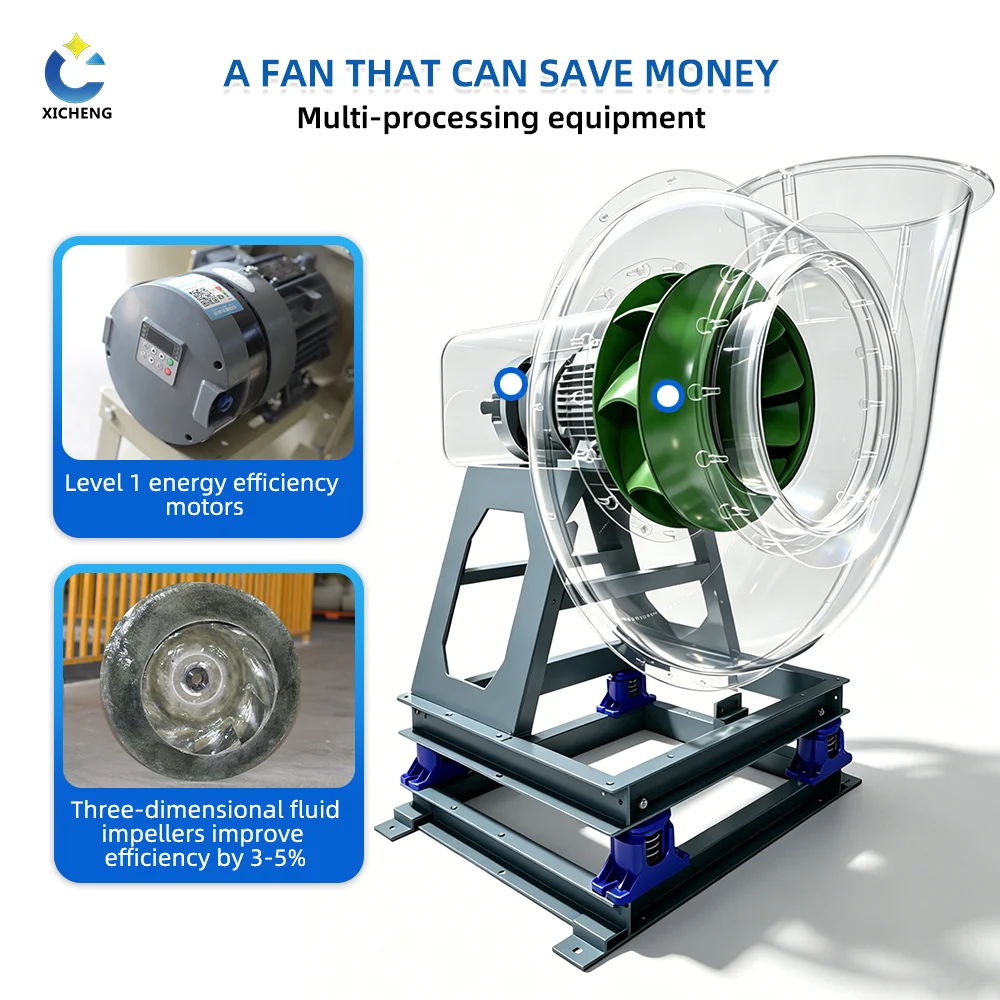
The one-piece rotor in the photograph is the shape the process produces: a dense family of curved blades, a wrapped hub, and no joints anywhere in the air path. Compare it with a riveted or welded metal wheel of the same duty and the corrosion story writes itself.
Polypropylene Fan Blades by Fan Form
Blade geometry is a packaging decision: the same polypropylene material takes very different shapes depending on how much static pressure the installation owes the duct. The three families that dominate industrial air are the tube axial fan, the forward-curved centrifugal impeller, and the small motor-cooling blade. Each one uses polypropylene fan blades for a slightly different reason, and the type table at the foot of this section ties the geometry to the pressure it can deliver.
Tube Axial: Non-Sparking PP on an Aluminum Hub
The cleanest example of the component in service is the tube axial fan with polypropylene blades. On these machines the blades are molded polypropylene mounted on a cast aluminum hub, arranged around the motor in a cylindrical housing that moves large air volume at modest static pressure. The hub gives the blades a rigid mounting and a precise bore; the plastic gives the fan a property the metal does not: it cannot strike an impact spark. That is why suppliers of paint booth and powder coat ventilation offer the tube axial fan with polypropylene blades as their standard spark-safe build, rated against NFPA 33 spray-booth rules.
Because the motor sits outside the airstream and the bearings are grease-serviceable, the tube-axial configuration is also the easiest to maintain in continuous duty. The aerodynamic trade is inherent: tube axial fans deliver volume, not pressure, and their ceilings sit near 1.5 inches of static water column even in the largest housings. For the same reasons it appears in the broader centrifugal-versus-axial taxonomy and against the axial fan definition that frames these machines.
Centrifugal: Forward-Curved One-Piece Impellers
Where pressure rules, the part changes shape entirely. A polypropylene fan impeller for centrifugal duty is a forward-curved, many-bladed wheel molded in one piece, and it trades the tube axial’s simplicity for real static pressure inside the same footprint. Molded impellers of this kind are cataloged to roughly 5,000 CFM at 4 inches of water column, with gas temperatures to about 122°F, in direct-drive or belt-drive arrangements; the fan curve against the centrifugal fan standard explains why the many shallow blades earn their pressure. Because the whole polypropylene fan impeller is one molding, it is also removable for inspection, and the bonded-tight hub keeps corrosive gas away from the steel shaft.
Motor-Cooling Blades and Crossflow
At the small end of the family sit the molded polypropylene blades bolted onto electric motor shafts to cool the windings. These are short, many-bladed axial fans with a keyway in the bore, cataloged by frame size from IEC 56 to IEC 200 and rated from below freezing to about 90–100°C at the motor end. In crossflow and mixed-flow machines the same molded-plastic discipline appears as long cylindrical impellers, useful where air must be delivered over a wide, narrow outlet. All of these variants share the same design grammar summarized in the fan-type catalogue.
| Fan form | Blade geometry | Static pressure | Typical polypropylene build | Best-fit duty |
|---|---|---|---|---|
| Tube axial | Propeller, 4–8 blades | Low (to ~1.5 wc) | Molded PP blades on aluminum hub, motor outside airstream | Large-volume exhaust, paint booths, spark-safe ventilation |
| Centrifugal, forward-curved | Many shallow curved blades, one-piece | Moderate (to ~4 wc) | Injection-molded PP impeller with steel-reinforced, sealed hub | Lab exhaust, scrubber feed, ducted corrosion duty |
| Centrifugal, backward-curved | Deep curved airfoil blades | Higher, self-limiting load | PP where corrosion rules; glass-reinforced for span | Higher-pressure chemical exhaust |
| Motor-cooling blade | Short multiblade axial | Negligible | PP, keyway bore, IEC frame sizes | Electric motor cooling in corrosive or humid plants |
| Crossflow / mixed-flow | Long cylindrical or angled blades | Low to moderate | Molded PP impeller | Air curtains, unit heaters, wide-low outlets |
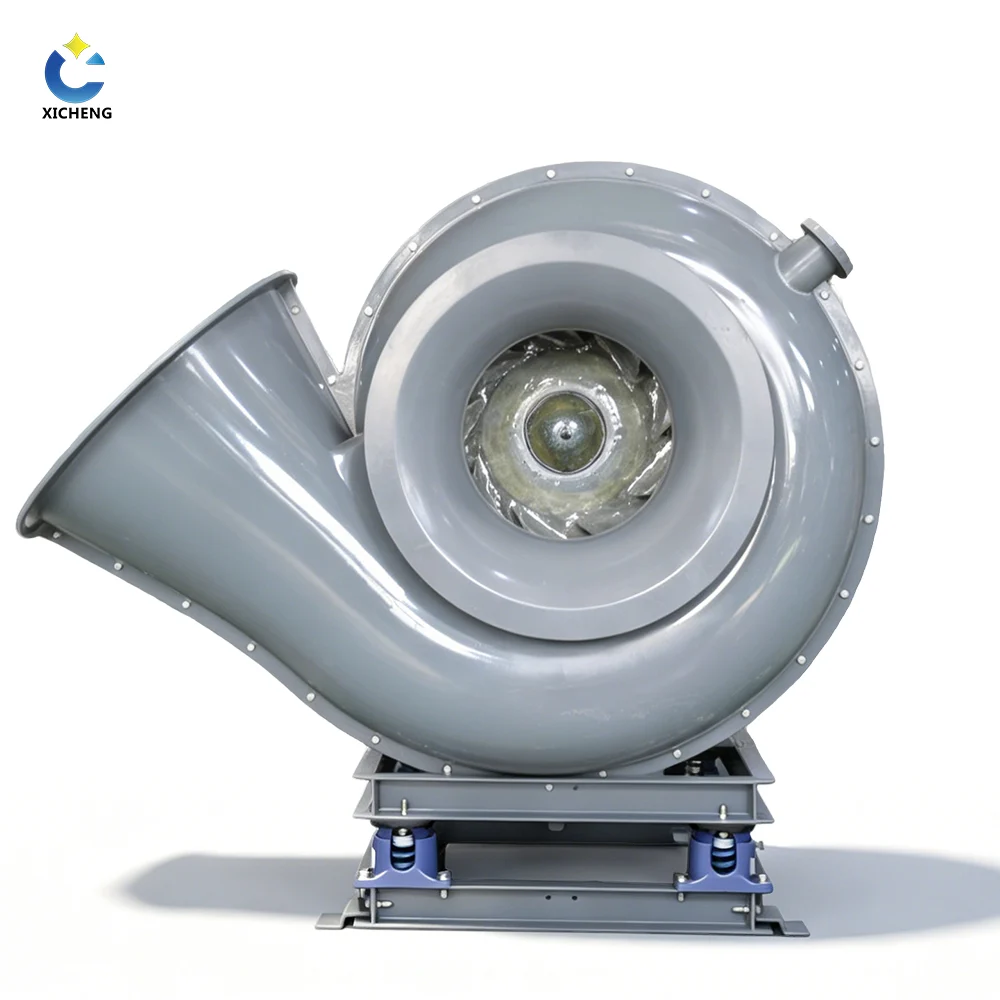
The rows above map directly onto the forward-curved versus backward-curved decision. Forward-curved polypropylene fan blades win the corrosion-fit argument inside a tight footprint; backward curved earns its place where the system loads stiffen and the fan must not overload the motor.
The Polypropylene Fan Blade Spec Sheet
For a replacement buyer, everything a set of polypropylene fan blades needs to fit is stated on a short ticket that the distributor prints under the part. Learning to read it in the same order every time removes most of the errors that send a new blade back to the shelf. The table below reproduces a real 24-inch, four-blade fiberglass-reinforced polypropylene replacement with a cast aluminum hub, including the operating data its supplier prints.
The Parameters That Decide Fit
Seven fields settle whether a blade threads onto your motor: blade diameter, the hub bore and shaft size over which the hub slides, the blade count, the pitch angle, the rotation direction seen from the shaft end, the rated RPM, and the motor horsepower the blade loads. Suppliers state the CFM the geometry earns at a speed in a particular mounting, and farms list it per shaft size so a buyer anywhere can match the 1/2-inch or 5/8-inch shaft already on the motor. Pitch and RPM do the real work: the table shows CFM climbing with pitch at the same speed, and with RPM at the same pitch, because each blade sweeps a steeper cone of air per turn. Set the rotation against your fan’s housing and orient the blades so they push air the way the system needs it. The common convention, printed beside many replacement blades, states that the fan spins clockwise when viewed from the exhaust side.
A Real Replacement Table, Read Line by Line
| Shaft size | Diameter | RPM | HP | Pitch | CFM at 0 wc |
|---|---|---|---|---|---|
| 1/2 in | 24 in | 1700 | 1/3 | 25 deg | 4660 |
| 5/8 in | 24 in | 1700 | 1/2 | 30 deg | 6270 |
| 5/8 in | 24 in | 1100 | 40 deg | 5670 | |
| 5/8 in | 24 in | 1100 | 45 deg | 6370 |
Reading down the columns, the same 24-inch blade family spans the air-moving range by changing shaft, speed, and pitch. A buyer with a 1/2-inch shaft and a 1700 RPM motor takes the first row; a buyer who can spin the same diameter at 1100 RPM picks the steep 45-degree row and still clears 6,000 CFM at free air. The empty horsepower cells are the honest part of the sheet: at 0 inches of static, the fan does little work, and the horsepower only appears once the system resists the airflow.
Direct Drive vs Belt Drive
Whether the polypropylene fan blades bolt straight onto the motor shaft or hang on a belted arbor changes the rules that apply. Direct-drive blades turn at motor speed, so the pitch has to be selected for that exact RPM, and adjustable speed on a single-phase motor is a rare exception; most single-speed machines simply require a starter. Three-phase direct drive opens variable speed through a VFD, but a VFD is not a proxy for getting the blade geometry right. Belt drive decouples blade speed from motor speed and lets one motor serve a range of fan duties by changing sheaves, which is why fan engineers keep belt-drive arrangements in the catalogue wherever a process load may drift. Notice that the certified fan curves behind these numbers follow the discipline of the AMCA test standards, and the energy yardsticks stay aligned with the U.S. Department of Energy’s fan-system guidance.
Where Polypropylene Fan Blades Earn Their Keep
Material science picks the resin; the application picks the fan form. Four working environments carry the bulk of the polypropylene fan blades sold, and each one points at a different combination of geometry and building code. The tour below starts with the spark-safe world, moves to the corrosive one, and ends at the small continuous-duty machines where the blades never stop.
Paint Booths and Mixing Rooms
In a paint or powder-coat booth, the air stream carries solvent vapor and airborne coating, and codes such as NFPA 33 define how the ventilation is allowed to behave. A metal blade that strikes its housing can throw a spark into that vapor; a polypropylene blade cannot, because plastic does not produce impact ignition the way aluminum or steel does. Combined with the aluminum hub and an explosion-rated motor outside the airstream, molded PP blades give the booth its non-sparking path without the added cost of a fully exotic wheel. That is the single clearest sale the material makes.
Corrosive Exhaust and Laboratory Fume Cupboards
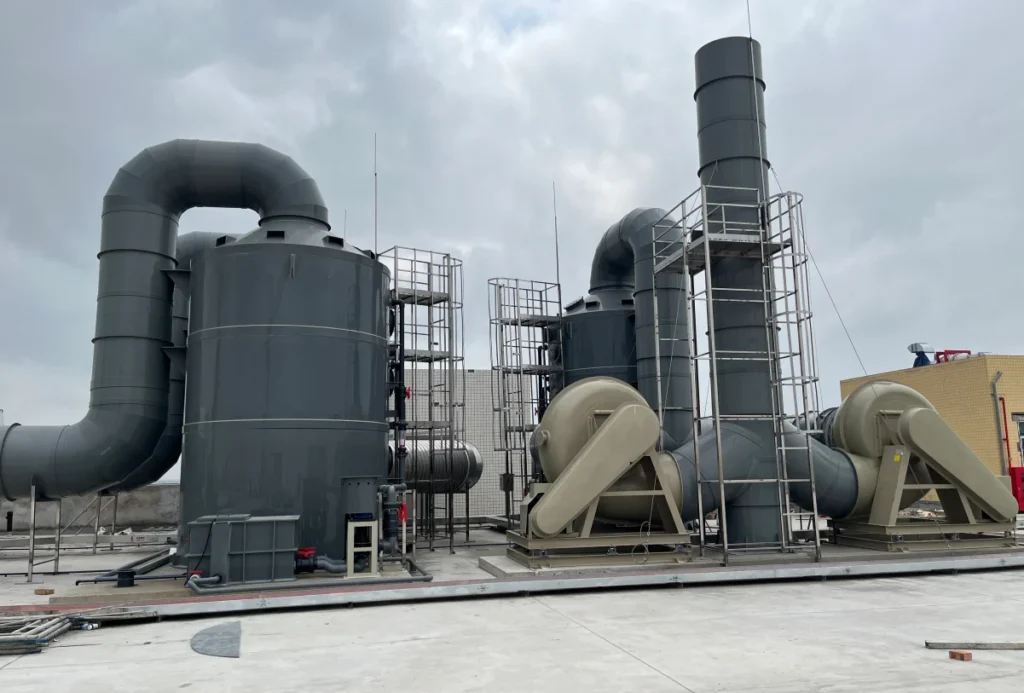
Where the process air itself is the hazard acid, halogen, or solvent, the blade job moves to the same logic that builds the whole exhaust train. A polypropylene fan impeller in a lab fume cupboard or a scrubber circuit carries the corrosive stream over molded plastic, with the steel hub hidden inside the molding, so the only metal the gas can touch sits behind plastic. These are polypropylene fan blades specified with the same material discipline as the rest of the train. This is the exact component-level version of the chemical resistant exhaust fan system guide: hood, duct, scrubber, fan, and stack all selected from the same material family so the weakest link disappears. For stream classes that stay under the polypropylene temperature ceiling, an injection-molded PP impeller delivers the corrosion resistance at a far lower price than a laminate wheel, and it keeps paying for years in plants that run continuously.
Motor Cooling and Agricultural Ventilation
At the least glamorous end of the family, molded polypropylene blades spin on motor shafts in corrosive and humid plants to keep windings below their temperature limit, sized by IEC frame and rated across freezing winters. In agricultural and shop-floor ventilation, the fiberglass-reinforced 24-inch replacement blades on aluminum hubs handle barn exhaust, condensation, and wash-down moisture that would pit a steel propeller in a season. Both are quiet, light continuous-duty machines: the light blade keeps the bearing load low and the motor off the overload curve, which is what the polypropylene blower range on this site carries through to whole-machine service.
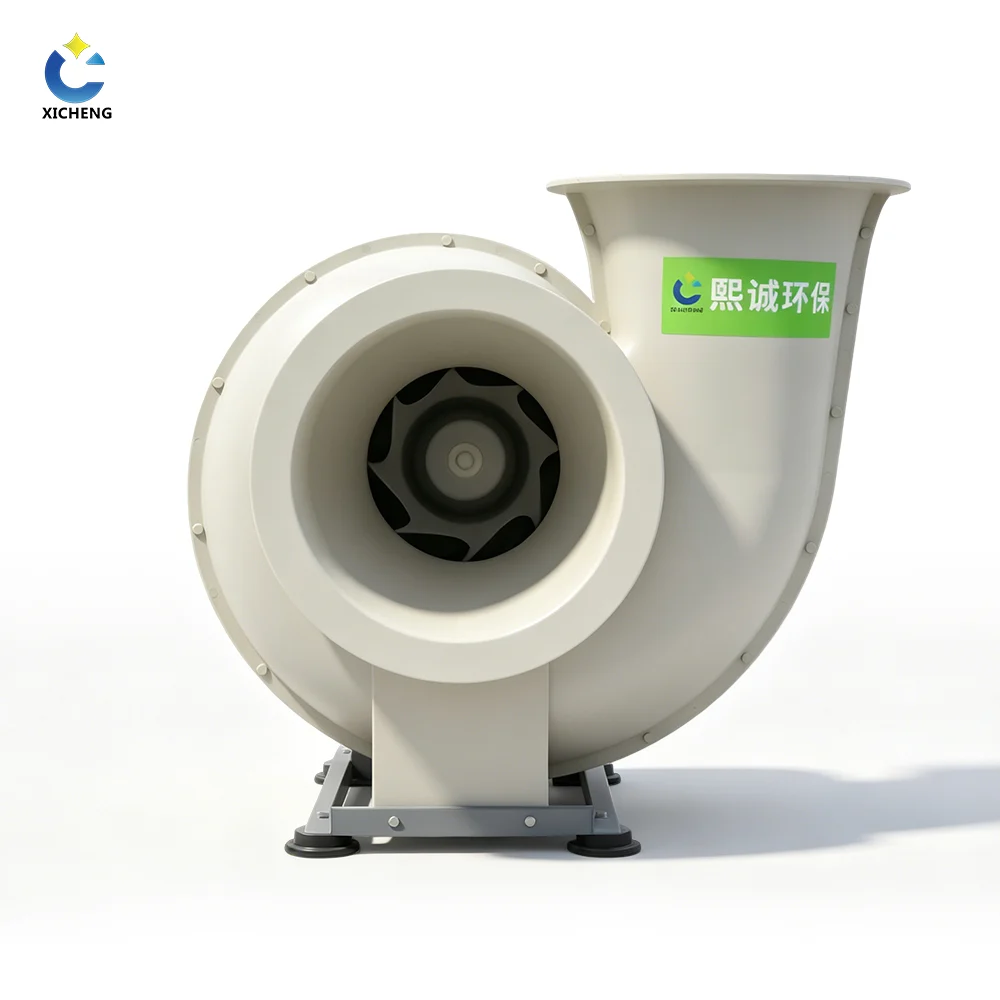
When the application list above matches your stream class, the next question is the temperature it runs at and the inches of static the system owes. Those numbers then pick the exact row of the polypropylene and FRP blower selection that matches your duty.
Supplier Checklist for Polypropylene Fan Blades
Among polypropylene fan blades, the genuine item is told apart from a molded part that merely resembles one by documents, not by surface finish. Work this short list before comparing prices on either the replacement shelf or the mold floor, because the same three facts decide both purchases: what the plastic is, how the hub is built, and what the temperature limit really is.
What the Replacement Sheet Must Prove
For an off-the-shelf blade, ask the distributor for the seven-field ticket before ordering: blade diameter, bore and shaft size, blade count, pitch, rotation direction, rated RPM, and horsepower. Then ask what the plastic actually is. The phrase you want on the sheet is a named grade of polypropylene, with glass reinforcement called out if the blade is span-critical. If the sheet says only “plastic blades,” ask for the resin; a fiberglass-reinforced polypropylene part behaves very differently from an unbranded ABS one at the same diameter. Confirm the hub is a metal insert appropriate to your shaft, the balance class is stated, and the continuous temperature limit is printed in degrees for your stream class.
What the Mold Shop Must Prove
For a custom component, the same three facts go upstream. The molder should name the base resin and the glass percentage in the compound for the duty you stated, then confirm the part is molded as one piece with the hub molded or over-molded for the corrosive path you described, exactly the discipline shown on the FRP blower range for the fiberglass half of the family. Ask for the balance grade, the mold-flow direction that puts fibers along the blade span, and a written temperature ceiling for continuous rather than peak duty. Ask about the one-time mold cost versus the piece price, because a one-piece impeller needs a dedicated steel cavity and that cost amortizes across volume. Finally, ask to see the part on a live or photographed installation that has run the same stream class long enough to show real wear, not a showroom sample.
Frequently Asked Questions About Polypropylene Fan Blades
When should I choose polypropylene fan blades over metal?
Choose polypropylene when corrosion, moisture, salt, or spark risk is the governing constraint, or when a light blade saves bearing life and motor load. Choose metal, or an FRP wheel, when the duty exceeds the polypropylene temperature ceiling, needs more than about 18 inches of reliable diameter, or owes the duct a static pressure that plastic geometry cannot hold.
What is the temperature limit of polypropylene fan blades?
Continuous service lands near 180-190°F for a standard polypropylene blade alloy, matching the 80-100°C deformation zone that blade suppliers quote for polymer alloys. Glass reinforcement extends practical stiffness within that band, but it does not raise the resin’s temperature ceiling. Above the band, hand the duty to a laminate or metal wheel.
How large can a polypropylene blade or impeller be made?
Practical molded diameters stop around 18-24 inches before balance and rigidity demand reinforcement. Fiberglass-reinforced polypropylene extends the practical band, and commercial replacements are offered at 24 inches and beyond. Larger wheels, and high-pressure centrifugal duty, belong to FRP wheels or metal fabrication.
How do I replace a blade using the spec table?
Read seven fields in order: diameter, hub bore and shaft size, blade count, pitch, rotation direction from the shaft end, rated RPM, and motor horsepower. Match the shaft size and RPM to your motor first, then pick the pitch row that delivers the CFM your system needs. Confirm the rotation direction against your housing, and you can drop the part in from the same table printed on the shelf.
Can a custom polypropylene impeller be molded to my duty?
Yes, as a one-piece forward-curved or fan-form impeller with the hub molded for your shaft and the resin grade matched to your stream. The mold shop needs the stream chemistry, the continuous temperature, the shaft and bore geometry, the target CFM and static pressure, and the volume that amortizes the tooling cost.
Why do corrosion-resistant plastic fan impellers hide a steel hub inside?
The steel hub carries the torque where the blade meets the shaft; the molded plastic isolates it from the process gas. A steel-reinforced hub over-molded in polypropylene means no corrosive vapor touches the steel, so the part gets the strength of an insert and the corrosion behavior of plastic blades over the whole air path.
Get a Recommendation for Your Blade or Impeller Duty
Every selection in this guide collapses to three facts: the stream chemistry including its worst component, the continuous operating temperature, and the shaft and bore geometry of the motor the part must fit. Fire those three facts at the Xicheng team and the response comes back as a concrete spec for your polypropylene fan blades or your custom impeller: the resin grade, the glass percentage, the hub build, the balance class, and the price for the replacement or the molded one-piece part.
Send the duty details and get a matched blade or impeller recommendation – a components answer, not a catalogue page, for your farm fan, your booth, or your scrubber circuit.