Selecting a polypropylene sheet for an industrial fabrication starts with a material decision that most specifiers get wrong: they choose a sheet by price or by what the local supplier stocks, and then discover that the grade, the thickness, or the type does not fit the chemical, the temperature, or the fabrication method. Polypropylene sheet is one of the most widely used industrial plastics because it combines chemical resistance, weldability, and a low density of 0.91 g/cm3, but its performance depends on choosing the right type and thickness for the duty. This guide is the complete reference for engineers and fabricators: the material properties, the sheet types, the sizes and thicknesses, the industrial applications, and a selection checklist before you buy. It is the hub for the full PP sheet guide series on this site.
Key Takeaways
- Polypropylene sheet is a flat thermoplastic panel with a density of 0.90-0.91 g/cm3, continuous service to 80-90 °C, and broad chemical resistance, making it the standard fabrication material for chemical ductwork, tanks, and scrubbers.
- The material is selected against four inputs: chemical, temperature, load, and fabrication method. Against HDPE, polypropylene has a higher melting point (160-170 °C) and lower density; against acrylic it is more chemical-resistant but less transparent.
- The sheet family spans solid, corrugated, foam, hollow, and honeycomb types. The solid sheet carries the full chemical and temperature duty; the lightweight types trade that performance for a much lower weight.
- A 4×8 foot sheet at 3 mm weighs about 8 kg, and the weight follows the density at 0.91 kg per square meter per millimeter of thickness. The standard size is 1220 by 2440 mm, with rolls for continuous supply.
- Buy the sheet against the duty, not the price: specify the grade, the type, and the thickness for the chemical and temperature, and choose a manufacturer for grade control and fabrication support over a distributor for a standard stock sheet.
What Is Polypropylene Sheet?
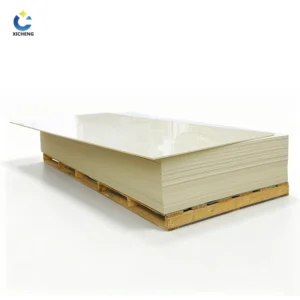
A polypropylene sheet is a flat thermoplastic panel extruded from polypropylene resin, used across industrial fabrication for its combination of chemical resistance, weldability, and low weight. The sheet is the raw material for ductwork, storage tanks, scrubbers, tank linings, and a wide range of fabricated parts, and it is produced in solid, corrugated, foam, and hollow forms to suit different duties.
The Definition and Properties
Polypropylene is a semi-crystalline thermoplastic, and the sheet inherits the resin’s properties. A standard polypropylene sheet has a density of 0.90-0.91 g/cm3, which makes it one of the lightest structural plastics, and it floats on water. The low density makes the sheet roughly 35% lighter than PVC and 23% lighter than acrylic, and it is the reason a standard 4×8 foot sheet at 3 mm thick weighs about 8 kg. The sheet resists a broad range of acids, alkalis, and solvents at ambient temperature, which is the property that makes it the standard lining and fabrication material for chemical service. It welds reliably by hot air and extrusion welding, which lets a fabricator build large vessels and duct runs from flat panels. The polypropylene sheet material properties are covered in detail in the material properties section below.
How Polypropylene Sheet Is Made
The sheet is produced by extruding melted polypropylene resin through a die to form a continuous flat sheet, which is then cooled, cut, and either stacked as panels or wound into rolls. The extrusion process controls the thickness, the width, and the surface finish, and the resin grade and any additives set the performance: a homopolymer grade for stiffness, a copolymer grade for impact, and UV or flame-retardant additives for outdoor or fire-rated service. The manufacturing process determines the consistency of the sheet, and the how polypropylene sheet is made guide covers the extrusion process in detail.
PP Sheet vs Other Plastic Sheets
The pp sheet competes with HDPE, PVC, and acrylic sheets, and the choice is set by the duty. Polypropylene resists more chemicals than acrylic and welds more easily than HDPE. HDPE has better low-temperature impact strength but a lower melting point. Acrylic is clearer but far less chemical-resistant and more brittle. PVC is stiffer and self-extinguishing but less weldable and less chemically versatile. The comparison table in the material properties section gives the numbers, and the selection is made against the chemical, the temperature, and the fabrication method of the application.
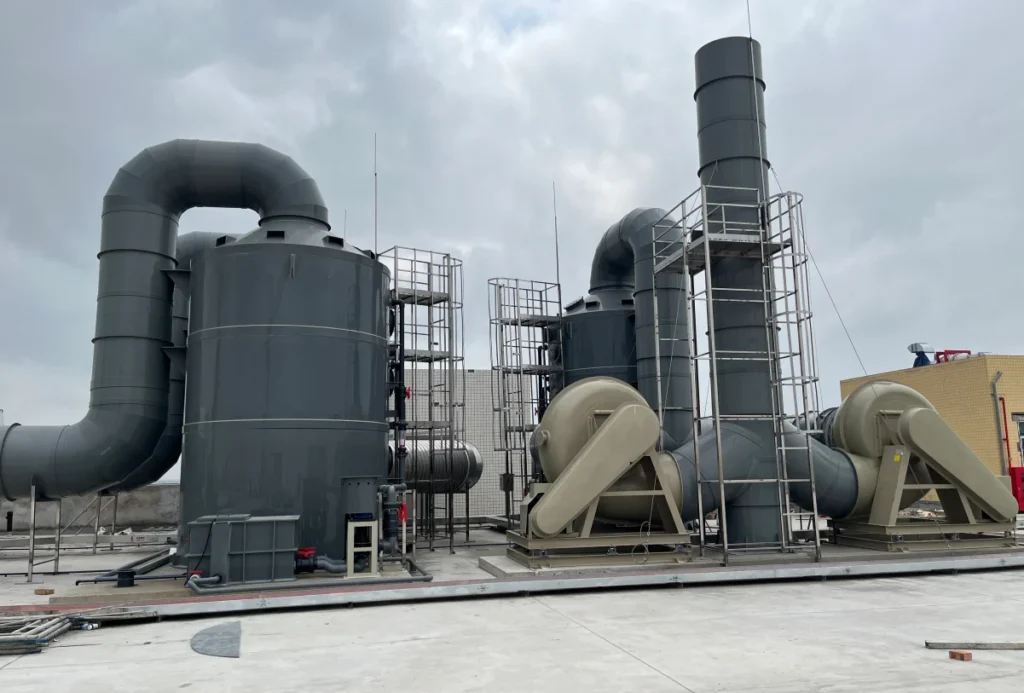
The industrial role of polypropylene sheet is defined by the equipment it makes possible. A chemical plant’s corrosion-resistant ductwork, a wastewater facility’s fume scrubber, and a metal finisher’s acid tank are all fabricated from welded polypropylene panels, because no other material combines the chemical resistance, the weldability, and the cost. The sheet is the raw material that Xicheng’s own scrubbers, ductwork, and tanks are built from, and the same sheet is supplied to fabricators for their own projects. The choice of the polypropylene sheet is therefore the first engineering decision in most corrosion-resistant fabrication, and it determines the service life of the equipment built from it.
Polypropylene Sheet Material Properties
The polypropylene sheet material properties set what the sheet can do, and the four that drive most selections are density, temperature resistance, chemical resistance, and weldability. The values follow the two classification systems that govern polypropylene materials: ASTM D4101, which covers polypropylene for injection molding and extrusion, and ISO 19069-1, the international designation system that can be used as the basis for specifications.
Density and Weight
Polypropylene sheet has a density of 0.90-0.91 g/cm3, which makes it roughly 35% lighter than PVC and 23% lighter than acrylic. The low density reduces the handling weight and the cost per square meter, and it is the reason a standard 4×8 foot sheet at 3 mm thick weighs about 8 kg, compared with about 12.5 kg for the same sheet in rigid PVC. Where the sheet is intended for food contact the figure is not left to the supplier: 21 CFR 177.1520 specifies a density of 0.880-0.913 for the polypropylene it covers, and the same table gives a melting point of 160-180 °C. The weight calculation is covered in the sizes section, and the density matters wherever the sheet is moved, shipped, or installed in a structure.
Temperature Resistance
A polypropylene sheet is rated for continuous service up to roughly 80-90 °C, with a melting point near 160-170 °C. Below 0 °C the sheet becomes brittle and can crack under impact, so a copolymer grade is selected for cold service. The temperature limit sets the material choice for hot chemical service: above 90 °C the specifier moves to PVC at moderate temperatures or to a higher-temperature material. The temperature rating is a ceiling, not a guide, and a sheet selected for a 75 °C continuous duty leaves margin against the softening that occurs near the limit.
Note on the temperature ratings and the cost index The 80-90 °C continuous-service ceiling, the 160-170 °C melting point and the relative cost index in the table below are indicative figures taken from sheet manufacturers’ datasheets and industry practice rather than values published by a standards body. The FDA specification for the polypropylene it covers allows a melting point of 160-180 °C, so the number to design against is the one on the datasheet for the grade actually being bought. Continuous service also depends on the load and on the chemical in contact, so a sheet rated to 90 °C in one duty is not automatically suited to another.
Chemical Resistance
Polypropylene offers broad resistance to dilute and concentrated acids, alkalis, and most organic solvents at ambient temperature, which makes it the standard material for chemical tanks, scrubbers, and linings. The exceptions are the strong oxidizing acids, such as concentrated sulfuric and nitric acid, and the aromatic and chlorinated hydrocarbons, which attack the material. The chemical resistance of a polypropylene sheet must be checked against the specific chemical, the concentration, and the temperature of the service, because a chemical that is safe at 20 °C can degrade the sheet at 60 °C.
Mechanical and Welding Properties
The sheet is stiff and impact-resistant at room temperature, with a tensile strength that supports self-supporting tanks and ductwork, and it welds cleanly by hot air and extrusion welding. The weldability is the property that makes polypropylene the preferred fabrication material: a fabricator builds a tank or a duct run by cutting panels and welding the seams, and a properly made weld retains most of the parent material strength. The high density polypropylene sheet grade offers higher stiffness and is covered in the high density polypropylene sheet guide, and the polypropylene sheet properties guide details the full data.
| Property | Polypropylene | HDPE | Acrylic |
|---|---|---|---|
| Density (g/cm3) | 0.90-0.91 | 0.95-0.97 | 1.18-1.19 |
| Max continuous temp (°C) | 80-90 | 60-70 | 60-70 |
| Melting point (°C) | 160-170 | 125-135 | None (amorphous) |
| Chemical resistance | Excellent | Excellent | Poor |
| Weldability | Excellent | Good | Poor |
| UV resistance | Poor (needs additive) | Poor | Good |
| Impact strength | Good | Excellent | Poor (brittle) |
| Transparency | Translucent | Opaque | Clear |
| Relative cost index | 1.0 | 1.1 | 1.6 |
The transparent and colored grades are covered in the transparent polypropylene sheet and black polypropylene sheet guides.
The property values are nominal and vary with the grade. A homopolymer polypropylene sheet is stiffer but less impact-resistant, and a copolymer grade is tougher at low temperature. A glass-filled grade adds stiffness at a higher density. The polypropylene sheet specification should state the resin grade and the required property values, because a sheet bought on price alone may be the lower-impact homopolymer grade when the application needs the tougher copolymer. The data sheet from the manufacturer gives the exact values for the grade supplied, and the specification should reference the applicable ASTM D4101 or ISO 19069-1 class so the buyer and the supplier agree on the material standard.
That standard is a classification system before it is anything else. It covers polypropylene materials suitable for injection molding and extrusion, and it groups them as unreinforced natural-color, unfilled and unreinforced, calcium carbonate filled, glass reinforced, copolymers, and talc filled. The polymers themselves consist of homopolymer, copolymers and elastomer, compounded with or without impact modifiers such as ethylene-propylene rubber, polyisobutylene rubber and butyl rubber, together with colorants, stabilizers, lubricants or reinforcements. That list is why a sheet specification names a grade rather than simply the material, and why two sheets sold as polypropylene can behave differently in the same chemical service.
Types of Polypropylene Sheet
The polypropylene sheet family divides into types by the internal structure, and each type serves a different duty. The polypropylene plastic sheets buyer selects the type by the load, the weight limit, and the fabrication method.
Solid PP Sheet
The solid sheet is the standard type: a dense, flat panel used for tanks, ductwork, scrubbers, linings, and any structural fabrication. It is the strongest and most weldable type, carries the full chemical resistance of the resin, and is available in the full thickness range from 0.5 mm to 25 mm and beyond. The solid sheet is the default choice for chemical equipment and process fabrication, and it is the type that most of this site’s scrubber and tank products are built from.
Corrugated and Fluted PP Sheet
The corrugated or fluted sheet has a hollow, ribbed internal structure between two facing layers, which gives it high stiffness at a low weight. It is used for signage, packaging, and lightweight panels where the strength-to-weight ratio matters more than the chemical or temperature duty. The fluted sheet is easier to cut and fold than the solid sheet, which suits the sign and display industry. The corrugated polypropylene sheet guide covers this type in detail.
Foam, Hollow, and Honeycomb PP Sheet
The lightweight types replace the solid core with a cellular structure. The polypropylene foam sheet has a closed-cell foam core that provides thermal insulation and buoyancy. The PP hollow sheet has continuous hollow channels, and the polypropylene honeycomb sheet has a hexagonal core that gives a high stiffness-to-weight ratio for panels and sandwich structures. These types trade the solid sheet’s full chemical and temperature performance for a much lower weight, and they are selected where weight is the constraint.
Colored and Specialty PP Sheet
The colored and specialty sheets add performance or appearance. A perforated polypropylene sheet has a pattern of holes for ventilation and filtration. A woven PP sheet is used for reinforcement, and a black grade with a UV stabilizer is selected for outdoor service where the standard sheet would degrade in sunlight. The colored grades are covered in the color guide, and the specialty types are selected when the duty adds a specific requirement beyond the standard sheet.
The full pp sheets range spans these types, and the selection between them is covered in the selection section below.
The type selection also considers the fabrication and the installation. The solid sheet welds into structural equipment, while the corrugated and foam grades are joined by folding, adhesive, or mechanical fasteners. A duct system built from solid sheet uses welded seams that match the duct material and resist the chemical fume; a signage panel built from fluted sheet uses folded edges that keep the panel light and printable. The fabrication method is therefore a type-selection input, and a fabricator that specializes in welding chooses the solid grade while a sign maker chooses the fluted grade. The sheet type and the joining method are designed together, because the joint is the weak point of any fabrication, and a type selected without the joining method in mind produces a part that fails at the seam.
Sizes, Thickness, and Weights
The polypropylene sheet is available in standard sizes and a thickness range, and the size and thickness selection sets the sheet weight and the fabrication plan.
Standard Sizes
The most common standard size is the 4×8 foot sheet, 1220 by 2440 mm, which is the default for most fabrications and the size that polypropylene sheets 4×8 buyers specify. Larger sheets, such as 4×10 foot and wider rolls, are available from the manufacturer, and the polypropylene sheet roll is supplied as continuous sheeting in a specified width and length. The size selection balances the fabrication layout against the sheet cost, because a fabrication that fits within the 4×8 sheet wastes less material than one that requires cutting across a sheet boundary.
Thickness Range
The thickness range runs from 0.5 mm for lightweight and lining applications to 25 mm and above for structural tanks and scrubbers, with the common industrial thicknesses at 2, 3, 4, 5, 6, 8, 10, 12, and 15 mm. The thickness sets the stiffness, the load capacity, and the weld strength, and the PP sheet thickness guide details the selection for each application. A tank wall is sized by the hydrostatic load, a duct wall by the pressure and the span, and a lining by the erosion and the chemical duty, so the thickness is an engineering decision, not a preference.
Weight Calculation
The sheet weight follows the density and the volume: a polypropylene sheet at 0.91 g/cm3 weighs 0.91 kg per square meter per millimeter of thickness. A 3 mm sheet weighs 2.7 kg/m2, and a standard 4×8 foot sheet (2.97 m2) weighs about 8 kg. The table below gives the reference weight per square meter by thickness, and the weight sets the handling, the shipping, and the structural support.
| Thickness (mm) | Weight (kg/m2) | Typical application |
|---|---|---|
| 1 | 0.9 | Lining, covers |
| 2 | 1.8 | Duct, light panels |
| 3 | 2.7 | Ductwork, tank lining |
| 5 | 4.6 | Tank walls, scrubbers |
| 8 | 7.3 | Structural tanks, duct |
| 10 | 9.1 | Heavy tanks, scrubbers |
| 15 | 13.7 | Large tanks, structural |
| 20 | 18.2 | Heavy fabrication |
The weight calculation follows from the density of 0.91 g/cm3 given above, and the same polypropylene sheet in a lighter type, such as the corrugated or hollow grades, weighs a fraction of the solid sheet for the same thickness.
The sheet sizes and the fabrication layout are planned together to minimize waste. A duct or a tank design that fits the 4×8 sheet with a cutting plan wastes less than a design that ignores the sheet boundary, and a fabricator lays out the panels on the sheet before cutting. The standard sheet size also sets the maximum panel dimension for a single piece, because a tank wall wider than the sheet is welded from two panels. The sheet width from a roll sets the continuous length available for a long duct run or a lining, and the roll supply is selected where the fabrication runs long sections without a seam. The size and the layout are an engineering pair, and the sheet specification should state the panel sizes the fabrication requires.
The sheet flatness and the dimensional tolerance are the quality inputs for a precision fabrication. A duct or a tank panel that must align at the weld needs a sheet within the flatness tolerance, because a warped panel draws the weld out of line and stresses the joint. The thickness tolerance matters for a part that must fit a slot or a groove, and the sheet width tolerance matters where panels are edge-welded to a matching width. A fabricator checks the sheet flatness, the thickness, and the edge straightness on receipt, and the polypropylene sheets that pass the check produce a consistent fabrication, while a sheet that fails produces rework and a weak joint. The tolerance specification is part of the sheet purchase, and a manufacturer supplies the tolerance data with the sheet.
Polypropylene Sheet Applications
The polypropylene sheet applications span the chemical, environmental, and fabrication industries, and the polypropylene sheet uses guide details each industry.
Industrial Applications
The largest use of polypropylene sheet is the fabrication of chemical and environmental equipment. It is the standard material for corrosion-resistant ductwork, because the sheet welds into the rectangular and round duct runs that carry acid and alkaline fumes. It is the standard material for storage tanks and process vessels, because the welded sheet holds the chemical load that would corrode a metal tank. It is the lining material for tank and floor protection, where a polypropylene lining isolates the substrate from the chemical. And it is the material that Xicheng’s own scrubbers, tanks, and ductwork are fabricated from. The pp sheet for ductwork and tank service is specified for the chemical, the temperature, and the structural load, and the sheet thickness is sized against those inputs.
Fabrication and Signage
The fabrication applications use the sheet’s weldability and formability. A fabricator builds a duct, a tank, a fume hood, or a scrubber body from flat panels joined by hot air and extrusion welding, and the weld quality sets the service life. The corrugated and fluted grades serve the signage and display industry, where the sheet is cut, folded, and printed into signs, and the polypropylene sheeting in the solid grade serves the machine guards, covers, and fabricated parts that need a chemical-resistant panel. The cutting and bending methods are covered in the fabrication guides on this site.
Application Selection
The application selection matches the sheet type and thickness to the duty. A chemical duct carries a corrosive fume at a temperature, so it needs a solid sheet in a thickness that spans the duct and resists the chemical. A signage panel carries a print and a display load, so it needs a corrugated sheet that is light and stiff. A tank lining needs a solid sheet that bonds to the substrate and resists the stored chemical. The selection checklist in the next section walks through the four inputs, and the application is the first of them.
The application also includes the environmental and utility service. A wastewater treatment plant uses polypropylene sheet for the odor-control scrubber and the corrosion-resistant covers over the tanks. A food and beverage plant uses the food-grade sheet for the process equipment and the wash-down resistant panels. A semiconductor or plating facility uses the sheet for the acid waste lines and the fume exhaust. Each application carries a specific chemical and temperature, and the sheet is specified against that duty. The common thread is the corrosion resistance that polypropylene provides at a cost that the alternative materials cannot match, and the application guide lists the industries where the sheet is the standard choice.
Selecting and Buying Polypropylene Sheet
The polypropylene sheet selection converges on four inputs, and the buying decision follows the same pp sheets checklist that any industrial plastic purchase uses.
Selection Checklist
The four inputs are the chemical, the temperature, the load, and the fabrication method. The chemical sets the material grade and the chemical-resistance check, because a chemical that is safe in standard polypropylene may require a specific grade or a different material. The temperature sets the grade and the thickness, because the service temperature must stay below the 80-90 °C continuous limit with margin. The load sets the thickness, because a tank wall or a structural panel is sized against the hydrostatic or span load. The fabrication method sets the sheet type, because a welded tank needs a solid sheet while a folded sign needs a corrugated sheet. A sheet selected against these four inputs fits the duty; a sheet selected by price alone does not.
Manufacturer vs Supplier
The buying decision is between a direct manufacturer and a distributor. A manufacturer, such as Xicheng, produces the sheet to specification and can supply the grade, the size, and the fabrication support for the application. A distributor stocks standard sheets and supplies them quickly but does not control the production or the grade. For a standard sheet in a common size, a distributor is convenient. For a project that needs a specific grade, a large size, or a fabrication partner, the manufacturer provides the direct support. The polypropylene sheet manufacturer guide covers the supplier evaluation.
Cost Factors
The cost is set by the type, the thickness, the grade, and the quantity. A solid sheet is priced per kilogram, so the low density of polypropylene gives it a cost advantage over denser plastics, and a thicker sheet costs proportionally more. A UV or flame-retardant grade adds a premium, and a corrugated or foam sheet is priced differently per unit area. The polypropylene sheet price guide details the cost by type and thickness. The cost comparison should include the fabrication, because a sheet that is easier to weld and cut lowers the total project cost even if the material price per kilogram is equal.
For a project-specific sheet, browse the PP sheet product range or contact our engineering team with the chemical, the temperature, and the size, and receive a sheet recommendation matched to the duty.
The selection also covers the sheet surface and the edge quality. A sheet with a smooth surface is specified for a lining where the chemical must not collect in surface defects, and a sheet with a matte finish is specified for a part that will be printed or bonded. The edge quality matters for the weld, because a clean, square edge produces a consistent weld while a ragged edge produces a weak joint. The sheet tolerance, the flatness, and the warpage are the quality inputs that a fabricator checks on receipt, because a warped sheet does not lay flat in the jig and a sheet out of tolerance does not fit the cutting plan. The quality of the polypropylene sheet is as much a selection input as the material grade, and a specification that states the surface, the tolerance, and the flatness prevents the fabrication problems that a price-only purchase introduces.
FAQ
What is polypropylene sheet used for?
A polypropylene sheet is used to fabricate chemical-resistant industrial equipment: corrosion-resistant ductwork, storage tanks, process vessels, scrubbers, tank linings, and machine guards. The corrugated and fluted grades are used for signage, packaging, and lightweight panels.
Is polypropylene sheet food safe?
A food-grade polypropylene sheet is safe for food contact, because polypropylene is an FDA-compliant material for food handling. The grade must be specified as food-grade, and the sheet must not contain additives that are not approved for food contact.
The rule behind that is a resin rule rather than a sheet rule. 21 CFR 177.1520 permits the olefin polymers it lists to be used as articles or components of articles intended for use in contact with food, and it defines polypropylene as basic polymers manufactured by the catalytic polymerization of propylene. A sheet intended for food service is therefore bought against a resin grade that complies with that section, and the additives are checked on the same basis.
Can you weld polypropylene sheet?
Yes. Polypropylene welds reliably by hot air and extrusion welding, and the weld retains most of the parent material strength. The weldability is the property that makes the sheet the standard for fabricating tanks, ductwork, and scrubbers from flat panels.
What is the difference between polypropylene and HDPE sheet?
Polypropylene has a higher melting point (160-170 °C vs 125-135 °C) and a lower density (0.91 vs 0.95-0.97 g/cm3), which makes it stiffer and lighter. HDPE has better low-temperature impact strength. Polypropylene welds more easily, and the two are chosen by the temperature, the impact, and the fabrication requirements.
How much does polypropylene sheet weigh?
A polypropylene sheet at 0.91 g/cm3 weighs 0.91 kg per square meter per millimeter of thickness. A 3 mm sheet weighs 2.7 kg/m2, and a standard 4×8 foot sheet at 3 mm weighs about 8 kg.
Is polypropylene sheet chemical resistant?
Polypropylene resists a broad range of acids, alkalis, and organic solvents at ambient temperature. The exceptions are the strong oxidizing acids and the aromatic and chlorinated hydrocarbons, and the resistance must be checked against the specific chemical, concentration, and temperature of the service.
What thickness polypropylene sheet do I need?
The thickness is set by the load, the span, and the chemical duty. A duct or a light panel uses 2-5 mm, a tank wall uses 6-15 mm depending on the hydrostatic load, and a heavy fabrication uses 15-25 mm. The PP sheet thickness guide details the selection for each application.
Is polypropylene sheet UV resistant?
Standard polypropylene degrades in prolonged sunlight and is not UV resistant. A black grade with a UV stabilizer is used for outdoor service, and the UV-resistant grades are specified where the sheet is exposed to direct sunlight. The UV performance is a grade decision, not a material property, and the black grade is covered in the black polypropylene sheet guide.
Sources
- ASTM International – ASTM D4101-24, Standard Classification System and Basis for Specification for Polypropylene Injection and Extrusion Materials (the polypropylene material families the classification covers and the polymer, modifier and filler combinations they include).
- ISO – ISO 19069-1:2015, Plastics — Polypropylene (PP) moulding and extrusion materials — Part 1: Designation system and basis for specifications (the international designation system for polypropylene and the designatory properties — tensile modulus of elasticity, impact strength and melt mass-flow rate — by which the grades are differentiated).
- U.S. eCFR (GPO / National Archives), mirroring the FDA food-contact regulations – 21 CFR 177.1520, Olefin polymers (the rule that permits the olefin polymers it lists to be used in contact with food, the definition of polypropylene and of propylene homopolymer, and the density and melting point specifications for food-contact polypropylene).