A manual bleed valve is the small, hand-operated valve that vents or drains a controlled amount of air, gas, or liquid from a pressurized system, instrument, or duct. Technicians open one before maintenance to release line pressure, drain condensate that collects at a low point, or draw a sample for analysis. The manual bleed valve is the simplest safety and service tool in the valve family: no power supply, no actuator, no control signal — just a handle, a stem, and a seat that an operator opens and closes by hand. When the same vent duty must happen automatically instead of by hand, the electric valve actuator guide is the powered counterpart of that bleed point.
The component appears under two spellings that mean the same device. Component catalogs list it as a manual bleed valve, while process and service sites commonly write manual bleeder valve; both name the same vent-and-drain valve. It sits behind the other manual members of this cluster — the plastic duct damper, the manual air valve, and the manual valve actuator — as the small downstream valve that takes a system down to a safe working state rather than regulating the main flow. This guide explains what a manual bleed valve does, how it works internally, the types on the market, where one belongs on duct and fume systems, and how to select, install, and care for it.
What Is a Manual Bleed Valve?
Definition and naming
A manual bleed valve is a manually operated vent or drain valve whose opening is set by hand and whose purpose is to release a small, controlled flow of fluid or air. The bleed valve, also called a vent valve, is opened only when needed and closed when the task is done, which is why operation is described as low-frequency. In industrial terminology the manual bleed valve is the controlled-release member of the pressure-control family: it does not regulate continuously like a needle valve, and it does not protect against overpressure like a relief valve.
The alternative name manual bleeder valve is simply the older, service-room spelling of the same component. A manufacturer may stamp BLEED on the body while a maintenance department calls the same part a bleeder; both refer to the identical vent-and-drain device discussed here. The manual air-release angle matters in hydronic and tank service, where the same valve clears trapped air from the top of a vessel instead of draining pressure from the side.
Anatomy: body, stem, seat, and handle
A manual bleed valve has a deliberately small parts count — body, stem, seat, and a handle or button — because reliability at high pressure comes from simplicity, not complexity.
Body, port, and vent tube
The body carries the inlet port that connects to the instrument, tank, or duct, and the vent path that carries released media away from the operator. In a straight-pattern bleed valve the vent path exits opposite the port; in a tee-pattern valve it exits at 90 degrees, which lets the installer aim the discharge into a drain or containment line. The body material follows the system: brass and stainless for instrument lines, PP and PVC for plastic fume and chemical service.
Stem, seat, and backstop screw
The stem moves in and out of a seat to open and close the flow, driven by a fine thread that lets the operator regulate release rate by fractions of a turn. Instrument-grade bleed valves carry a backstop screw opposite the vent that prevents the stem from being wrenched out entirely, so a full back-off never releases the stem into the vent stream. The seat is the sealing surface the stem lands on, and its condition decides whether the valve drips when closed.
Handle, button, and actuator
The top end of the valve carries the operator interface: a turned handle or hex cap on a threaded bleed screw, a push button on a spring-loaded design, or a lever on a small ball-type vent. Every one of these counts as part of the manual bleed valve assembly because none of them needs external power. The same top-end family is described on the manual valve actuator range, where the lever, wheel, and gear operators set larger valves in the same hand-powered way.
How a Manual Bleed Valve Works
The open-close path: stem to seat
Opening a manual bleed valve is a linear motion: turning the handle withdraws the tapered stem from the seat, and the pressure inside the vessel pushes gas or liquid out through the uncovered port and away through the vent. Closing reverses the path — the stem advances into the seat, and the metal-to-metal or elastomer seal stops the flow. Because the stem thread is fine, a manual bleed valve releases media at a rate the operator controls by how far the stem opens, which is the property that makes it safe to vent a pressurized line bit by bit rather than in one burst.
Three duties: vent, drain, and equalize
The same mechanism carries three routine jobs. Venting lets out trapped air or gas so a system reaches atmosphere before work begins — and on a fuel-gas line the vent is opened only after the manual gas valve upstream proves the section dead. Draining empties condensate, water, or a settled liquid from a low point where it would otherwise corrode fittings or foul instruments. Equalizing is the service trick of opening a bleed on one side of a section so that pressures on both sides balance before a damper, gate, or flange is opened, avoiding the suction or slam that an unbalanced release can cause. The automated duct damper that opens and closes with that bleed procedure is an electric air valve where motorized airflow control takes over.
Manual vs automatic release
The manual bleed valve stays closed until a person decides otherwise, which is its difference from an automatic bleed valve. Automatic units, such as the air-release valves fitted at the high points of hydronic systems, open as trapped air collects — the float drops and the vent cracks — which suits systems that must shed air continuously. Crucially, they do not replace manual bleeding: an automatic vent handles air that collects during normal service, while commissioning a freshly filled system and remedial bleeding after an airlock still need a manual bleed screw opened by hand. The manual design also trades that convenience for control — nobody is surprised by an auto-vented discharge, and a hand-operated valve holds its closed position rather than weeping open on its own. For duct and fume work, where a bleed is opened deliberately for maintenance or sampling and then closed, the manual valve is the standard choice. On automated exhaust branches the same maintenance access is planned around the motorized dampers treated in the electric exhaust valve guide, whose blades must be free before a bleed opens.
Types of Manual Bleed Valves
Manual bleed screw (instrumentation)
The instrumentation bleed screw is the classic manual bleed valve of analyzer rooms, pressure manifolds, and gauge stands. A threaded handle advances or withdraws a stem against a seat, and the whole unit is compact enough to mount inline with a gauge or manifold. The Superlok analysis of bleed, purge, and relief valves notes that these units typically rely on that threaded screw for opening and closing, and that the design handles the high pressures and temperatures common in instrument service. A backstop screw opposite the vent keeps the stem captive, so even a full back-off cannot drop the stem into the vent stream.
Straight and tee-pattern bleed valves
The two body patterns differ only in where the vent leaves. A straight-pattern manual bleed valve discharges along the axis opposite the inlet, which suits a stack or a drain directly below; a tee-pattern valve vents at right angles, letting the released media be piped away into a containment line instead of drifting past the operator. Otherwise the two perform identically, and the choice is dictated by how the line is run at the installation point.
Push-button bleed valve
A push-button manual bleed valve replaces the threaded stem with a spring-loaded poppet that opens when the button is pressed and reseats when it is released. Its strength is speed: a momentary push vents pilot pressure in a control circuit without turning a handle. VERSA’s bleed valve range, used on directional control valves, mounts on the pilot cap or at the end of a remote bleed line and releases pressure from one side of a valve so the opposite side shifts the spool — a precise example of bleeding for balance rather than for drainage. The button-style valve is the right type where a technician must vent quickly and repeatedly, on port sizes around 1/8-inch NPT and pressures in the low hundreds of psi.
Manual air vent and bleeder
At the low-pressure end of the family, the manual air vent and bleeder is the valve that clears air from liquid systems and water from air systems. It shares the same hand-operated stem-and-seat layout, scaled down to a thin bore and a small handle.
Air vents on tanks and radiators
On hydronic loops and storage tanks, a manual air vent at the high point lets a technician purge trapped air that would collect as a gas pocket and block circulation. These are the radiator-type bleeder valves familiar in heating work — turned open a fraction with a small knob or key until the hiss stops, then closed. The manual action matters here because tank and radiator vents are serviced occasionally rather than continuously; an automatic valve would be equally acceptable, but the manual version costs less and leaves no mechanism to fail.
Compressed-air condensate drain
Compressed-air receivers and dryers collect water at their bottom drain points, where a manual bleed valve doubles as a condensate drain. The operator opens the drain when the tank is down, lets the accumulated water and oil blow out for a second or two, and closes it again. On this duty a manual bleed valve beats a self-draining trap when the discharge is dirty enough to foul pilot parts, because a hand-opened drain has no internal mechanism to stick.
Bleed vs purge vs relief
Three pressure-release valves look alike and do different jobs, and the distinction is worth keeping straight in specification. A manual bleed valve opens by hand to vent a controlled amount of media and directs the outflow; a purge valve opens through a captive cap or poppet to empty media without directing it; a relief valve stays closed until spring force is exceeded, then opens automatically to protect the system. Table 1 summarizes the split.
| Valve type | Operation | Primary duty | Vent behaviour | Typical use |
|---|---|---|---|---|
| Manual bleed valve | Hand-operated stem or button | Vent, drain, or equalize under control | Directed through a vent tube | Maintenance vent, sample tap, condensate drain |
| Purge valve | Captive cap, poppet and spring | Empty trapped media from a dead space | Undirected cap vent | Purge chambers, dead zones |
| Relief valve | Automatic, spring-set | Limit system pressure | Full-size outlet, re-directable | Overpressure protection |
Manual Bleed Valves in Duct and Fume Systems
Duct and fume systems are the product territory where a manual bleed valve earns its place beside the larger dampers and air valves. The blade-type butterflies in our plastic duct damper guide and the throttling handles of the manual air valve range set the main airflow; the manual bleed valve handles the small flows around them — the low-point drainage, the pressure balance before a damper is opened, and the sample draws used to verify conditions in the duct.
Bleed points at duct low points
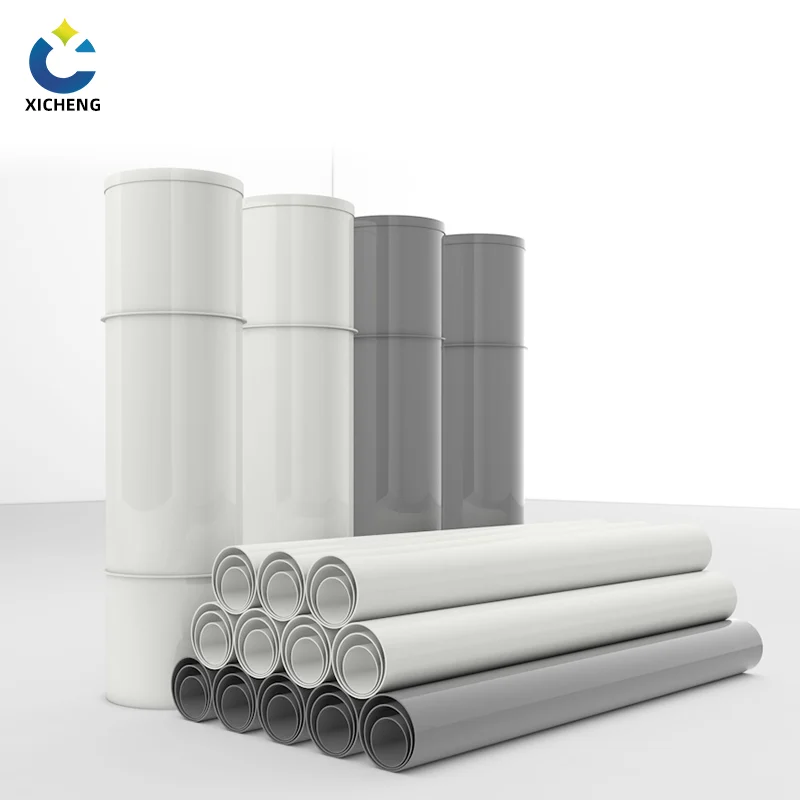
Every duct run has low points where condensate, wash water, or scrubbed carryover settles, and those are the bleed points. A manual bleed valve fitted at the bottom of a low point lets an operator drain the collected liquid before it rusts supports, dirties instruments, or slops into the next section. On PP fume ductwork the bleed valve body and pipe stay in the same material family as the duct, matching the grades covered in the polypropylene sheet properties guide and the PP sheet range, so the drain point corrodes no differently from the run around it.
Pressure equalizing before damper service
A damper that must be opened against an unbalanced pressure can slam, strain its seat, or pull a technician forward; opening its bleed valve first equalizes the two sides. This is the equalizing duty of the manual bleed valve, and it directly complements the manual valve actuator work of the branch damper — the operator stops the damper, cracks the bleed to let the section reach atmosphere, then moves the blade without fighting the system pressure. On automated fume branches the same idea applies before the declutchable override is engaged.
Sampling and calibration taps
A bleed valve mounted at a tee on the duct wall makes a sampling tap: crack the handle, draw the sample, and close it, with no need to open the main damper. Lab and scrubber installations use the same tap to calibrate pressure and gas sensors, verifying a reading against a bleed sample from the same plane. In every case the manual bleed valve is the small valve that lets the duct system be worked on safely — the counterpart to the balancing duties described in the manual air valve guide and on the PP duct damper product page. The powered branch dampers a bleed is equalized before — fresh-air intakes and zone dampers that move on a controller signal — are the subject of the electric motorized damper guide.
How to Use a Manual Bleed Valve Safely
Using a manual bleed valve is simple to describe — open, vent, close — but the safety lies in the order and the pace. The sequence below is the field standard for venting a pressurized line, and it applies equally to a 10,000 psi instrument manifold and a low-pressure PP duct bleed.
The bleed sequence
Confirm isolation and barriers
Before touching the handle, confirm what the valve is upstream of and what is holding pressure. Isolate the section from the source, place a barrier or warning tag on the operating valve so nobody repressurizes mid-bleed, and point the vent tube away from personnel into a drain or containment. Check that the downstream gauge reads zero or the bleed is genuinely open to atmosphere before confident handling.
Open the bleed screw slowly
Crack the handle a fraction of a turn and listen for flow before opening farther. A slow open keeps the vent under control, lets condensate or debris exit without violent spray, and gives the operator time to judge what is coming out. On a threaded bleed screw this is exactly what the fine pitch allows; on a push-button valve it means short, measured presses rather than a sustained open.
Listen, vent, and close, then lock
Vent until the flow drops to the point the listener knows the line is at atmosphere, close the handle firmly, and confirm the seat holds with a quick leak check. Where a valve must stay open or stay sealed, lock the position with the locking device or tag-out — the same lock-and-travel-stop discipline described for larger manual operators in the manual valve actuator guide, applied to the small valve.
When a manual bleed valve is the wrong choice
Manual is not always the right answer. A line that must shed air continuously, in an enclosed or unattended system, wants an automatic air-release valve instead of a hand-opened one. Where that automatic release can be served by a motorized quarter-turn disc, the electric butterfly valve guide covers the powered butterfly body. The electric valve guide treats the powered side of that same hand-versus-automatic decision for valves and dampers. A bleed that must respond to an overpressure event wants a relief valve set to crack automatically, because no person should be relied on to catch a rising pressure spike. And a duty that needs exact repeatable set flow — metering a bleed at precisely 1 L/min — wants a needle valve or a calibrated orifice, not a hand-turned stem. The manual bleed valve is for deliberate, occasional, human-paced release, and choosing it beyond that role trades safety for simplicity the wrong way.
How to Select a Manual Bleed Valve
Selecting a manual bleed valve is a three-step check: what media and pressure it must handle, how it connects into the system, and how often it will be used. Work through the three and the right type, body material, and size follow.
By media and pressure
Air and inert gas service
For compressed air, purge gas, and instrument air, the manual bleed valve is usually a brass or stainless bleed screw with an elastomer or metal seat, sized to the port and working pressure of the line. The push-button design suits the low-pressure pilot circuits around directional valves, in the low hundreds of psi, where fast repetitive venting matters more than fine throttle control.
Condensate and liquid service
Condensate and liquid drains step up the seat requirement, because water and condensate carry debris and corrosion products. A manual bleeder valve on a drain duty wants a body and seat that tolerate the dirty end of the cycle, an assembly that can be dismantled for cleaning, and a vent that discharges to a safe point rather than past the operator. On PP fume ductwork the drain valve matches the duct material, as covered in the polypropylene properties guide, so the bleed point does not become the corrosion start of the run.
By connection and size
Match the bleed valve’s inlet to the existing port. Instrument and pneumatic work uses threaded ports — 1/8-inch and 1/4-inch NPT are the common small sizes — while duct and vessel taps accept a bodied valve with a flange or socket matching their own format. Keep the bore small on a vent duty: a manual bleed valve does its job through a controlled trickle, and an oversized port turns a drain into a dump.
By duty and frequency
The last check is how the valve will be treated. A valve opened twice a year wants a simple, low-maintenance design; a valve opened daily for condensate wants a sturdy handle and a repairable seat; a valve that must never be touched in a critical line wants the same design as a maintenance bleed but with a lockable handle. Table 2 summarizes the match by application.
| Application | Preferred manual bleed type | Notes |
|---|---|---|
| Instrument vent, pressure manifold | Manual bleed screw | High pressure, fine stem control, backstop screw |
| Pilot circuit bleed | Push-button bleed valve | Fast repetitive venting, 1/8 in port |
| Duct low-point drainage | Manual bleed valve, PP body | Material matches fume duct |
| Tank or hydronic air release | Manual air vent / bleeder | High-point purge, small handle |
| Compressed-air condensate drain | Manual bleed drain | Dirty service, no pilot parts to foul |
| Sampling and calibration tap | Tee-pattern bleed valve | Directed outflow, repeatable draws |
When the service conditions are unusual, send the media, pressure, temperature, and port size to our engineering team and take the bleed valve recommendation before ordering, so the small valve is specced with the same care as the dampers around it.
Installation and Maintenance
Mounting and port orientation
Mount the manual bleed valve at the point where the vent or drain is actually needed — the low point of a duct run, the top of a tank, or the manifold tap of an instrument line — with the handle reachable and the vent aimed at a drain or containment point. Align the vent direction before tightening so the released media clears personnel, and keep the valve clear of heat sources if the media is flammable. On ductwork the bleed is usually fitted to a socket or flange on the duct wall, and it should be positioned so a technician can open it without climbing onto the pipe.
Service, leak checks, and troubleshooting
A manual bleed valve earns its reputation from two checks. First, the seat check: with the handle closed, confirm no drip passes the stem, and re-seat or replace the seat if weeping appears. Second, the stem check: confirm the thread turns freely, that the handle is tight on the stem, and that the backstop keeps the stem captive on instrument types. Debris in a drain valve is the usual fault, and cleaning the seat and vent bore of settled deposits restores a leak-tight close. Record what each bleed point was opened for in the maintenance log, so the sequence of drains, calibrations, and overhauls stays repeatable season to season.
Manual Bleed Valve FAQ
What is a manual bleed valve?
A manual bleed valve is a hand-operated vent or drain valve that releases a small, controlled amount of air, gas, or liquid from a pressurized system, instrument, or duct. It has no power supply or actuator — turning a handle, pressing a button, or turning a knob opens a stem off its seat, and closing it reseals the system.
What is the difference between a manual and an automatic bleed valve?
A manual bleed valve opens only when a person opens it, which gives full control over timing and release rate; an automatic bleed valve opens by itself when trapped air or excess pressure builds up. Manual suits deliberate, occasional release for maintenance and sampling; automatic suits systems that must shed air continuously without attendance.
When should I use a manual bleeder valve instead of a relief valve?
Use a manual bleeder valve when you want to vent or drain under human control, such as before maintenance or for a condensate drain. Use a relief valve when the system must protect itself automatically against overpressure, because no person can be relied on to catch a rising pressure spike. They are complementary valves, not substitutes for one another.
How do you use a manual bleed valve?
Isolate the section, point the vent away from personnel, crack the handle a fraction of a turn, listen for flow, vent slowly until the line reaches atmosphere, close firmly, and check that the seat holds. On a push-button type, use short measured presses instead of a sustained open.
Can a manual bleed valve be used on a duct or fume line?
Yes. A manual bleed valve at a duct low point drains condensate, at a tee beside the damper equalizes pressure before the damper is opened, and at a sample tap draws a calibration or verification sample. On PP fume ductwork the valve body is matched to the PP duct material so the bleed point resists corrosion like the run around it.
Key Takeaways
• A manual bleed valve is the hand-operated vent-and-drain valve that releases a controlled amount of air, gas, or liquid for maintenance, sampling, or balancing — no power supply and no actuator.
• It carries three duties: vent pressure before work, drain condensate and settled liquid from low points, and equalize pressure before a damper or flange is opened.
• The family spans instrument bleed screws, push-button pilot bleeds, and manual air vents and condensate drains — with the distinction from purge and relief valves kept clear by their operation and duty.
• On duct and fume systems the manual bleed valve is the small line to the dampers and air valves: low-point drains, equalizing taps, and sample points, all kept in the same material family as the PP duct.
• Use it slowly, deliberately, and rarely: isolate, crack, listen, close, and lock, and specify an automatic relief valve where overpressure protection must work without a person.