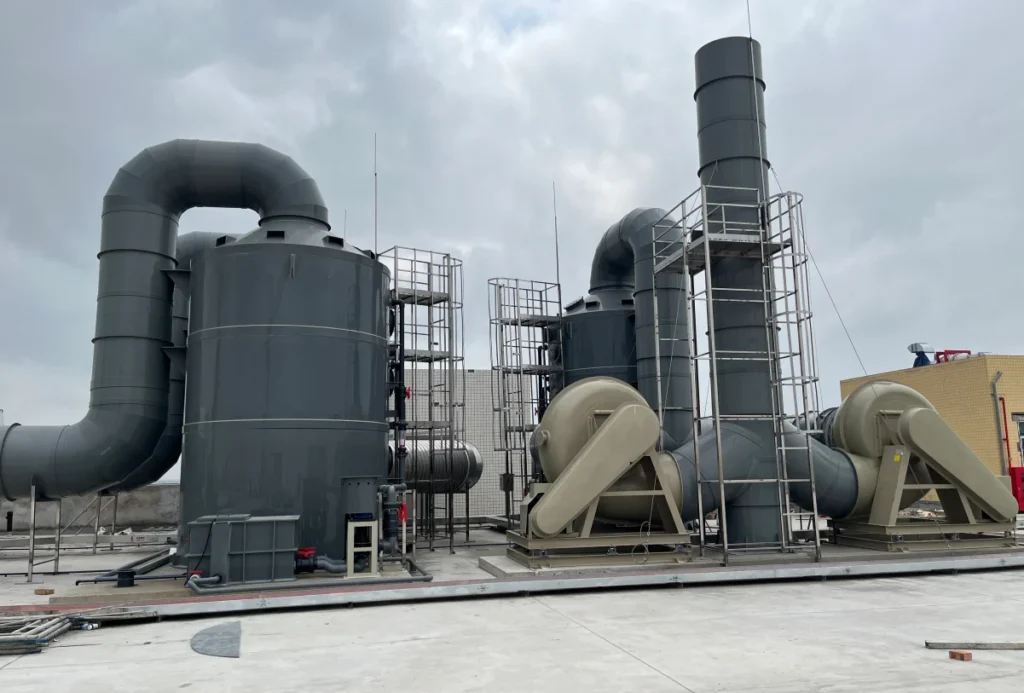
A plastic duct damper is a flow-control device mounted inside a ventilation duct that throttles or stops air with a pivoting blade. The plastic duct damper differs from a metal HVAC damper in one essential way: it is molded from corrosion-resistant polymers and built for chemical fume, laboratory exhaust, and wastewater air systems where steel would not survive a season.
In industrial ductwork, the plastic duct damper performs the same job as an industrial valve on a pipe. It balances airflow, isolates a branch line, or shuts a section down for maintenance, and it does it in round or square PP and PVC ducting. When the body and blade are molded from polypropylene it is called a PP duct damper, and the family of components sold as part of a complete PP or PVC ducting system is often described as a plastic ventilation duct damper. This guide covers what a plastic duct damper is, why polypropylene is the standard material, the manual and electric types, standard sizes, applications, and a buying checklist, so you specify the right damper on the first order.
What Is a Plastic Duct Damper?
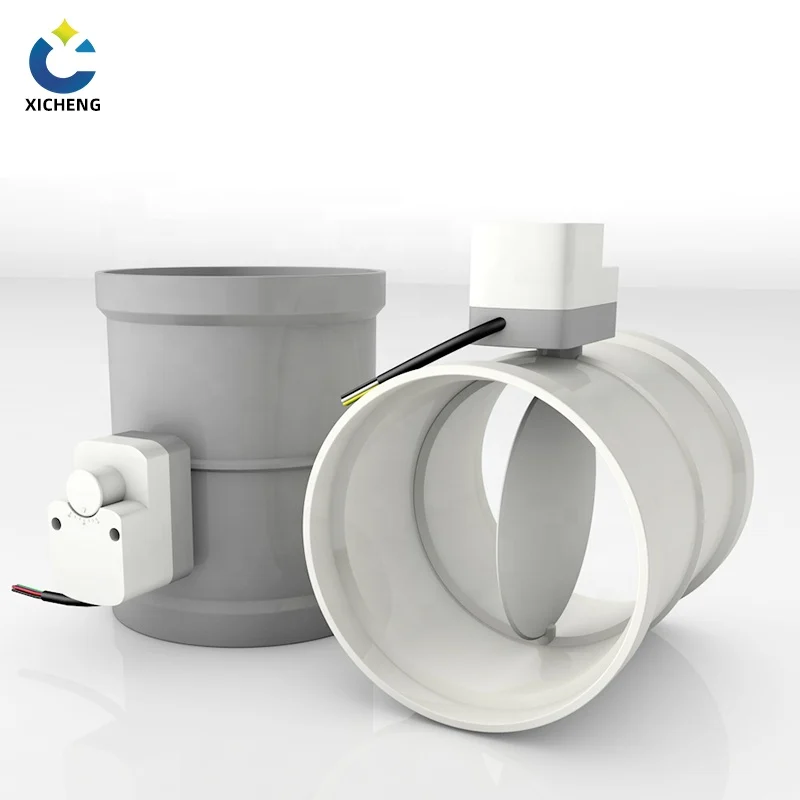
A plastic duct damper is a throttling device that regulates the volume of air moving in a ventilation duct. The blade inside the damper rotates around a central spindle, and the operating handle or manual valve actuator on the outside drives that rotation. At 0 degrees the blade sits parallel to the airflow and the damper is fully open; at 90 degrees the blade blocks the duct and the damper is closed; anywhere between is a throttled position that balances the flow to that branch.
Physically, a plastic duct damper has five working parts: the body or sleeve that mates with the duct, the pivoting blade, the spindle that carries the blade, the external operating handle or actuator, and a locking or position-holding device. Sealing lips or a gasket seat improve shut-off tightness in the closed position. The same construction appears in circular and rectangular bodies, which is why one family of dampers covers round duct runs, spiral ducts, and square PP ductwork without changing the operating principle. Our plastic duct damper product range shows the molded-body and blade options we manufacture in-house.
Performance on a plastic duct damper is described by three numbers that matter at specification time. The airflow or pressure-drop curve of the blade at each opening angle tells you how much flow the damper will pass when throttled, the leakage class tells you how much air slips past the closed blade, and the operating torque tells you what size handle or actuator the damper needs. The electric valve actuator guide explains how that torque is turned into a motorized size, duty, and control specification. A butterfly damper is nearly invisible to the airstream when fully open, which is why the family is preferred on balance points that must not starve the fan upstream.
Why PP for Duct Dampers?
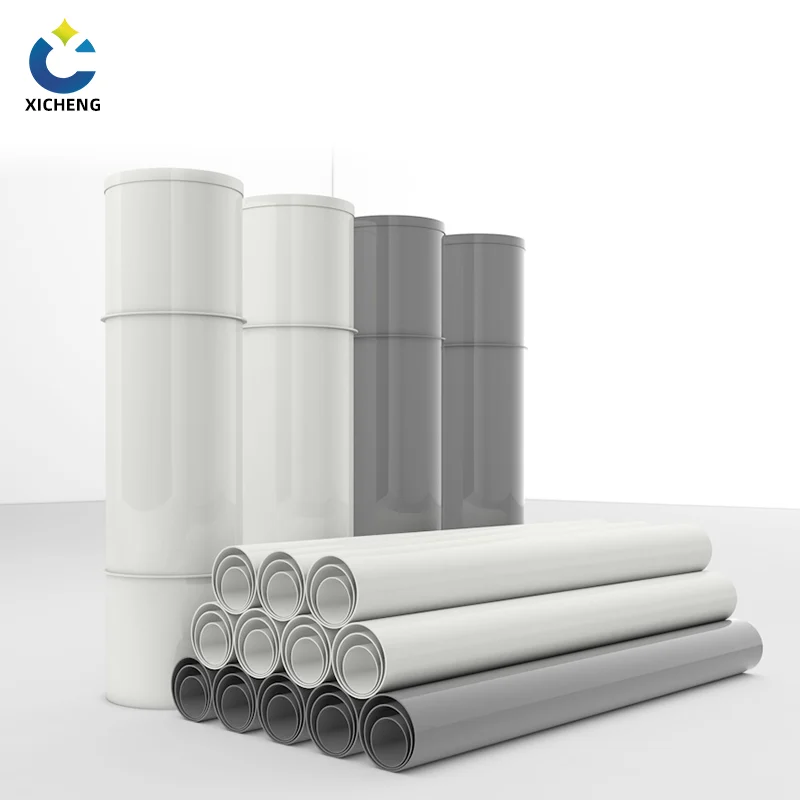
The material question when buying a plastic duct damper is polypropylene versus PVC versus coated steel. Polypropylene wins most corrosive-air specifications because it combines chemical resistance, low weight, weldability, and a broad temperature range at a competitive price. It is the same reasoning that makes PP sheet the default fabrication material for fume ductwork, and the material properties that matter in sheet stock apply directly to the molded damper body.
Density and Weight
Polypropylene density is about 0.90 to 0.91 g/cm³, roughly one-third lighter than PVC at about 1.40 g/cm³ and a fraction of galvanized steel. A lighter damper means lighter duct supports, easier handling during installation, and less load on long vertical risers. For large flanges and long duct networks where support spacing is a cost, the weight saving is the first financial benefit of a PP specification.
Chemical Resistance
PP resists most mineral acids, alkalis, and organic solvents at service temperatures, which is why it is specified for hydrochloric acid fume, caustic scrubbing, chrome and nickel plating lines, and general chemical plant exhaust. The plastic duct damper shares this resistance because every wetted surface is the same polypropylene resin; there is no coated layer that can scratch through and expose a steel core. Where particularly aggressive streams exceed the PP envelope, the same damper family is available in modified or bonded grades.
Temperature Range
Polypropylene performs well in continuous service up to about 80 to 100 °C depending on grade and loading, comfortably wider than PVC, which begins to lose stiffness above 60 °C. The higher ceiling matters in drying ovens, curing zones, and scrubber discharge lines where the air leaving the process is genuinely warm.
Flame-Retardant Grades
Flame-retardant PP compound is a standard option for duct dampers. The additive package meets UL 94 vertical burn requirements, and suppliers publish the flammability class on the material data sheet. A flame-retardant PP duct damper is the safe default for exhaust risers and any duct that passes through a building without intermediate fire-rated separation.
| Property | Polypropylene (PP) | PVC | Galvanized steel |
|---|---|---|---|
| Density (g/cm³) | 0.90 – 0.91 | 1.38 – 1.45 | 7.85 |
| Continuous service temperature (°C) | up to ~80 – 100 | up to ~60 | wide, coating-limited |
| Resistance to acid / alkali fume | Excellent | Good (chloride-sensitive service) | Poor — corrodes |
| Relative weight per part | Light | Medium | Heavy |
| Site weldability | Hot-gas / extrusion weld (PP rod) | Solvent cement or weld | Not weldable at thin gauge |
The trade-offs behind the table are simple. If the duty is chemically aggressive and warm, PP is the strongest candidate; if the duct is small, low-temperature, and price-driven, PVC still competes; if the air is clean and dry, steel cost and weight dominate. Because PP fabricates into the same duct components end to end, PP manufacturing keeps the whole duct system on one compatible material set.
Polypropylene also has limits that a responsible supplier will state on the data sheet before the sale. Continuous exposure to strong oxidizing acids, aromatic and chlorinated solvents, and open flame shortens service life, and unshielded PP without UV stabilizers degrades in outdoor sunlight over years of exposure. Ducts that are pressurized, outdoor-routed, or serving hot oxidizing gas need a compatibility review against the exact chemical and temperature rather than a blanket PP assumption, and where a fuel-gas line joins the duct, the take-off needs a manual gas valve rated for combustible service rather than a WOG-only ball valve. Stating the limits is why the material table above lists ranges instead of single numbers, and why the duty review happens before the damper is specified.
Types of Plastic Duct Dampers
Four distinctions cover nearly every plastic duct damper on the market: manual versus motorized, butterfly versus slide, backdraft versus two-way, and round versus rectangular. Each choice changes how the damper is operated, where it is mounted, and what it costs.
Manual vs. Motorized
A manual plastic duct damper is operated by hand, usually through a lever or knob that rotates the blade and locks in position. It is the economical choice for balance points that are set once and changed rarely. A motorized damper carries an electric actuator that positions the blade automatically from a switch or an analog control signal, which suits remote control, process interlocks, and any point where a worker cannot physically reach the handle. The full motorized valve family behind that actuator — types, control signals, and selection — is covered in the electric valve guide. Both families are made in PP, and the same body accepts either a manual handle (see our manual air valve, see our manual air valve guide) or a direct-mounted actuator (see our electric air valve).
Butterfly vs. Slide and Guillotine
The butterfly damper, named for the disk that rotates on a central spindle, is the most common plastic duct damper for round duct. It is compact, cheap, and throttles well. Slide and guillotine dampers instead move a flat blade across the duct, giving a cleaner shut-off and higher-torque isolation; they are the standard where the duct must be fully and positively closed for maintenance. For PP ducting the butterfly type dominates metal and chemical exhaust lines because the blade assembly is simple to mold in one material.
Backdraft Dampers
A backdraft plastic duct damper passes air in one direction and closes by gravity when flow stops or reverses, which stops outside air, dust, and moisture from backfeeding into a building. It is the same one-way-duty construction used on PP roof terminations and inline fan discharge.
Round vs. Rectangular
Round dampers match circular and spiral ducts and are sized by nominal diameter. Rectangular plastic duct dampers are matched to fabricated square ducts and are sized by width and height. Since duct systems often mix both, a full PP damper range offers both formats in the same manual and electric options.
Nearly every plastic duct damper carries three operator features a buyer should look for: a positive locking device that holds the blade where it was set, a visible position indicator so a technician can read the blade angle from the floor or walkway, and a standard spindle or bolt circle that accepts an actuator later. A damper with all three converts from manual to electric on the same body, which is the cheapest way to keep a balance point upgradeable as control needs grow.
Manual PP Duct Damper: How It Works
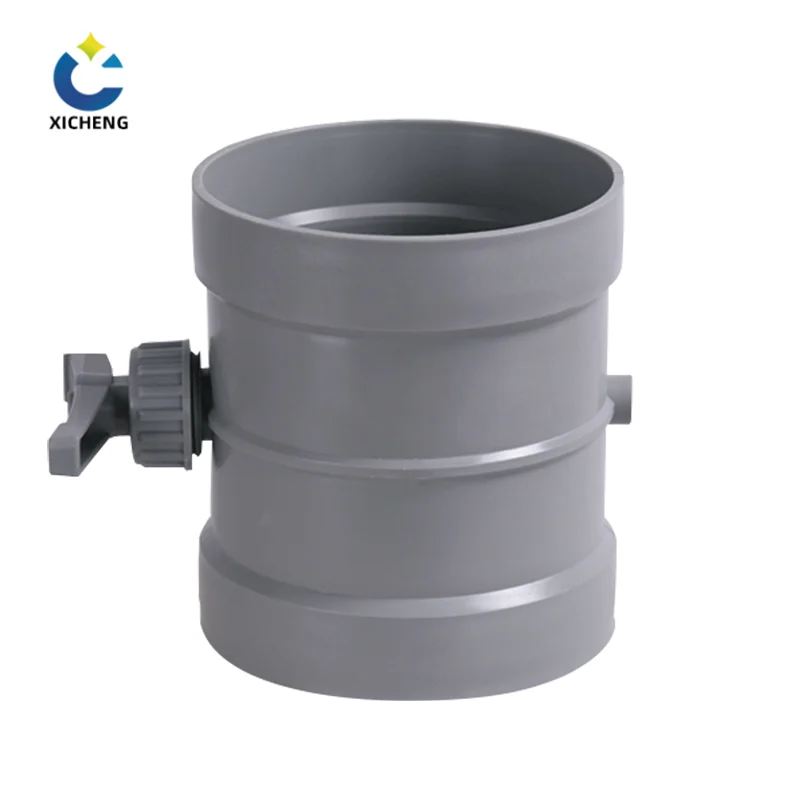
The manual plastic duct damper is the workhorse of industrial air balancing. Mounted in a duct run, it is set by hand: pull the locking lever aside, rotate the handle to the desired blade angle, and release the lever to hold the position. The blade angle is read from a position indicator on the hub, and on the PP butterfly damper that hub carries a lockable quadrant that resists vibration and accidental movement.
What the operator feels is direct: the handle drives the spindle, the spindle drives the blade, and the blade forces the air to change direction around its edges, which is the throttling action that reduces flow through that branch. Because the mechanism has no gears, cams, or power supply, the manual damper is nearly maintenance-free and cannot fail electrically. It is the correct specification at balance points, blanked-off zones, and any duct where set-it-and-leave-it is the operating plan. Our PP duct damper product range shows the handle, quadrant, and mounting options used across sizes.
Flow response is not linear across the handle travel. On a butterfly damper, the first 30 degrees of blade rotation throttles lightly, the middle band does most of the balancing work, and the last 15 degrees is where a small handle move produces a big flow change. Commissioning a manual damper therefore proceeds in small steps near the closed end: open a little, measure the branch flow, and lock the handle only when the reading stabilizes, so the balance is not over-trimmed in a single swing.
Electric PP Duct Damper: How It Works
An electric plastic duct damper adds an actuator to the same blade-and-body assembly, so the damper still throttles air by rotating the blade to a chosen angle; the difference is that the position is commanded remotely instead of by a hand lever. The actuator mounts directly on the damper hub and drives the spindle to the open, closed, or intermediate position.
Two actuator classes cover the applications. An on/off electric damper runs the blade hard-open or hard-closed from a two-wire mains or 24 V DC signal, and it is used for zone shut-off and interlocked isolation. The supply-air and fresh-air side of that same powered blade — the damper that closes the outdoor-air intake when the unit is off and cycles zone branches on a thermostat — is treated in the electric motorized damper guide. A modulating electric damper accepts a 0-10 V or 4-20 mA analog signal and holds any blade angle between 0 and 90 degrees, which is what flow-trimming and HVAC balancing stations need. The motorized air-valve form of that drive is covered in the electric air valve guide, which details the control signals, sizing, and PP bodies for duct duty. Both can be fitted with manual override for commissioning, feedback contacts for the control panel, and fail-safe spring return when the damper must close on loss of power. The motorized-exhaust edition of that fail-safe story, where the damper must shut automatically when the served space is idle, is the electric exhaust valve guide.
The electric family is where the plastic duct damper behaves most like an industrial valve in an automated process: the control system treats it as just another final control element. The electric butterfly valve guide shows how the same quarter-turn disc automates on the pipe side of that control scheme. Our electric valves and the motorized options in the PP duct damper family list the actuator sizes, control voltages, and wiring conventions we ship.
Three actuator specification points trip up first-time buyers. The first is torque: an actuator must carry not only the blade weight but the friction of the spindle bush and the pressure loading from the duct, so a damper catalogue lists a required actuator torque for each size. The second is enclosure: an actuator rated IP65 or better seals against the same corrosive atmosphere the damper lives in, and a lower rating fails early on a chemical duct. The third is feedback: a modulating loop needs a position-feedback signal, and if the control panel expects it, the actuator order must include the feedback module rather than a bare two-wire version.
Key Applications for PP Duct Dampers
Industrial valve duty in air service is the same story everywhere: a line must be balanced, isolated, or modulated without being contaminated by the media it controls. Because PP duct dampers are corrosion-proof and lightweight, they appear wherever stainless steel is overkill and coated steel would fail.
Chemical Plant Fume and Scrubber Exhaust
Hydrochloric, sulfuric, and caustic fume lines are the classic duty for a plastic duct damper. The damper rides in the PP scrubber discharge or the return duct and modulates purge airflow while every wetted face stays chemically inert.
Laboratory Fume Hood and Cabinet Exhaust
Fume-hood exhaust networks use plastic ventilation duct dampers to set the face velocity at each hood and to isolate hoods during maintenance without shutting the whole lab, and a manual bleed valve at each low point drains condensate before the branches return. Manual dampers set the trim; electric dampers let the building management system rebalance the bank on schedule.
Electroplating and Wastewater Air
Chrome, nickel, and zinc plating lines release acid mist that a metal damper will not tolerate. A PP damper at each tank bank, tied to the exhaust fan with an interlock, keeps the line both balanced and corrosion-proof, and the same material set extends into the PP ductwork that already handles the mist.
General Industrial Ventilation and Air Balancing
Warehouses, machining halls, battery rooms, and clean manufacturing areas balance supply and extract airflow with plastic duct dampers at branch take-offs. The lightweight PP construction mounts easily on existing supports and adjusts without vibration drift once the locking handle is set.
Cost is the deciding factor for most plants, and here the plastic duct damper wins on both purchase price and lifecycle. The PP body is molded, not welded from plate, so unit cost stays low at small diameters, and the corrosion-proof construction removes the repaint-and-replace cycle that steel dampers face on humid or mildly aggressive air. Plants that standardize one damper family across fume, lab, and general duty hold one blade spare and one locking-handle stock instead of three incompatible inventories.
Sizes and Dimensions
Round plastic duct dampers are dimensioned by the nominal duct diameter they mount in, and the choice of damper diameter must match the inner diameter of the connecting duct, not the duct outer dimension. The common metric sizes for PP dampers line up with the standard PP duct series, so a butterfly damper intended for a 200 mm duct mates with the 200 mm PP coupling and flange without adapters.
| Nominal size (mm) | Form | Typical use | Notes |
|---|---|---|---|
| 110 | Round butterfly | Small fume hoods, equipment vents | Compact blade, low pressure drop |
| 125 | Round butterfly | Laboratory branches | Matches standard PP duct series |
| 160 | Round butterfly | Lab and light plant exhaust | Common balance-point size |
| 200 | Round butterfly | General plant extract | Wide range of flow settings |
| 250 | Round butterfly | Main exhaust runs | Higher flow, check pressure drop |
| 315 | Round butterfly | Large fume stacks, headers | Largest common round size |
Rectangular plastic duct dampers are sized to the inside width and height of the square duct, typically from 100 × 100 mm up to 500 × 500 mm and beyond. For an existing duct, measure the clear internal opening before ordering; the damper sleeve should fit the duct inner diameter or the fabricator mating flange. When in doubt, order matching PP flanges and couplings from the same duct series so the whole line stays mechanical-fit. The base material for that series is covered in our polypropylene sheet guide.
How to Select a Plastic Duct Damper
Start a plastic duct damper selection with the duty and the budget, not the catalogue. If the duct is new, the damper is one line in a larger PP ducting package and the size is fixed by the duct series; if the damper is a retrofit, the existing duct opening dictates everything downstream of it. With the size tabled, the four checks below finish the choice in the order they are written.
Specifying a plastic duct damper comes down to a short checklist, and each line removes one class of damper from the list.
1. Match the duct size and form. Measure the duct inner diameter or the square duct opening and confirm the damper body is threaded, flanged, or slipped to the same PP duct series you use. A damper that requires adapters adds parts, costs money, and leaks.
2. Decide manual or electric. If the position is set rarely and a worker can reach the handle, a manual plastic duct damper is the lowest-cost reliable answer. If the damper must respond to a controller, an interlock, or a schedule, choose an electric damper with the right actuator and control signal, and confirm the control voltage is available at the duct.
3. Check media temperature and aggressiveness. Confirm the stream stays inside the PP service range, and if the gas is above the standard envelope or contains solvents that soften polypropylene, move up to a modified resin or verify the supplier compatibility sheet for that specific chemical and temperature.
4. Set the sealing and pressure-loss class. For simple balancing, minimal sealing is fine; for isolation or fire-rated stops, specify a shut-off-tight and flame-retardant plastic duct damper with a gasket seat. Larger dampers and throttled positions carry more pressure drop, so check the airflow curve when the damper sits most of its life partly open.
Follow the same rule used for the full material line: the damper should match the PP sheet and fabrication components you build with, so the finished duct system is one compatible, documented material set. If you are not sure which damper your duct needs, send the duct size, media, and temperature to our sales and engineering team and take the recommendation before you order.
Installation and Maintenance
Installation
Install the plastic duct damper with the spindle axis perpendicular to the airflow and the handle or actuator accessible for operation and maintenance. In round duct, do not trim a damper down by forcing a smaller body into a larger coupling; use the matching flange or coupling and seal the joint. Leave the blade fully open and protect the body from weld spatter if the duct is joined after mounting, then check that the blade opens and closes freely through its full 90 degrees before the system is energized.
Commissioning the damper is part of installation, not a separate project. After the system is on air, walk each balance point, confirm the blade opens and closes without binding at the hottest operating condition, record the handle or actuator position for the as-built drawing, and tag the damper with its branch name and target flow. A tagged, recorded damper line is what an auditor can verify in a minute; an untagged line starts the whole review over.
Maintenance
Quarterly inspection is enough for most PP fume systems: confirm the blade rotates freely, the locking handle holds position, and the gasket or seat shows no build-up that stops the blade seating. Lubricate the spindle bush with a compatible grease, re-tighten actuator mounting screws, and never force the handle against a seized blade — sediment on a throttled blade is cleaned with a soft brush so the seat is not scored. An electric damper gets one extra check, the wiring gland and cable strain relief, because vibration on the duct run is the usual cause of premature actuator failure.
Standards and Certifications
Standards matter more for a plastic duct damper than the sales sheet implies, because they are the only objective proof that the damper will perform under the conditions it is sold for. On the damper-family side, damper types and their duties are documented against AMCA Standard 500 for leakage and airflow performance, and SMACNA duct construction standards define how the duct subsystem around the damper is built. In Europe, EN 1751 assigns an air-leakage class to dampers and that class is printed on the specification. On the industrial side, the field aligns with the thinking that governs industrial valves, where ASME and API standards set the dimensional and testing rules, and a valve definition without a standard is incomplete. For a broader look at where each damper type fits, the AWV guide to industrial damper types is a useful reference.
On the material side, flame-retardant PP grades cite UL 94, and the mechanical strength of the welded PP duct system follows from the PP sheet manufacturing standards, which is why a plastic duct damper should be bought together with, not separately from, the certified PP duct line. Ask the supplier for the damper leakage class, material data sheet, and the PP flammability rating before you release a purchase order — those three documents answer most liability questions before they happen.
Plastic Duct Damper FAQ
What is a plastic duct damper used for?
A plastic duct damper balances, isolates, or shuts off airflow in a ventilation duct by rotating a blade across the air stream. It is the air-side equivalent of an industrial valve and is standard in chemical fume, laboratory exhaust, and wastewater air systems where corrosive air would attack a metal damper.
What is the difference between a plastic duct damper and a butterfly valve?
Mechanically they are close cousins — both pivot a blade on a central spindle. A butterfly valve is a pipe-duty flow device sized for liquids or gases in pressure-sealed lines, while a plastic duct damper is a low-pressure air-regulating device built for ductwork. The PP duct damper uses a lighter blade, a bigger operating lever, and a body that mates with PP or PVC duct rather than flanged piping.
Can a PP duct damper be used in high-temperature exhaust?
Polypropylene handles continuous service up to about 80 to 100 °C depending on grade and loading. Above that envelope, or where solvents soften the resin, a different material is required; the temperature and chemical compatibility must be confirmed against the supplier data sheet before installation.
Manual or electric duct damper — which one do I need?
Choose manual when the blade position is set once and rarely, and when a worker can reach the handle. Choose electric when the damper must respond to a controller, an interlock, or a schedule, or when it sits out of reach. The same PP body accepts both drives, so the choice rarely forces a different duct specification.
Are plastic duct dampers flame retardant?
Flame-retardant PP is a standard option and meets UL 94 vertical burn requirements. If the duct passes through a building or is part of a fire-rated assembly, specify a flame-retardant PP duct damper and confirm the flammability class on the material data sheet.
Key Takeaways
• A plastic duct damper is the air-side equivalent of an industrial valve: it balances, isolates, and shuts off airflow in PP and PVC ducting with a single pivoting blade.
• Polypropylene is the default material because it resists corrosive fume, runs to roughly 80–100 °C, weighs about one-third of PVC, and is available flame-retardant.
• Choose a manual plastic duct damper for set-it-and-leave-it balance points; choose an electric version for control, interlock, and remote positioning.
• Match the damper to the exact duct diameter or square opening, and to the flame-retardant and leakage class your duty requires.
• Buy the damper together with a certified PP duct line so the whole system is one documented, compatible material set.