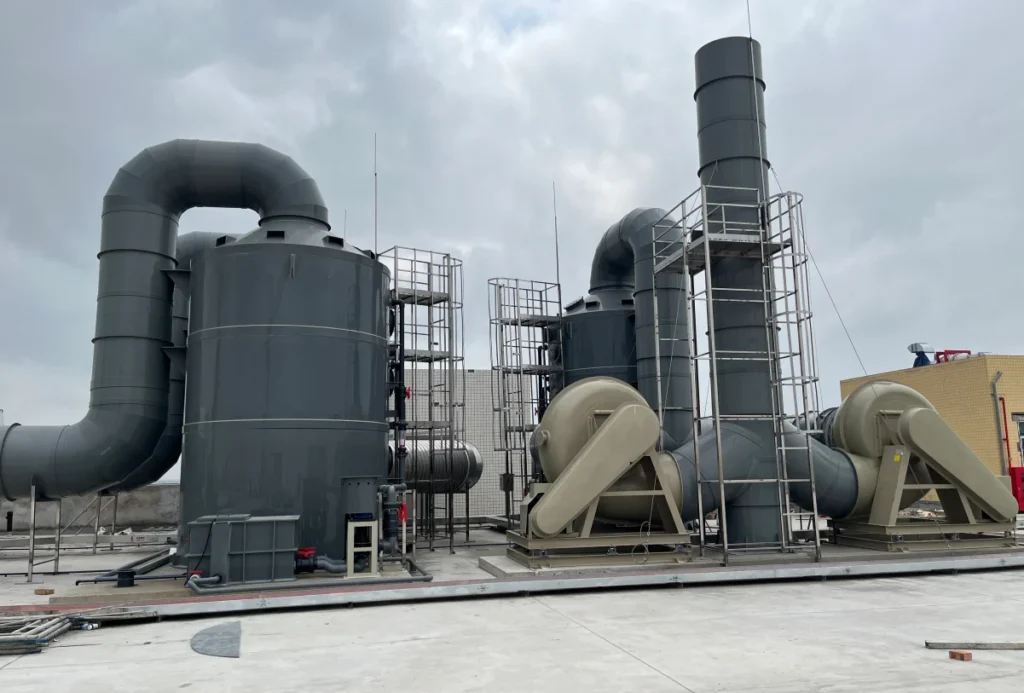
A manual air valve is a hand-operated device that throttles, isolates, or diverts airflow in a ventilation or process duct. In industrial ducting the manual air valve does the same balancing work as an industrial valve on a pipe: a technician sets the blade once, locks it, and the duct delivers the right flow to that branch for years. The manual air valve family spans butterfly dampers for round duct, slide and guillotine valves for positive shut-off, backdraft valves for one-way flow, and diverter and blast-gate valves that route air between branches. Where those branches must open and close on a controller signal rather than a hand lever, the powered counterpart is the electric motorized damper, whose fresh-air, zone, and supply duties are set out in a dedicated guide.
Because the name is shared with a different product, the pneumatics trade calls the lever-operated 2-way, 3-way, and 4-way valves manual air control valves; those control cylinders and tools instead of ducts. This guide covers the duct-flow side in depth — what a manual air valve is, how it works, the main types, sizes, common applications, and a selection checklist — and closes with a clear comparison so you order the right valve on the first attempt.
Mechanical contractors, chemical plant maintenance teams, and woodshop owners all choose a manual air valve for the same reason: a balanced duct stays balanced with no power and no attention. If you are new to these valves, the comparison section is the fastest way to avoid the pneumatic-versus-duct mistake, and the types, sizes, and selection sections carry a set-it-and-commission-it workflow that works on both plastic and metal duct systems.
What Is a Manual Air Valve?
The two families behind one name
A manual air valve in the ducting world is a flow-control damper mounted in a round or square duct, opened and closed by hand through a lever or handle. A manual air valve in the pneumatic world is a directional control valve that switches shop air to a cylinder or air tool. The names overlap, the products do not: a duct damper regulates cubic meters of air at low pressure, while a pneumatic valve switches compressed air at line pressure through threaded ports.
Where a manual air valve sits in a duct system
In a duct network the manual air valve mounts at the branch take-off, in the main run, or at the equipment outlet, and it is sized to the same diameter as the duct it joins. The blade inside rotates or slides to throttle the branch, and the locking lever holds the chosen position. This is the same mounting pattern used by a plastic duct damper in PP and PVC fume systems, which is why the two terms are used interchangeably on corrosive-air projects.
The overlap between the two names exists because both industries turn a handle to operate a valve, and both call the result a manual air valve. The engineering answer is to specify by construction, not by name: a duct-side specification states duct size, media, and leakage class, while a pneumatic specification states port size, pressure rating, and number of positions. Writing the specification this way prevents the two families from colliding on a purchase order.
In PP and PVC fume systems the manual air valve is the standard terminal device because the molded body is chemically inert and economical at every duct size. It mounts between the same couplings, flanges, and reducers as the duct run, so a plant standardizes on one valve family across the fume, scrubber, and exhaust networks, keeping one set of spares and one documented material set.
Manual Air Valve vs. Manual Air Control Valve
Duct volume-control valves
The duct-side manual air valve throttles air moving at low pressure through a duct system. Its operating handle (manual valve actuator) drives a blade that reduces the open area across the duct, and because there is no pressure seal to hold, the body is a light molded sleeve that mates with PP, PVC, or metal spiral duct. This is the valve discussed through most of this guide.
Pneumatic directional control valves
The pneumatic manual air control valve switches compressed air to cylinders, grippers, and air tools. It is a ported block with internal spools and seals, threaded connections such as 1/8-inch or 1/4-inch NPT, and a lever, button, or foot-pedal actuator. The pneumatic valve operation article at Control.com explains how these valves are also operated by air pilot or solenoid, which is where the manual family meets automated control.
Pneumatic manual air control valves are specified by the number of working ports and positions, most commonly 2-way and 3-way valves for single-acting cylinders and 4-way valves for double-acting cylinders, with lever, push-pull, rotary, or foot-pedal actuation. When the same valve is shifted by a small air signal instead of a hand it is an air-pilot valve, and when it is shifted by a coil it is a solenoid valve; the Control.com article walks through all three. For a plant air network the manual family remains the emergency fallback, because the cylinder can always be moved without electricity.
Reading a pneumatic manual air control valve specification is equally exact: the part number encodes port size and thread, valve function, actuation style, and body material, and the flow coefficient sets how much air the valve will pass for a given pressure drop. A supplier should be able to read both numbers off any valve on its shelf, because mis-read specifications are the leading cause of returned pneumatic parts.
How to tell them apart at a glance
Look at what the device connects to. If it fits inside or on the outside of a duct and its lever turns a blade, it is a manual air valve for airflow control. If it threads into a compressed-air line and its lever shifts internal spools, it is a manual air control valve for pneumatics. One more check: a duct valve is rated in duct diameter and airflow, a pneumatic valve in port size, pressure range, and flow coefficient.
This dual meaning is not cosmetic. A buyer who calls a pneumatic supplier for a duct damper receives a ported 3-way valve that cannot throttle a duct, and a buyer who calls a duct supplier for a pneumatic valve receives a butterfly body that cannot switch a cylinder. Order the same way a specification is written — by duty, duct size or port size, and media — and the two families never collide on a purchase order.
| Attribute | Duct manual air valve | Pneumatic manual air control valve |
|---|---|---|
| What it controls | Airflow in a ventilation duct | Air pressure to cylinders and tools |
| Body | Round or square duct sleeve | Threaded block with internal spools |
| Operating element | Pivoting or sliding blade | Shifting spool with seals |
| Primary specification | Duct diameter, airflow, leakage class | Port size (NPT/G), flow coefficient, pressure rating |
| Typical service | Ventilation, fume exhaust, dust collection | Machine actuation, plant air |
| Media | Low-pressure moving air | Compressed air, sometimes vacuum |
Types of Manual Air Valves for Ducting
Butterfly volume dampers
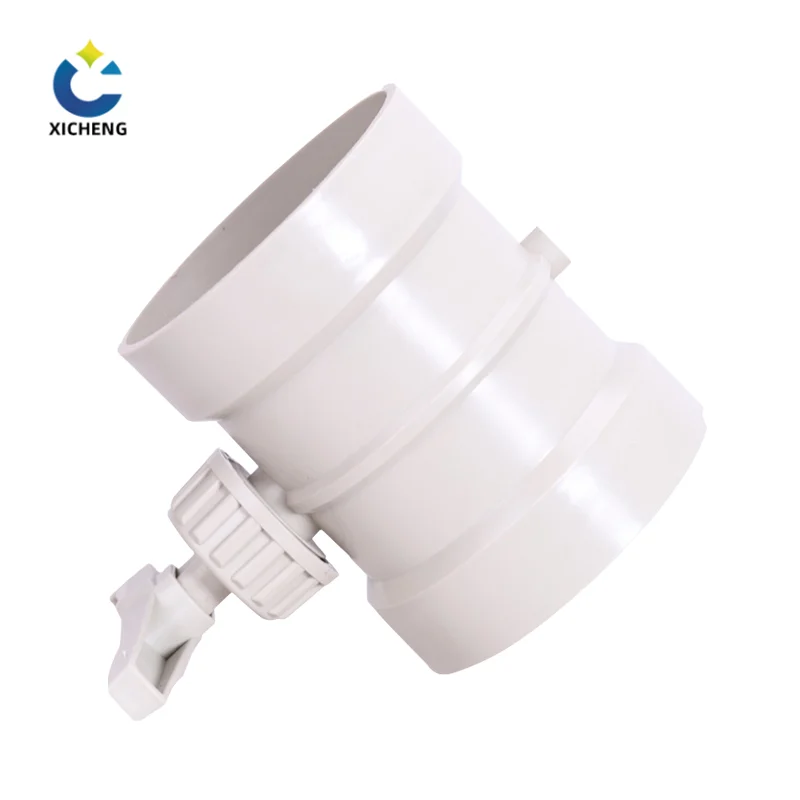
The butterfly manual air valve is the standard choice for round duct. A disk rotates on a central spindle across the airstream, giving fine throttling with minimal pressure drop when open, and the compact body fits tightly into a duct run. It is the type most often purchased for ventilation balance points and is the common form of PP and PVC fume-system dampers, such as the molded-body butterfly range in our PP duct damper product line.
On a butterfly manual air valve the operating lever and the blade travel together through the quadrant, so a technician reads the set position directly from the lever angle without climbing to the duct. Where that same blade angle is commanded by a controller instead, the assembly is an electric air valve whose motorized head holds the commanded position in the duct. The quadrant also stops vibration from drifting the balance, which keeps the branch flow stable between commissioning and the next maintenance event.
Slide and guillotine valves
A slide valve moves a flat blade across a rectangular opening, and the guillotine version drops the blade through a slot for a hard shut-off. These types close the duct fully and positively, which makes them the maintenance isolation valve on lines that must be blanked before personnel enter, with a manual bleed valve venting the section first so the line is at atmosphere when the blank goes in.
Backdraft and check valves
A backdraft manual air valve is a one-way device whose blade closes by gravity when flow stops or reverses. It stops outside air, dust, moisture, and fumes from backfeeding into the building through idle exhausts, and it is fitted at fan discharge and roof terminations. The powered counterpart that does the same one-way protection with code-required automatic shutoff is covered in the electric exhaust valve guide.
Diverter and blast-gate valves
Diverter valves route flow between two outlets, and blast gates are sliding shut-offs fitted at machine branches in woodshop dust collection. Both are manual by default in small shops because the machine schedule is set by hand, and US Duct’s ductwork valve range gives a practical look at the diverter and butterfly options used in wood and metal fabrication.
Round vs. rectangular formats
Round manual air valves match circular duct and are specified by nominal diameter. Rectangular valves match fabricated square duct and are specified by width and height. The mechanism is the same in both; the body changes to suit the duct profile.
Pressure drop is the deciding performance number between the types. A butterfly valve is nearly invisible to the flow when fully open and throttles well through most of its range, which suits continuous balancing; a slide or guillotine valve has moving edge seals that wear but shut off harder, which suits isolation; a diverter forces the flow to turn, so it is reserved for routing where a small pressure penalty is acceptable. This is why a competent supplier asks the duty before quoting a type.
How a Manual Air Valve Works
Handle, spindle, and blade
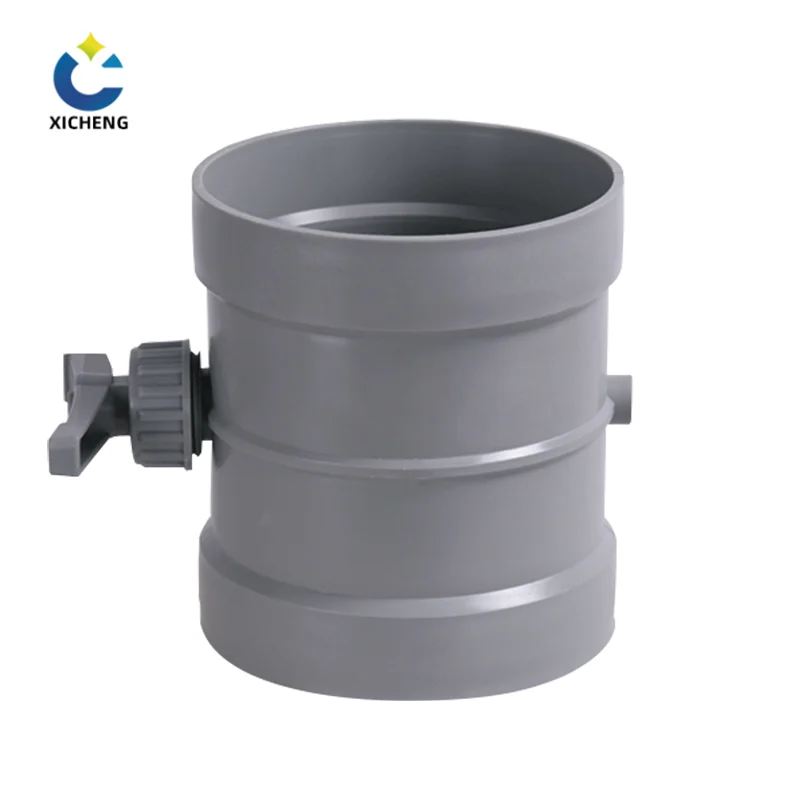
Turning the handle rotates a spindle that passes through the duct wall and carries the blade inside. On a butterfly valve a 90-degree turn moves the blade from fully open, edge-on to the flow, to fully closed, face-on. The mechanical chain is only three parts, which is why the manual air valve stays reliable where powered valves fail. Our manual air valve product range shows the handle, hub, and spindle options used across the diameter range.
The locking quadrant
Below the handle a locking quadrant or thumb screw holds the blade at the set angle. The quadrant is what separates an operating valve from a wandering balance point: without it, vibration and airflow slowly swing the blade open or closed, and the duct delivers the wrong flow to the branch.
Blade angle and flow response
Flow does not change linearly with handle position. On a butterfly blade the opening is gentle for the first 30 degrees, does most of its balancing work through the middle band, and turns a small handle move into a large flow change in the last 15 degrees. Commissioning uses small steps near the closed end, measuring the branch flow before locking the handle.
Operating force scales with blade area, which is why small manual valves turn with two fingers while the largest sizes need a longer lever or a geared positioner. The spindle is the load path, so a clamped V-bolt or keyed hub on every PP butterfly body keeps the lever from slipping on the shaft after years of daily use.
Commissioning marks matter more than they look. Paint or notch the handle position that gave the target flow, then record the same number on the as-built drawing; after a filter change or a maintenance lift the balance is restored to the recorded mark instead of re-derived from trial and error.
The blade itself carries enough of the job. A balancing butterfly valve uses a bare PP blade with a soft seating lip, which throttles cleanly but does not claim a tight shut-off; an isolation version adds a gasket or EPDM seat at the blade edge so the closed valve holds a measurable seal class. Confirming which blade the order quotes — throttling or isolating — avoids a valve that balances at a small percent leak but fails an isolation test.
Why Choose a Manual Air Valve Over Motorized
Cost and simplicity
A manual air valve costs a fraction of an actuated valve because it has no actuator, control signal, or wiring. Installation is a screwdriver task and operation needs no trained electrician, no programming, and no standby power. For balance points set once and rarely changed, the manual valve is the lowest-first-cost answer and often the lowest lifetime cost too, because it has fewer failure modes than a motorized assembly.
When electric makes more sense
Switch to an electric actuator when the valve must respond to a controller, an interlock, or a schedule; when it sits out of reach of personnel; or when a process must repeatedly change the airflow. Where that automated valve is a quarter-turn butterfly body, the electric butterfly valve guide covers the powered disc valve in full. Under those conditions the electric valve guide walks through the motorized types, control signals, and selection steps. Those are the duties covered by the electric valve family and the electric valve actuator guide in this cluster, and the same PP body accepts either the hand lever or a direct-mounted motor, so the upgrade path stays cheap.
Even automated plants keep the manual option in the mechanism. Electric actuators for duct valves commonly include a manual override handwheel or a declutch mechanism so an operator can position the blade without power during commissioning, emergency, or actuator failure, and the manual position is safe because the blade relaxes to whatever angle the hand leaves it.
Lifecycle cost confirms the manual choice. A manual valve has no motor, gearbox, limit switches, or control module to fail, so the maintenance ledger shows a grease point and a brush instead of actuator replacement every few years, and the same no-electronics argument is why a manual gas valve carries the hand shutoff on a fuel-gas train. On a plant with two hundred balance points, that difference pays for an entire spare valve inventory within a single maintenance cycle.
Reach is part of the manual decision. If the valve sits on a walkway, mezzanine, or service platform where a hand can reach the handle, manual is operationally sound; if the valve hangs above a tank hood or behind a heat exchanger, a manual valve forces a ladder and a two-person layout, and the actuated valve pays for itself. Position every manual valve so the handle is reachable and the lever travel is unobstructed.
Key Applications for Manual Air Valves
Woodshop and metal fabrication dust collection
Blast-gate and diverter manual air valves route dust collection to the machine in use, concentrating airflow where it is needed and keeping idle machines from robbing suction. Woodshops and fabrication shops balance an entire collection network with a handful of economical manual valves instead of a panel of actuators.
Laboratory fume hood and cabinet exhaust
Fume-hood banks set individual face velocities with manual air valves at each hood take-off, isolating one hood for filter change without shutting the whole laboratory exhaust system. The PP version resists the chemical mist that metal dampers cannot hold.
Chemical plant fume and scrubber lines
Acid and caustic fume ducts use plastic manual air valves whose wetted faces are chemically inert, modulating scrubber purge and isolating tank lines during maintenance.
Pressurization and purge lines in cleanrooms and semiconductor areas use hand-set airflow valves where the balance is fixed by process recipe rather than by live control. A manual valve set once keeps the room pressurization predictable, and the PP version adds chemical resistance for the acids used in photolithography exhaust.
Hazardous dust and mist collectors, ovens with light process exhaust, and farm and greenhouse ventilation all use manual valves where the airflow requirement is stable enough to set once. The duty is not exotic; it simply does not justify live control, and the manual valve delivers the set flow with no wiring in the enclosure.
HVAC air balancing in general buildings
Supply and extract networks in warehouses, machine halls, and clean manufacturing areas set static balance with manual valves at branch take-offs, delivering full airflow to the areas that need it without power or control wiring.
Because the same PP valve family serves fume, lab, and general duty, a plant carrying one blade spare and one locking-handle stock covers every balance point in the building. The saving compounds: one maintenance procedure, one set of seals, and one purchasing code instead of three.
Sizes and Formats
Round manual air valves are dimensioned by nominal duct diameter, matching the standard PP duct series so the valve mates with the same couplings and flanges as the duct. The common sizes for duct-style manual valves are shown in the table below.
| Nominal size (mm) | Valve type | Typical flow duty | Notes |
|---|---|---|---|
| 110 | Butterfly | Small equipment vents, hoods | Compact blade |
| 125 | Butterfly | Laboratory branches | Standard PP series size |
| 160 | Butterfly | Lab and light plant exhaust | Common balance-point size |
| 200 | Butterfly | General plant extract | Wide flow range |
| 250 | Butterfly | Main extract runs | Check pressure drop throttled |
| 315 | Butterfly | Headers, large stacks | Largest common round size |
Round sizes
Choose the valve diameter to match the duct inner diameter. A butterfly manual air valve specified for 200 mm mates with the 200 mm PP coupling, flange, and reducer without adapters, so the trim stays balanced and the joint stays leak-free.
Rectangular sizes
Rectangular valves are sized by internal width and height, commonly from 100 × 100 mm up to 500 × 500 mm and larger. Measure the clear duct opening before ordering and match the valve sleeve to the fabricator mating flange so the blade travel is unobstructed.
Round duct uses two sizing conventions. The metric series runs 110, 125, 160, 200, 250, and 315 mm and dominates PP and PVC ducting; inch sizes such as 4-in, 5-in, 6-in, 8-in, 10-in, and 12-in dominate metal spiral duct in North America. The valve must match the duct series, not the nearest round number, because a 6-in valve will not sit on a 160 mm duct without an adapter collar.
A complete duct-style manual air valve specification carries five fields: nominal size and form, duct series (PP, PVC, or coated metal), operating type (butterfly, slide, backdraft, diverter), locking and sealing class, and media temperature range. Reading a specification with those five fields tells a supplier exactly what to quote and a warehouse exactly what to pick.
How to Select a Manual Air Valve
The four steps below assume the duct size is already known. The usual first-time failure is ordering by handle type or brand before the duct opening is measured, which returns a valve that does not fit the series; taking the five-field specification approach from the sizes section removes that failure before it starts.
Step 1: Match duct size and form
Measure the duct inner diameter or square opening and select a valve whose body mates with the same PP, PVC, or metal duct series. A valve that needs adapters adds parts, leaks, and costs money.
Step 2: Choose the valve type by duty
Butterfly for general balancing on round duct, slide or guillotine for positive shut-off, backdraft for one-way flow, diverter or blast gate for routing between branches. State the duty and the valve type falls out of it.
Step 3: Check media, temperature, and pressure
Confirm the airstream and temperature are inside the valve material envelope. For acid and caustic air use a PP manual air valve; for dusty machine collection confirm the blade clears and seals at the fan pressure the system runs.
Step 4: Confirm material, locking, and sealing
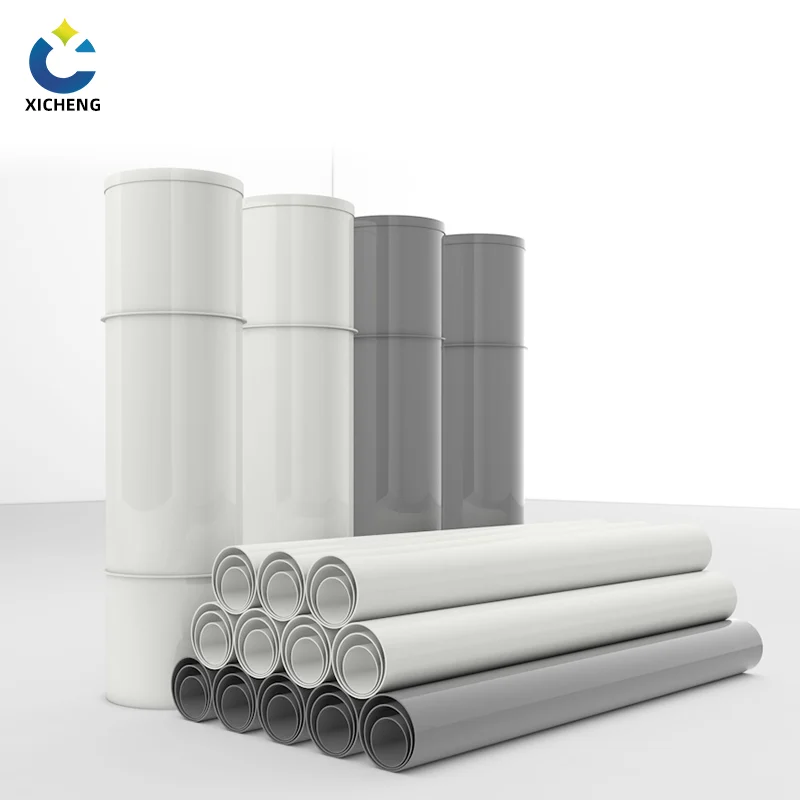
Flame-retardant PP for fire-rated ducts, a locking quadrant on every balance point, and a gasket seat where the valve must shut tight. The selection ties to the same PP sheet and fabrication components used for the rest of the duct, covered in the PP material properties guide, and if the project is a full PP duct system the PP sheet product category keeps the whole line on one compatible material set. For sizing help on a specific duct, send the duct size and media to our engineering team and take the recommendation before you order.
Installation and Maintenance
Installation
Install the manual air valve with the spindle perpendicular to the airflow and the handle accessible for operation. Use the matching coupling or flange rather than trimming a valve into a larger duct, verify the blade moves freely through its full 90 degrees, and leave the damper open while the duct is being joined or welded so spatter does not stick to the blade edge.
Maintenance and inspection schedule
A quarterly check covers dust and chemical deposit on the blade seat, free blade movement, and a lock that holds position. Clean a throttled blade with a soft brush, lubricate the spindle bush with compatible grease, and never force the handle against a seized blade. Record the set position on the as-built drawing so the balance is repeatable after a maintenance lift, and re-tighten any actuator interface hardware if the valve has been converted to motorized.
Two commissioning rules prevent the most common field errors. First, never use the valve handle as a structural support or a place to hang tools — the spindle loads are design-limited. Second, after the system is on air, verify the blade against the recorded balance mark at the hottest operating condition, because thermal expansion can tighten the bush and change the effective lever friction on a large PP valve.
Manual Air Valve FAQ
What is a manual air valve used for?
A manual air valve throttles, isolates, or diverts airflow in a ventilation duct by rotating or sliding a blade across the airstream. It balances air delivery to branches, isolates sections for maintenance, and stops backflow, all without electricity.
Is a manual air valve the same as a manual air control valve?
Not for sourcing purposes. A duct manual air valve controls airflow in low-pressure ventilation ducting, while a pneumatic manual air control valve switches compressed air through ported blocks to cylinders and tools. The comparison table in this guide shows the differences at a glance.
Can a manual air valve be motorized later?
Yes, when the valve body uses a standard spindle and bolt circle, a direct-mounted electric actuator replaces the hand lever and the same blade assembly becomes a motorized damper. This is why buying a valve with a standard actuator interface keeps the upgrade path open.
What size manual air valve do I need?
Choose the valve diameter to match the duct inner diameter. Common round sizes run from 110 mm to 315 mm, and rectangular valves are sized by the clear width and height of the square duct opening.
Are manual air valves flame retardant?
Flame-retardant PP is a standard material option and meets UL 94 vertical burn requirements. For fire-rated ducts, specify the flame-retardant grade and confirm the flammability class on the material data sheet.
Can a manual air valve be used on a blower discharge?
Yes, when the valve is sized to the duct diameter and the blower pressure is within the PP or PVC service rating, a butterfly manual air valve adjusts fan output on a discharge duct. Confirm the pressure rating and avoid forcing the blade past the closed seat while the fan is running.
What temperature range does a PP manual air valve handle?
Polypropylene manual air valves run in continuous service up to about 80 to 100 °C depending on grade and loading, and PVC versions are specified up to about 60 °C. Confirm the exact temperature against the supplier material data sheet before assembling the line.
Key Takeaways
• A manual air valve is the hand-operated airflow control for ducts: butterfly for balancing, slide or guillotine for hard shut-off, backdraft for one-way flow, diverter and blast gate for routing.
• Do not confuse the duct valve with the pneumatic manual air control valve — one regulates low-pressure air in ducts, the other switches compressed air to cylinders and tools.
• Manual wins on cost and simplicity at balance points; switch to electric only when a controller, interlock, or schedule must drive the position.
• Match the valve to the duct size and form, the duty type, the media temperature, and the flame-retardant and sealing class the line requires.
• Standardize on one PP valve family and PP duct components so spares, seals, and documentation stay compatible across the whole system.